It has now reached the point where we need to worry about the “scalp” more than the “hair.”
Hair loss is not simply a matter of hair falling out.
In fact, changes in the scalp itself may be the beginning of hair loss.
Recently, an interesting study scientifically revealed this fact.
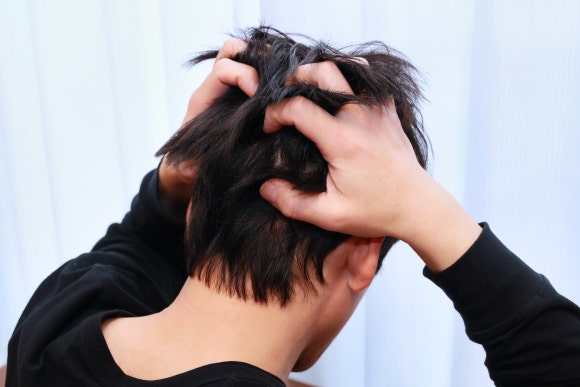
In 2024, researchers at Mahidol University in Thailand
conducted a study comparing the scalp conditions of men with androgenetic alopecia (AGA) and healthy men,
demonstrating that hair loss is not simply a hair problem.

Differences in scalp physiology: A comparison between AGA patients and healthy men
This study was conducted on a total of 62 men.
They consisted of 31 AGA patients with hair loss and 31 healthy controls, and the following items were measured on two areas of the scalp—the crown (the area where hair loss is progressing) and the occipital area (the area less affected by hair loss).
Skin Surface Lipid (SSL)
Simply put, this refers to the “oil” secreted from the scalp.
An appropriate amount of sebum helps protect the scalp, but excessive secretion can clog pores and cause inflammation or hair loss.
Transepidermal Water Loss (TEWL)
This indicates how quickly moisture inside the skin evaporates outward.
A high value means that the skin barrier function has weakened.
The same applies to the scalp.
Stratum Corneum Hydration (SCH)
This is an indicator of how moisturized the outermost layer of the skin is.
If this value is low, the scalp may become dry and the environment for hair growth may worsen.
Hair-loss scalps are oilier and drier.
The study found that the crown scalp of AGA patients showed the following characteristics:
-
SSL levels were higher (p=0.03),
-
Stratum corneum hydration was lower (p=0.02), and
-
Transepidermal water loss showed no statistically significant difference (p=0.31).
In other words, the area where hair loss is progressing is in a state of excess oil and insufficient moisture,
and this combination can harm scalp health and affect hair growth.
The more severe the hair loss, the oilier the scalp?
An even more interesting fact is that the more advanced the hair loss, the higher the SSL level was (r=0.61, p=0.03).
This suggests that scalp oiliness may not simply be a matter of individual constitution, but could be an indicator of hair loss progression.
Ultimately, this means that scalp-specific shampoos or moisturizing products may not be just marketing, but a scientifically grounded way of caring for the scalp.
New directions in diagnosis and treatment
Now, we should not only look at the symptom of “hair falling out,” but also evaluate the condition of the scalp.
The following approaches are likely to become important.
-
Measuring SSL and moisture status may become a new standard for hair loss diagnosis.
-
Scalp care centered on sebum control and moisturizing may help with prevention and treatment.
-
An objective, data-based approach is needed to analyze scalp conditions by comparing areas with progressed hair loss and areas without it.
Conclusion: Hair loss is a problem of scalp physiology
This study clearly shows that hair loss is not simply a problem of hair.
It scientifically reveals how the physiological organ called the scalp changes and how those changes affect the hair.
If you’ve recently felt that the crown of your head is dry yet oily, try touching your scalp with your hand once.
And if that is actually the case, it would be a good idea to visit a nearby clinic and have your hair loss condition checked.
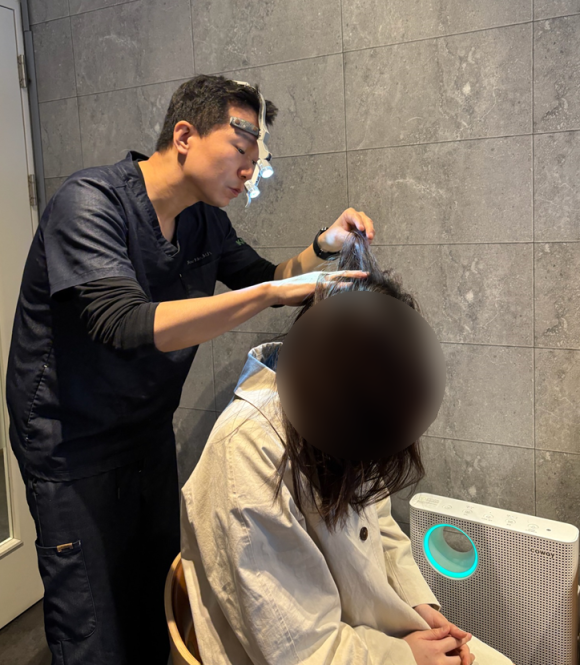
It’s time for hair to bloom, this was Kim Jin-oh.
Pilsaengsinmo (必生新毛).
Reference
Chanprapaph, K. et al. (2024). "Scalp Biophysical Characteristics in Males with Androgenetic Alopecia."
[In accordance with Article 56, Paragraph 1 of the Medical Service Act, this post is being written directly by a board-certified plastic surgeon for informational purposes. Hair loss surgery and treatment may have side effects, and you should make a careful decision through consultation with a specialist.]