Hair loss treatment strategies can vary depending on the area.
Hair loss does not simply mean the symptom of hair falling out.
The cause and treatment method can also differ depending on the area where hair loss is progressing and the degree of hair loss.
In particular, the M-shaped area (bangs, hairline) and the crown area, which many people worry about, often require different treatment approaches.
Recently, there are various treatment methods such as hair transplantation, follicle injections, and scalp micropigmentation, so
customized combination treatment strategies are being used to match each patient’s condition.
M-shaped area (bangs, hairline) hair loss
Cases where hair transplantation is considered depending on the condition
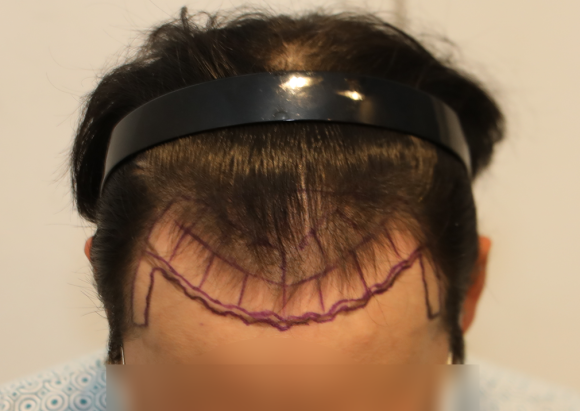
The bangs and hairline area are the areas most affected by DHT first.
If the hair follicles have become atrophied, recovery may be difficult with medication or injection treatment alone.
In such cases, hair transplantation may be considered, in which healthy follicles are taken from the back of the head and transplanted to the front of the forehead.
In particular, if the M-shaped area is wide or the hair loss has stopped progressing, transplantation may be actively considered.
If you wear your hair long, using only scalp micropigmentation on the M-shaped area may look unnatural and awkward, so caution is needed.
Depending on the condition, hair transplantation may be performed first, and then scalp micropigmentation may be used as a complementary method for areas that need additional coverage.
Crown hair loss
Cases where non-surgical treatment is considered depending on the condition
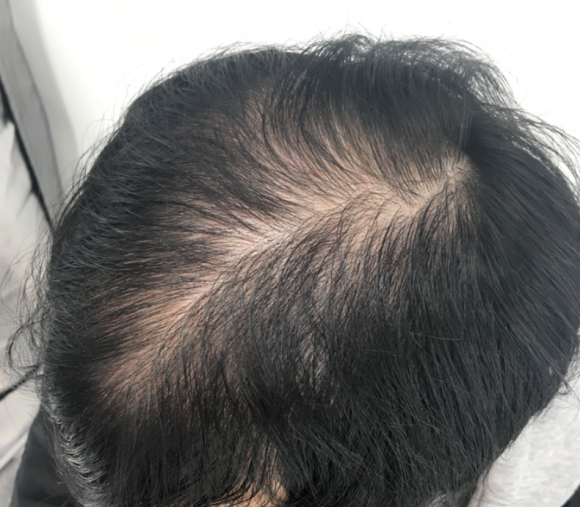
The crown area progresses relatively slowly, and in many cases the follicles are still alive.
For crown hair loss, non-surgical approaches may be considered first depending on the condition of the follicles.
One of the representative treatment methods is follicle injection treatment.
This method directly injects medication or nutritional ingredients into the scalp and may help restore the follicle growth environment
and suppress hair loss.
Because it acts locally on the scalp, the absorption rate of the medication is high,
and it is also a method that can be tried for people who have difficulty taking oral medication.
Treatment may be repeated over a certain period of time depending on the individual’s condition.
When is combination hair loss treatment needed?
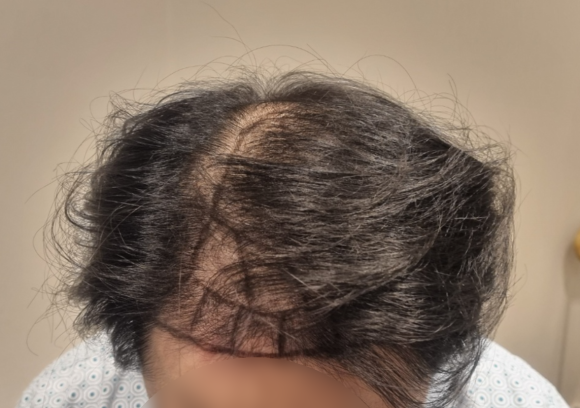
Because hair loss can differ by area, progression pattern, and condition from person to person,
many people experience both hairline and crown hair loss at the same time.
In such cases, the treatment order and methods may be combined to create a different treatment plan.
- Non-surgical treatment such as follicle injection treatment for the crown area
- Hair transplantation for the hairline area
- Scalp micropigmentation to supplement density for visual improvement
However, combination treatment should not always be performed all at once;
it is preferable to set the timing and method according to the stage of hair loss and the treatment goal.
Combination treatment order
- Follicle injection treatment – non-surgical. Applied to early-stage hair loss or mainly to the crown area
- Hair transplantation – for restoring areas where follicles have already disappeared. Mainly for the M-shaped area and hairline
- Scalp micropigmentation – used as a supplement when coverage after transplantation or treatment is insufficient
What is the interval between combination treatments?
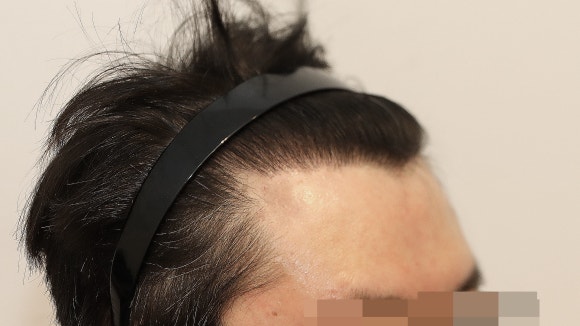
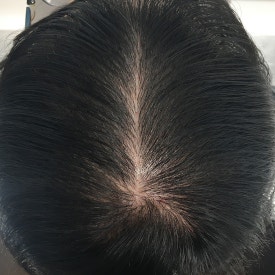
Hair transplantation + hair loss treatment
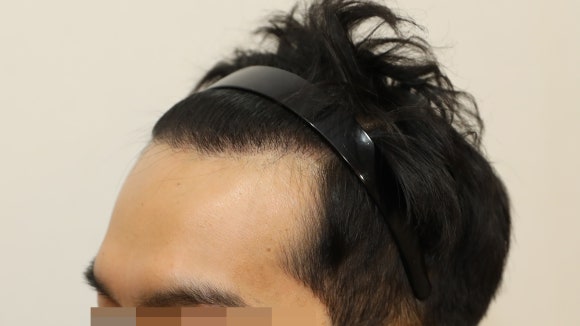
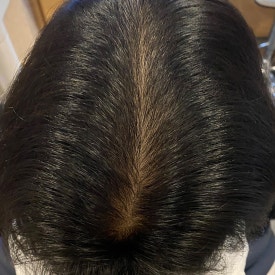
Hair transplantation + hair loss treatment
- Scalp micropigmentation after hair transplantation: at least 10–12 months later, after the results have stabilized
- Hair transplantation after scalp micropigmentation: possible after an interval of at least 1 month (after the pigment has stabilized)
- Combination of hair transplantation + follicle injection treatment: proceed after observing the recovery course and leaving an appropriate interval
- Combination of scalp micropigmentation + follicle injection treatment: may be combined depending on the skin condition
When performing scalp micropigmentation on a hair-transplanted area, the level of difficulty may vary depending on scarring or density,
so sufficient consultation with the practitioner is necessary.
Follicle injection treatment is a non-surgical method that can be repeated,
and in some cases it is used together with other procedures or applied sequentially.
Treatment process
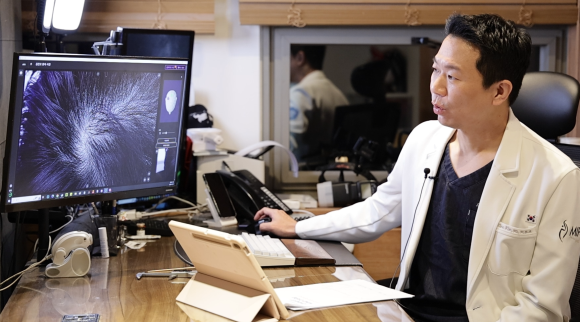
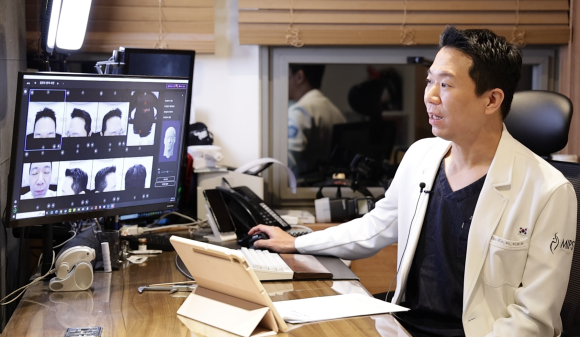
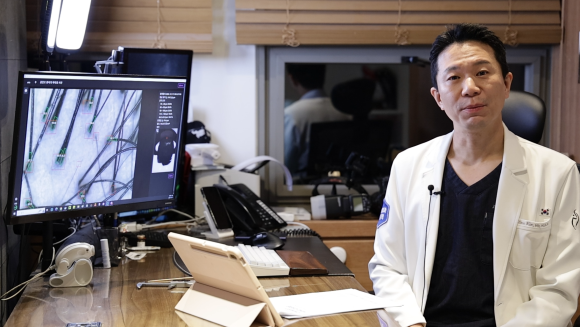
Before hair loss treatment, a hair loss test is performed to check the current condition, and counseling is provided based on the diagnostic results.
For hair loss, treatment planning is more important than simply choosing a treatment method.
Depending on the hair loss test results, an individual treatment plan may be established.
Which treatment to try first is decided through diagnosis and consultation,
and starting with one method and then gradually adjusting the treatment direction according to the response is also used.