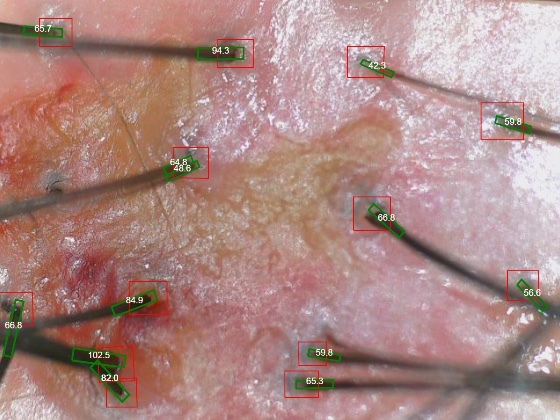
Seborrheic scalp dermatitis is a chronic skin condition in which inflammation repeatedly occurs in areas where sebaceous glands are overactive.
It commonly occurs on the scalp in particular and may appear as itching, redness, yellow or white greasy scales, and in severe cases, symptoms such as stinging and a feeling of heat.
�
This condition tends to occur more often in patients with hair loss.
This is because, as hair loss progresses, the sebaceous glands around the hair follicles enlarge
and sebum secretion increases, creating an environment where inflammation is more likely to develop.
Why seborrheic scalp dermatitis can affect hair loss
As hair loss progresses, the sebaceous glands become larger and sebum secretion increases.
Excess sebum blocks scalp pores and creates conditions that make inflammatory reactions more likely.
At this time, Malassezia, a yeast that normally resides on the scalp, uses sebum as a nutrient source
and rapidly multiplies, inducing an immune response that can cause or
worsen dermatitis.
When this inflammation is repeated, the overall scalp environment worsens,
and in severe cases, temporary hair loss (telogen effluvium) may be accompanied,
or the tissue around the hair follicles may be damaged, making continued hair loss possible, so caution is needed.
Treatment methods for seborrheic scalp dermatitis
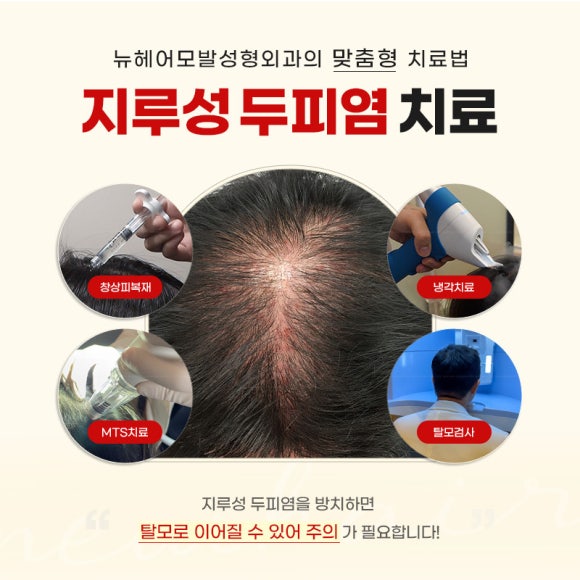
For patients with seborrheic scalp dermatitis that is difficult to resolve with simple shampoo or topical products alone,
a treatment system is operated that focuses not only on treatment but also on restoring scalp health.
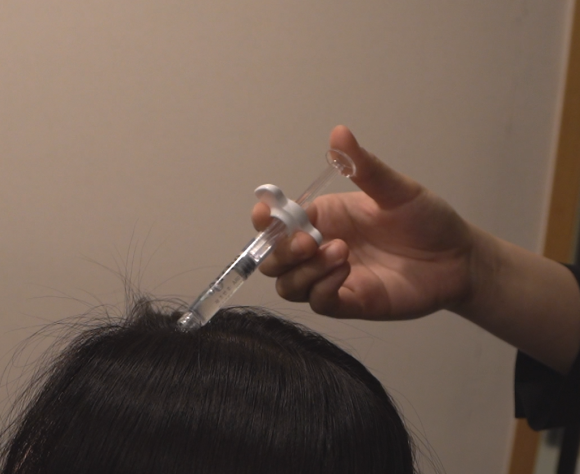
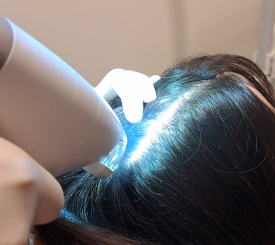
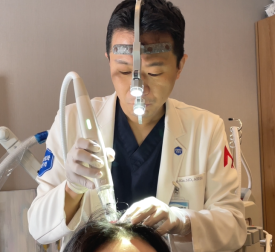
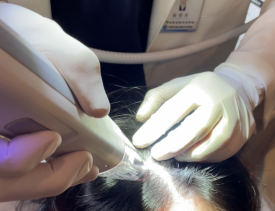
- Wound dressing material treatment
Wound dressing materials are medical materials originally used to help regeneration of wound areas and
can help soothe scalp inflammation and strengthen the skin barrier.
Using this ingredient, it is applied to scalp treatment aimed at suppressing inflammation, moisturizing, and inducing skin regeneration.
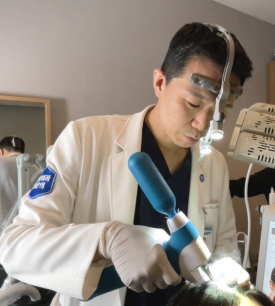
- Cooling therapy + MTS combination treatment
Cooling therapy helps stabilize inflamed areas and relieve itching and heat.
MTS is a treatment method that increases treatment efficiency by delivering active ingredients beneath the skin barrier through micro-needles.
Rather than being used alone, these two methods are combined in parallel
to allow treatment substances to reach the deeper layers of the scalp.
Hair loss and scalp examination before treating seborrheic scalp dermatitis
Treatment does not begin by looking only at simple symptoms.
In patients with scalp dermatitis accompanied by hair loss,
hair loss tests are conducted in advance to identify the cause and objectively analyze the scalp condition and the degree of hair loss progression.
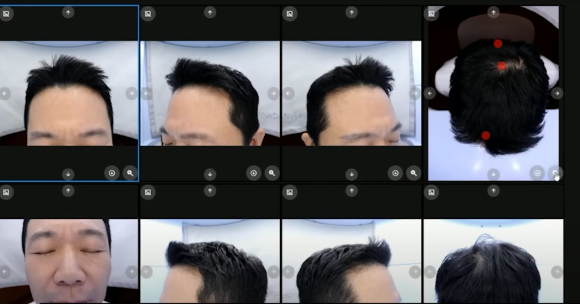
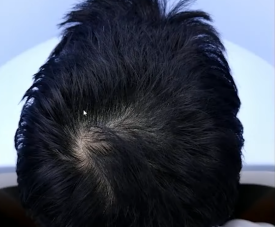
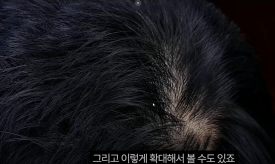
- 360-degree hair loss and scalp imaging
More than 500 images are captured while controlling indoor lighting, shooting angle, and light intensity.
The entire head is analyzed three-dimensionally to determine scalp inflammation, the range of hair loss, and the rate of progression.
Changes can be tracked every 3 months, 6 months, and 1 year, making it useful for checking treatment response.
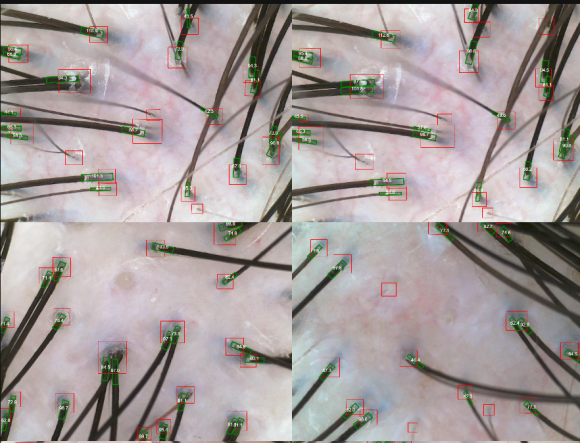
- AI scalp microscopy examination
The scalp and hair are magnified dozens of times or more to observe pore condition, hair follicle density, sebum secretion level, and whether inflammation is present.
Through an AI-based analysis algorithm, hair thickness, density, and hair loss patterns are quantitatively analyzed.
Based on these objective results, a treatment strategy tailored to each individual is established,
and the treatment effect is regularly monitored.
How can worsening of seborrheic scalp dermatitis be prevented?
Seborrheic scalp dermatitis is a common condition in which ongoing maintenance and management are more important than a complete cure.
Even after treatment, the following management strategies should be used together.
-
Maintain use of antifungal or steroid shampoo 2 to 3 times a week
-
Avoid hot water and strong scratching with fingernails, which can cause strong irritation, and wash by gently massaging with your fingertips.
-
When symptoms are mild, prevent recurrence through intermittent medication use
-
Avoid aggravating factors such as stress, lack of sleep, alcohol consumption, and dry environments
Seborrheic scalp dermatitis is a common condition that can appear together with hair loss,
but symptoms can be sufficiently relieved with appropriate treatment and management.
Through an integrated approach that considers both hair loss and scalp dermatitis,
it is necessary to systematically restore the patient's scalp health.
�