
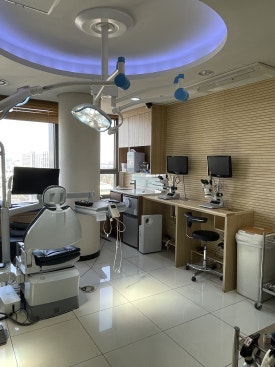
Many people spend quite a long time thinking before deciding to undergo a hair transplant.
Unexpectedly, the background of that 고민 is often driven more by emotions than by medical explanations.
Today, based on my experience meeting real patients and the results of a recent survey in a paper, I will talk about the three representative concerns that many people have before a hair transplant.
- What if it looks too obvious? – Concerns about naturalness
This was the part most people worried about.
44.3% of all respondents, nearly half.
“What if it ends up looking like hair that is obviously transplanted?”
“I’d feel embarrassed if it was clearly noticeable as transplanted hair.”
I hear comments like this very often in the clinic.
And there was a time when that concern was actually a reality.
In the past, hair transplants often produced unnatural results to the point that they were commonly called “doll hair,” and hairlines implanted in straight lines without design gave viewers an unfamiliar impression as well.
But times have changed.
Design planning, follicle placement techniques, and non-incisional methods have all advanced noticeably, and
experienced clinics are now delivering results so natural that others cannot tell surgery was performed.
In fact, except for immediately after the procedure, not many people say others noticed once they washed their hair and returned to daily life.
What people call “naturalness” is not simply a matter of technique.
In the end, it depends on which clinic you choose and which doctor you meet.
- Won’t it be too expensive? – Burden of cost
The second most common concern was cost.
31.4% chose this as their biggest worry.
“I want to have the surgery, but I’m afraid I just won’t be able to afford it.”
“What if several million won just disappears?”
Prices vary quite a bit by country.
Turkey averages $2,600, and the United States is over $13,000.
There is also a large difference among clinics in Korea.
But what matters here is not simply the price tag, but getting the surgery that is right for you.
When choosing a clinic, trust in the outcome should come before “it’s cheap.”
Because hair loss requires ongoing management, choosing carefully for the first surgery can be more economical in the long run.
- Will it hurt? – Fear of pain
The third concern was pain.
18.6% of respondents selected this item.
“Will the anesthesia be okay?”
“Can I go back to daily life afterward?”
It is natural to feel tense just from the word “surgery.”
But recently, anesthesia techniques have become more refined, and when the procedure is non-incisional, the pain is not that severe.
Even after surgery, pain is controlled for most people with one or two doses of pain relievers.
Pain is a subjective feeling, and that feeling is directly connected to fear.
However, many patients say:
“It hurt less than I expected. It was just a little uncomfortable.”
Hair transplants are no longer a surgery that needs to be hidden.
They can be the starting point for a small but important change for yourself.
But at that starting line, anyone would hesitate at least once.
You worry, compare, and search.
None of that is embarrassing at all; rather, it is a necessary process.
I sincerely hope that those reading this article will be able to make a decision that suits them with clearer information and greater confidence.
These concerns are things anyone can have, and they are fully solvable.
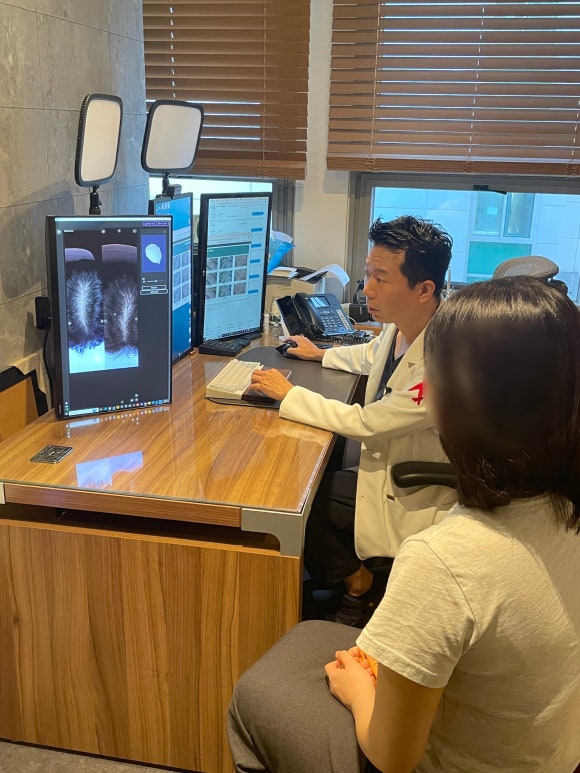
It is time for hair hair, this was Kim Jin-oh.
Filsaengsinmo (必生新毛).
References
Gogios, K. (2024). Digital Marketing Applications in Hair Transplants. Master’s Dissertation, Hellenic Open University.
[This post is being written directly by a board-certified plastic surgeon for informational purposes in accordance with Article 56, Paragraph 1 of the Medical Service Act. Hair loss surgery and treatment may have side effects, and please make a careful decision through consultation with a specialist.]