When watching movies, there is one image that appears especially often and feels strangely familiar.
Sharp eyes, a cold expression, and a shiny scalp.
Before long, this kind of portrayal becomes etched in the audience’s mind as a symbol of a “villain.”
Why are movie villains so often bald?

Source - Harry Potter and the Deathly Hallows Part 2
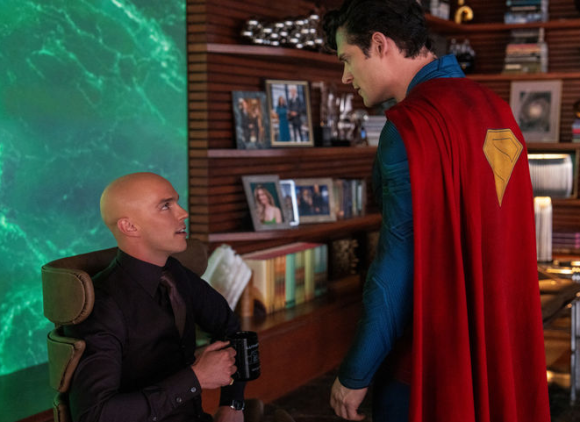
Source - Newsis
In films, characters without hair are often portrayed as abnormal, threatening, or even transcendent beings, and are used as villains.
It is hard to ignore the fact that one common trait among major villains such as Darth Vader, Voldemort, Lex Luthor, and Agent Smith is “hair loss.”
The scientifically analyzed “Bald Villain Theory”
A paper published in 2021 analyzed this cultural trend from an academic perspective. The research team selected the 100 “greatest movie villains of all time” from Ranker and the corresponding 100 heroes, then evaluated each character based on whether they had hair loss and the degree of hair loss.

The main findings were as follows:
-
64% of villain characters showed clear signs of hair loss, compared with only 22% of hero characters.
-
In particular, 90% of the top 10 villains showed moderate or greater hair loss (stage III or above).
-
In addition to male pattern hair loss, rare forms of hair loss such as alopecia areata totalis/universalis (AAT/U), frontal fibrosing alopecia (FFA), and post-burn scarring alopecia (PbSA) were also observed more often in villain characters.
The “bald villain” as a cultural device
Bald villain characters in films go beyond a simple physical trait and contain several symbolic devices.
-
Visual abnormality: An appearance with the scalp exposed increases visual attention on screen and can cause psychological discomfort in viewers.
-
Dehumanization: Hair symbolizes humanity, warmth, and naturalness. On the other hand, hair loss is perceived as a lack of humanity or as abnormality, and is used to highlight a villain’s unethical tendencies or status as someone outside the boundary.
-
Visualizing narrative corruption: Characters such as Gollum and Scott Evil had abundant hair in their good days, but as they were consumed by evil, hair loss gradually progressed.
This is used as a device that links personality change with changes in appearance.
Hair loss and social stigma: A shift into reality
The problem is that this kind of portrayal does not remain only in films.
The paper points out that visual depictions of hair loss can cause psychological burden and stigma for people with hair loss in the real world.
In fact, people with hair loss may experience issues such as depression, social avoidance, and social withdrawal, and some studies have reported that they felt a greater sense of stigma than patients with mental illness.
As hair loss changes appearance, people may feel that they have deviated from social standards, and this can lead to lower self-esteem and social isolation.
On the other hand, wearing wigs, medication, and hair transplantation have been shown to have a positive effect not only on restoring appearance but also on regaining social confidence.
The role of popular culture and improving perceptions of hair loss
The repeated film formula of “bald = villain” can help solidify social prejudice.
We need to move away from viewing hair loss simply as a deficiency or negative change and instead accept it as one aspect of diversity and individual characteristics.
This is a topic that should be considered not only in the medical field but across the cultural industry as a whole.
Going forward, bald characters should also be portrayed as intelligent, empathetic, and ethical people, and I hope for an atmosphere in which hair loss can be accepted as part of identity rather than a symbol of evil.
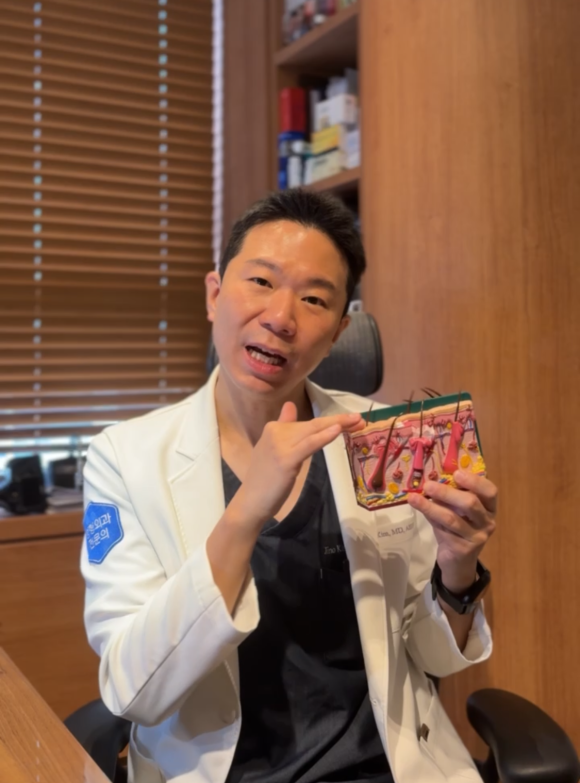
It’s time to do hair hair—this was Kim Jin-oh.
May new hair be born (必生新毛).
References
Kyriakou, G., Drivelou, V., & Glentis, A. (2021). Villainous hair: ba(l)d to the bone – would they be so evil if they had hair?. British Journal of Dermatology, 184(1), 156–157. https://doi.org/10.1111/bjd.19508
[In accordance with Article 56, Paragraph 1 of the Medical Service Act, this post is written directly by a board-certified plastic surgeon for informational purposes. Hair loss surgery and treatment may have side effects, and you should make a careful decision after consulting with a specialist.]