Human hair is remarkably diligent.
It quietly does its job, following the anagen phase (growth phase), catagen phase (regression phase), and telogen phase (resting phase).
But when this rhythm is disrupted by genetics, stress, hormonal influences, and other factors, hair loss begins.
When you start learning more seriously about hair loss, you naturally come across the name “minoxidil.”
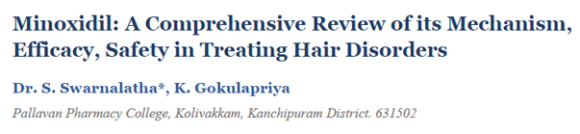
We will take a closer look, one by one, at how this drug, originally developed as a treatment for high blood pressure, became a hopeful therapy for so many hair loss patients, and what biological actions it has beyond simple vasodilation, based on a recent paper (Dr. S. Swarnalatha, 2025).
Minoxidil: just a “blood flow enhancer”?
Minoxidil is a representative vasodilator.
It opens ATP-sensitive potassium channels (KATP channels), expands capillaries,
and thereby supplies more oxygen and nutrients to hair follicles.
However, recent studies do not focus only on improved blood flow.
Minoxidil can reduce inflammation, send signals to stem cells, and even affect gene expression,
so it has a much more complex mechanism of action.
Minoxidil seen through seven mechanisms of action
This paper explains the action of minoxidil through the following seven pathways.
- Improved blood flow: By opening potassium channels, it increases blood flow and promotes the supply of
necessary nutrients and oxygen to hair follicles.
-
Anti-inflammatory effect: It inhibits the production of inflammation-inducing substances such as IL-1α and prostacyclin.
-
Activation of the Wnt/β-catenin pathway: It stimulates key signaling involved in hair follicle regeneration through VEGF.
-
Possible androgen suppression: Some studies have reported results showing reduced activity of 5α-reductase type 2.
-
Promotion of DNA synthesis: It rapidly shifts hair follicles in the telogen phase
to the growth phase, inducing hair growth.
- Regulation of the hair growth cycle: It prolongs the growth phase and shortens the resting phase,
improving both density and thickness.
- Immune response modulation: In autoimmune hair loss, suppression of local immune activity has also been observed.
Among these, the Wnt/β-catenin pathway is an important pathway responsible for cell differentiation and regeneration, and the fact that minoxidil activates
this pathway through VEGF is especially noteworthy.
Active “minoxidil sulfate” and predicting response
The minoxidil we apply is actually a prodrug.
It must be converted within the hair follicle into the active form, minoxidil sulfate, by sulfotransferase enzymes, especially SULT1A1, for it to take effect.
Because the activity of this enzyme differs from person to person, some people respond well, while
others may show no response at all.
To predict this, the Follicular Sulfotransferase Assay (FSA) was introduced.
By measuring enzyme activity in hair, an OD value of 0.4 or higher suggests that an effect can be expected.
Recently, studies have also been underway to use this test to predict response to oral minoxidil.
The potential of oral minoxidil and precautions
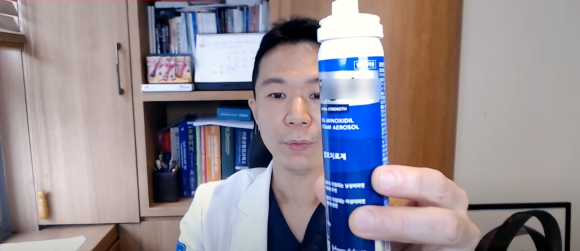
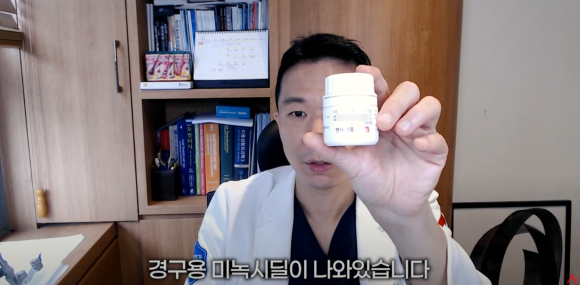
Oral minoxidil was originally used as a treatment for hypertension, but recently it has been drawing renewed attention for hair loss treatment at low doses (0.25–2.5 mg).
It can be a good alternative, especially for patients who find topical formulations cumbersome or whose scalp is strongly irritated.
However, because it acts systemically, side effects such as edema, low blood pressure, and palpitations can occur, so whether to take it should be carefully decided according to the patient’s individual condition.
Synergy with adipose-derived cells (ASC)
One of the most interesting parts of the paper is the finding that minoxidil increases the mobility and angiogenic ability of adipose-derived cells (ASC), and these cells promote dermal papilla cell (DP cell) growth by secreting growth factors such as VEGF, PDGF-C, and PD-ECGF.
In other words, minoxidil does not only act directly; it also plays the role of an “indirect regulator” that shapes and stimulates the surrounding environment.
What types of hair loss can it be used for?
Minoxidil is not limited to treating androgenetic alopecia (AGA).
It is being used in various forms of hair loss as follows.
| Condition | Purpose of use | Main effect | Evidence |
|---|
| Androgenetic alopecia (AGA) | FDA-approved | Increased density, increased thickness | Large-scale clinical studies, SULT1A1-based response prediction |
| Alopecia areata (AA) | Adjunctive treatment | Possible moderate or less effect | Some RCTs, possible immunomodulatory effect |
| Telogen effluvium (TE) | Reduced hair shedding | Effect reported with oral form | Responsive to stress-related factors |
| Scarring alopecia (FFA, CCCA, TA) | Maintaining growth of remaining follicles | Adjunctive effect when used in combination therapy | Anti-inflammatory effect, improved blood flow |
| Eyebrow/beard enhancement | Cosmetic purpose | Efficacy demonstrated | Multiple split-face clinical trials |
| Hair follicle disorders (Monilethrix, etc.) | Treatment of rare diseases | Effective in some cases | Case series and long-term observation |
Minoxidil was once developed as a treatment for high blood pressure, but an unintended side effect, hypertrichosis, opened up new possibilities.
It is now being reconsidered not as a simple blood flow enhancer, but as a drug that regulates hair follicles and the surrounding microenvironment.
In the future, response prediction based on biomarkers such as FSA and personalized treatment through combination therapy with adipose cells or growth factors will be studied more actively.
In that way, minoxidil is establishing itself not as an old new drug, but as a treatment option that continues to evolve.
Now it’s time for hairhair, this was Kim Jino.
필생신모(必生新毛).
References
Swarnalatha, S. & Gokulapriya, K. (2025). Minoxidil: A Comprehensive Review of its Mechanism, Efficacy, Safety in Treating Hair Disorders. International Journal of Scientific Research and Technology, 2(7), pp.33–51.
[This post is being written directly by a board-certified plastic surgeon for informational purposes in accordance with Article 56, Paragraph 1 of the Medical Service Act. Hair transplant surgery and treatment may have side effects, and they should be carefully decided upon through consultation with a specialist.]