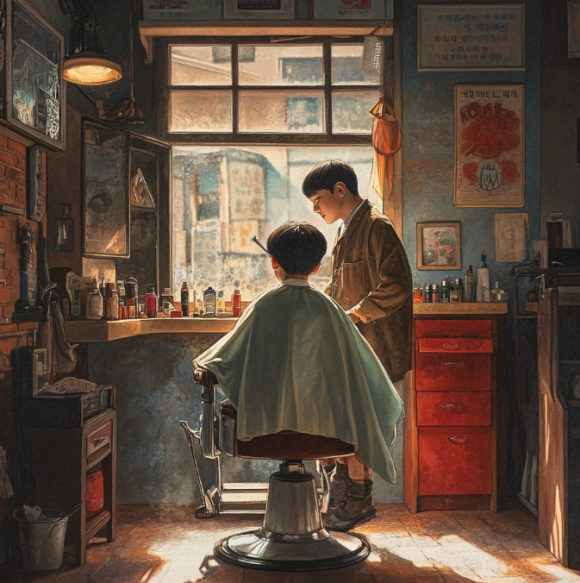
When did I start paying attention to hair?
I think it was probably from middle school.
Back then, I had a short sports haircut and got my hair cut at the neighborhood barbershop.
In those days, it was rare for boys to go to a hair salon, and even if they did, they often drew unnecessary attention.
Sitting in the barber chair, wrapped in a cape, listening to the old electric clippers go “whirr,” I would look at myself in the mirror.
Watching my hair being cut, I used to think:
“If hair didn’t grow, none of this would be necessary.”
But hair kept growing, and I cut it again.
In that repetitive cycle, I suddenly became curious.
Whose is long hair, and whose is short hair?
Long hair and short hair are more deeply tied to gender than we often realize.
During my college years, I had a female friend who always kept her hair short.
Then one day, she suddenly showed up with long hair.
Everyone was surprised, and the first words out of their mouths were, “Is something wrong?”
She had simply wanted a change, but people reacted differently.
This experience was a scene that showed just how deeply gender and hair are connected.
In fact, the norm of “women have long hair, men have short hair” has changed across eras and cultures.
During the Joseon Dynasty, men also wore their hair long and braided it, and even in the West, men wore long hair or wigs until the 18th century.
But as modern times arrived, the value of “neatness” made short hair for men seem natural, while long hair for women became a symbol of “femininity.”

Once, during a hair transplant consultation, I talked about hair length.
A patient who had kept long hair in his younger years said that when he began working, he was pressured to cut it short, and eventually changed to a neat style.
But after hair loss set in, he wanted to grow it long again, but said it was already too late.
Hearing that, I thought that perhaps the period in which we can freely choose the hairstyle we want is limited.
The same is true for women. In the clinic, I often meet people who regret cutting their hair into a bob.
If you keep long hair and cut it on impulse, it takes a long time to grow back. One person said this:
“Long hair is a careful decision, but short hair feels like a momentary impulse.”
That is true. Cutting it short is easy, but growing it back takes a long time. That is why cutting hair is often not just a change in style, but a “statement.”
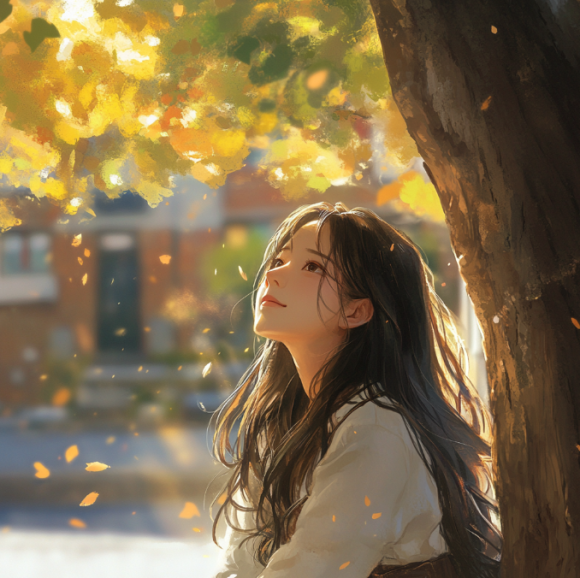
Hair is not simply a part of the body. It is memory, habit, and identity.
At an overseas conference, a male doctor I met said that the reason he kept long hair was not style, but “conviction.”
For him, long hair was the way he could present himself most naturally.
Hearing that, I thought:
We believe we express ourselves through our hair, but perhaps hair is what defines us.


Whether long or short, we are telling something through that length.
It is not merely a matter of beauty, but an expression of freedom, a reflection of norms, and an inner change.
So when cutting or growing hair, it would be good to remember that the act is not simply a “style change.”
Perhaps in that moment, we are having a conversation with ourselves through our hair.