I recently attended a lecture held as part of the Korean Medical Association’s Medical Policy Senior Course. The lecturer was Senior Advisor Jeong Young-seok, who served as director and deputy director at the Financial Supervisory Service and led major institutional designs such as the introduction of the bancassurance system and revisions to the Insurance Business Act and the Financial Consumer Protection Act. He is currently working as an advisor at Bae, Kim & Lee LLC and continues to provide policy advice on insurance and finance. With his long field experience and the perspective of a system designer, the lecture was more realistic and persuasive than ever.
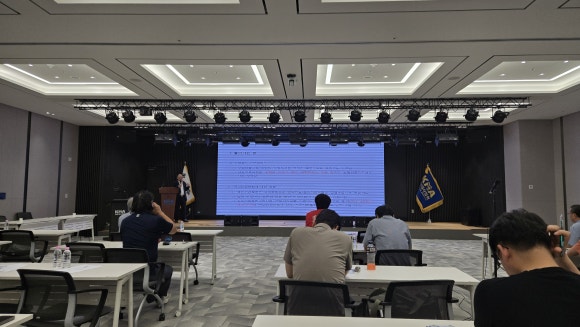
During Senior Advisor Jeong Myeong-seok’s lecture on actual medical expense insurance
Structural Problems of Actual Medical Expense Insurance
Senior Advisor Jeong emphasized that actual medical expense insurance is essentially a policy with “low severity, high frequency.” In other words, because it involves many frequent visits and small claims rather than major accidents, it is structurally difficult to maintain financial sustainability. He also pointed out that as actual medical expense policyholders use National Health Insurance more often, the National Health Insurance budget ultimately incurs an additional burden of several trillion won each year. From the patient’s perspective, it is important to understand that the reason premiums rise is not simply about insurers’ profits, but stems from structural limitations in the system itself.
Changes from the First to the Fourth Generation
The lecture provided a clear overview of the evolution of actual medical expense insurance.
-
1st generation (1999~2009): 100% coverage for both covered and non-covered services. Discontinued because the loss ratio became unsustainable.
-
2nd generation (2009~2017): Introduced deductibles and coverage limits, and established outpatient and inpatient standards.
-
3rd generation (2017~2021): Physical therapy, MRI, injections, and similar items were separated into riders, and non-covered benefit management was strengthened.
-
4th generation (2021~ ): Discount and surcharge system fully introduced; if non-covered benefit usage exceeds 1 million won, premiums can rise by up to 300%.
From the 4th generation onward, there are many changes that patients can directly feel. It has become more convenient because claims can be filed immediately through a mobile app after hospital treatment, but at the same time, it is essential to know that heavy use of non-covered services can significantly increase premiums.
The Upcoming 5th Generation Actual Medical Expense Insurance
The final part of the lecture covered the outlook for the upcoming 5th generation actual medical expense insurance. The direction presented was to strengthen coverage mainly for severe illnesses while significantly reducing non-severe, non-covered items. It was also clearly stated that physical therapy, extracorporeal shock wave therapy, proliferative therapy, and various injections are highly likely to be excluded from coverage. From the patient’s perspective, it is important to carefully check whether the treatment you receive will be covered in the future, and especially when choosing non-covered treatment, you must consider both insurance coverage and potential out-of-pocket costs.
Key Points Patients Should Remember
-
Premium surcharge condition: If annual non-covered medical expenses exceed 1 million won, next year’s premium may rise significantly.
-
Rider limits: Physical therapy, extracorporeal shock wave therapy, injections, MRI, and similar items have annual limits on the number of uses and amount, so they are not unlimited benefits.
-
Coverage focused on severe illness: In the future, actual medical expense insurance is likely to focus more on severe illnesses than on everyday, minor treatments.
In economics, a “rational choice” means acting when the benefit is greater than the cost. If an individual acts rationally and the result causes social loss, that is not the individual’s fault, but a problem arising from deficiencies in the system. The same applies to actual medical expense insurance. Rather than blaming patients or doctors for abusing the system, we should first ask whether the system itself created such incentives. In the end, what is needed is not shifting responsibility to individuals, but revising the system in a sustainable direction.

With my college classmate, Dr. Lee Geun-wook
| Category | Main Features | Deductible | Non-covered Benefit Management | What Patients Should Know |
|---|
| 1st generation (1999~2009) | Unlimited 100% coverage for covered and non-covered services | None | None | No longer available for new enrollment |
| 2nd generation (2009~2017) | Standardized coverage, outpatient/inpatient criteria established | 10~20% for covered and non-covered services | Some limits introduced | Existing policyholders remain covered |
| 3rd generation (2017~2021) | Physical therapy, MRI, injections, and similar items separated into riders | 1020% for covered services, 2030% for non-covered services | Surcharge applied if non-covered expenses exceed 1 million won | Be sure to check whether riders are included |
| 4th generation (2021~ ) | Discount and surcharge system fully introduced | 20% for covered services, 30% for non-covered services | Annual limits on number of uses and amount by rider item | Premiums can surge if annual expenses exceed 1 million won |
| 5th generation (planned) | Coverage centered on severe illnesses, non-covered items greatly reduced | Linked to National Health Insurance out-of-pocket rate | Physical therapy, extracorporeal shock wave therapy, etc. expected to be excluded | Future coverage will likely focus on severe treatments |
Written by Kim Jin-oh, MD, New Hair Plastic Surgery Clinic (Public Relations Director, Korean Society of Plastic and Reconstructive Surgeons / Senior Committee Chair, Hair Loss Division, Korean Society of Laser Dermatology and Hair Research)