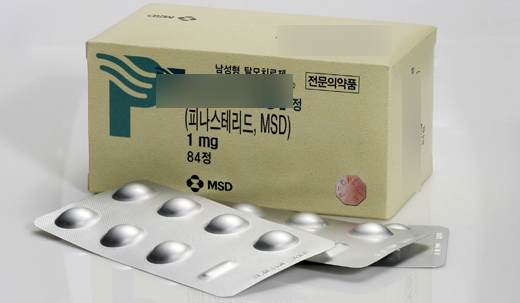
Source - Yakup News
Finasteride
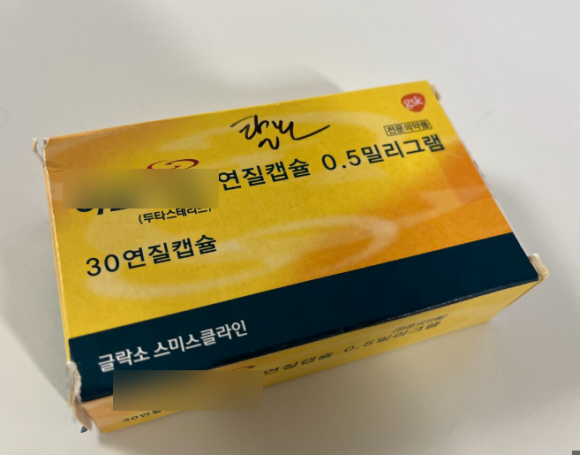
Source - Radiance Report
Dutasteride
Many people who take 5-alpha reductase inhibitors (5ARIs), hair loss treatments such as finasteride and dutasteride, wonder what changes may occur in testosterone or body hair.
In this article, I have organized the questions patients ask most often.
Q1. If you take a 5-alpha reductase inhibitor,
does testosterone rise sharply?
A. No. When taken, dihydrotestosterone (DHT) decreases significantly,¹ but total testosterone (total T) and free testosterone (free T) either remain almost unchanged or rise only slightly.²
This degree of difference does not cause a major impact on the body's hormone system or metabolism.
According to a study, “total testosterone and free testosterone either do not change or increase slightly after taking the drug, and they do not have a meaningful effect on metabolism or the hormonal axis.”²
Q2. Is it true that scalp hair and body hair respond differently?
A. Yes, that is true. DHT promotes hair loss by thinning scalp hair, but it plays a role in making body hair grow better.³
Therefore, when using an inhibitor:
In fact, some people who use this medication for benign prostatic hyperplasia say that “my beard grows more slowly than before.”
Q3. Is the “increase in body hair” that some people mention wrong?
A. Yes, that is incorrect information.
Although testosterone may rise very slightly at the beginning of treatment,² it is not enough to produce a noticeable change in body hair.
In the long term, it actually tends to reduce body hair.³
Q4. Finasteride and dutasteride: What is the relationship between testosterone and body hair changes when taking them? Summary only!
-
Taking a 5-alpha reductase inhibitor → DHT clearly decreases¹
-
Total/free testosterone → no major change²
-
Scalp hair → becomes healthier and hair loss improves³
-
Body hair → gradually decreases³
| Question | Key Answer |
|---|
| Testosterone change? | Almost no change² |
| Scalp hair response? | Thicker and hair loss improves³ |
| Body hair response? | Tends to decrease³ |
| Whole-body hormonal effect? | No meaningful change² |
Now it is time for hairhair, this was Kim Jin-oh.
Pilsaengsinmo (必生新毛).

Written by: Kim Jin-oh of New Hair Plastic Surgery (Public Relations Director, Korean Association of Plastic Surgeons / Academic Director, Korean Hair Research Society)
References
-
Clark RV, Hermann DJ, Cunningham GR, Wilson TH, Morrill BB, Hobbs S. “Marked suppression of dihydrotestosterone in men with benign prostatic hyperplasia by dutasteride, a dual 5α-reductase inhibitor.” Journal of Clinical Endocrinology & Metabolism, 2004.
-
Gormley GJ, Stoner E, Bruskewitz RC, Imperato-McGinley J, Walsh PC, McConnell JD, Andriole GL, Geller J, Bracken BR, Tenover JS, et al. “The effect of finasteride in men with benign prostatic hyperplasia.” New England Journal of Medicine, 1992.
-
Kaufman KD. “Androgens and alopecia.” Molecular and Cellular Endocrinology, 2002.
[This post is written directly by a board-certified plastic surgeon for informational purposes in accordance with Article 56, Paragraph 1 of the Medical Service Act. Hair loss surgery and treatment may have side effects, and you should make a careful decision after consulting with a specialist.]