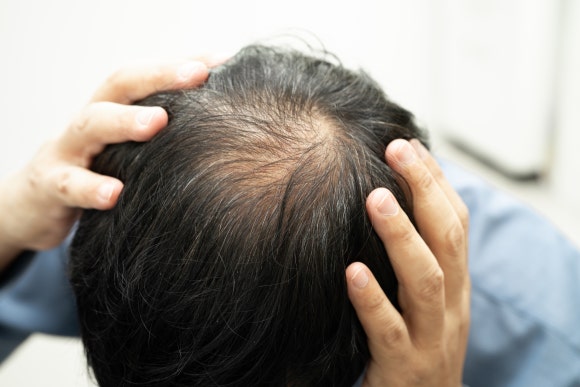
Patients often ask about the relationship between hair loss and height.
According to the results of a large-scale genetic study recently published in an international academic journal, there is an interesting report suggesting a certain connection between height and
male-pattern hair loss¹.
In this post, I will answer the questions patients often ask in a Q&A format.
Q1. Are height and hair loss actually related?
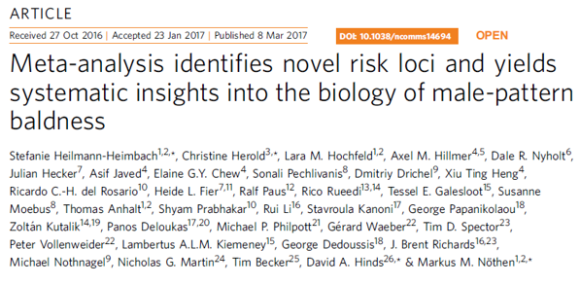
Yes. In a study published in Nature Communications, a GWAS (genome-wide association study)
of 22,518 men of European ancestry identified 63 genetic loci associated with male-pattern baldness (MPB).
Some of them were also simultaneously linked to short stature (being short)¹.
In other words, this suggests that not just appearance traits, but growth and development, as well as hormone sensitivity, may influence both hair loss and height.
Q2. Why is hair loss said to occur more easily in men who are shorter?
The study proposed accelerated puberty and early closure of the growth plates as the main mechanisms.
In the case of shorter height, hormone secretion patterns may differ during growth, which could increase androgen receptor sensitivity.
At that point, hair follicles that respond sensitively to DHT (dihydrotestosterone) enter the regression phase more quickly, which can lead to early hair loss.
Q3. Then does being taller mean a lower risk of hair loss?
It cannot be stated definitively.
The association between height and hair loss was found at the level of genetic tendency, not as a rule that applies identically to every individual.
In actual clinical practice, there are many patients whose hair loss progresses even though they are tall.
Therefore, the interpretation that "being tall means being free from hair loss" is not correct.
Q4. Is it related to other health issues besides hair loss and height?
Yes. The study explains that hair loss also shares a certain genetic basis with diseases associated with male hormones, such as benign prostatic hyperplasia and cardiovascular disease.
In real consultation settings as well, when patients are told that "hair loss is not simply a cosmetic issue, but part of overall health," they often understand the need for treatment more easily.
Q5. How do you explain this to patients in clinical practice?
I usually say this:
"Hair loss is not only a problem of the hair itself, but a phenomenon in which growth, hormones, and genetics are all intertwined."
The connection between height and hair loss can also ultimately be understood as a difference in hormone sensitivity during development.
Therefore, do not leave hair loss untreated; early diagnosis and management are important.
Is Male-Pattern Hair Loss and Height Genetically Linked?
Summary table
| Category | Content |
|---|
| Study size | GWAS meta-analysis of 22,518 men of European ancestry¹ |
| Main finding | Identified 63 genetic loci related to male-pattern hair loss; some were also associated with short stature |
| Proposed mechanism | Early puberty, early closure of growth plates, increased androgen sensitivity |
| Clinical significance | Hair loss can be used as an indicator of overall health; emphasizes the need for early diagnosis and treatment |
Is Male-Pattern Hair Loss and Height Genetically Linked?
Conclusion
Hair loss is not simply a phenomenon that appears after middle age, but is also related to the trajectory of development and hormones that begins in childhood.
The finding that hair loss is observed more often in men of shorter height shows this well.
The important point is not to oversimplify this as "shorter men will definitely lose hair," but to gain a new perspective that understands hair loss as part of overall health.
Now it is time to hairhair, Kim Jin-oh.
May new hair grow (必生新毛).

Written by: Kim Jin-oh of New Hair Plastic Surgery (Public Relations Director, Korean Society of Plastic and Reconstructive Surgeons / Academic Director, Korean Academy of Laser, Dermatology and Hair)
References
Heilmann-Heimbach, S., Herold, C., Hochfeld, L.M., Hillmer, A.M., Nyholt, D.R., Hecker, J., … & Nöthen, M.M. (2017). Meta-analysis identifies novel risk loci and yields systematic insights into the biology of male-pattern baldness. Nature Communications, 8, 14694. https://doi.org/10.1038/ncomms14694
[In accordance with Article 56, Paragraph 1 of the Medical Service Act, this post is written directly by a board-certified plastic surgeon for informational purposes. Hair transplant surgery and treatment may have side effects, and you should make a careful decision after consulting with a specialist.]