When people think of hair loss treatment, they often first think of hormone inhibitors or hair growth agents.
However, recent research is drawing attention to a slightly different perspective.
That is, electrical signals inside cells.
These electrical changes may act as a switch for hair growth.
In this post, I will organize this new research trend around questions that patients often ask.
Q1. What do electrical signals have to do with hair regeneration?
Source - mypathologyreport.ca
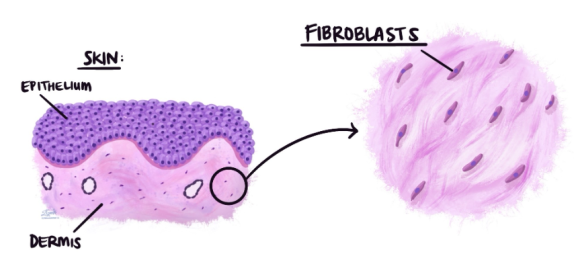
Fibroblast
According to recent studies, a cell called a fibroblast plays a key role in hair follicle regeneration.
When these cells enter a hyperpolarized state, stronger signals that promote hair growth are transmitted to the hair follicle.
In simple terms, the cell’s electrical state acts like a switch that determines whether hair will grow or not².
Q2. How is rare disease research connected to hair loss treatment?
Source - msdmanuals
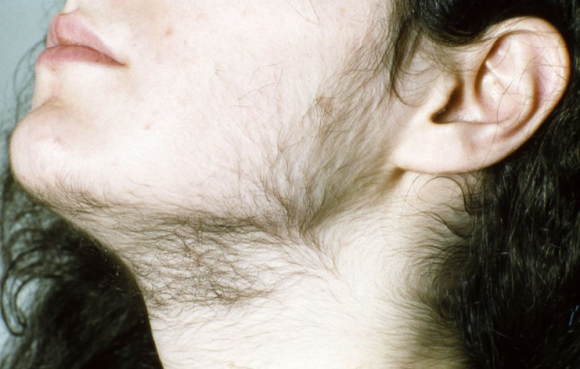
Hypertrichosis
The starting point was a rare disease called congenital generalized hypertrichosis (CGHT).
While studying this condition, in which excessive hair grows all over the body, researchers found clues that the cause of hair overgrowth is related to cellular electrical signals¹³⁴.
The fact that the mechanism identified in this process could also be applied to hair loss treatment is highly significant.
Q3. Is it also connected to existing drugs, especially minoxidil?

Yes. The well-known minoxidil has a potassium channel-opening effect.
Researchers suggested that this effect may be related not only to simple vasodilation but also to regulation of fibroblast electrical signaling²⁶.
In other words, minoxidil may contribute to hair follicle activation by mediating electrical stimulation.
Q4. What kinds of treatments could be possible in the future?
Approaches that use electrical signals could develop in several ways.
-
Drugs: new compounds aimed at regulating cellular membrane potential
-
Devices: wearable devices that deliver microcurrents or electromagnetic signals to the scalp
-
Protein/peptide formulations: topical delivery of substances that affect electrical balance
These methods open the door to implementing personalized hair loss treatment in combination with existing drugs²⁵.
Q5. Are there still limitations?
Of course. So far, the research has mainly been at the cell and animal experiment stage.
It still needs to be verified whether the same effects appear when applied to humans and whether long-term safety can be secured.
The possibility of unexpected side effects arising during the process of artificially regulating electrical signals also cannot be ruled out.
Therefore, clinical research must absolutely support this².
Could Electrical Stimulation Hair Loss Treatment Become a New Key to Hair Regeneration?
Key Summary Table
| Category | Content |
|---|
| Starting point | Rare disease CGHT research¹³⁴ |
| Key finding | Fibroblast electrical signaling (hyperpolarization) is favorable for hair regeneration² |
| Connection to existing treatments | Minoxidil’s effect may be related to cellular membrane potential regulation²⁶ |
| Expected treatments | Electrical signal-regulating drugs, scalp current devices, protein/peptide formulations²⁵ |
| Limitations | Lack of patient studies, long-term safety verification needed² |
Now it’s time for hairhair, this is Kim Jin-oh.
Filsaengsinmo (必生新毛).
Written by: Kim Jin-oh of New Hair Plastic Surgery (Public Relations Director, Korean Society of Plastic Surgeons / Academic Director, Korean Association of Laser, Dermatology and Hair)
References
-
Sprecher E. What do rare and common have in common? British Journal of Dermatology, 2022;187:279-280.
-
Chen D, Yu Z, Wu W et al. Fibroblast bioelectric signaling drives hair growth. Cell, 2025 (in press). doi:10.1016/j.cell.2025.07.035.
-
Sun M, Li N, Dong Z et al. Copy-number mutations on chromosome 17q24.2-q24.3 in congenital generalized hypertrichosis terminalis. American Journal of Human Genetics, 2009;84:807-813.
-
Mo R, Xu Z, Wang H et al. Narrowing the genomic region of autosomal-dominant congenital generalized hypertrichosis terminalis. JAMA Dermatology, 2021;157:733-735.
-
Felix RC, Medeiros MC, Elamine Y et al. Extracellular bioelectrical lexicon: detecting rhythmic patterns within dermal fibroblast populations. Scientific Reports, 2025;15:29857.
-
Shorter K, Farjo NP, Picksley SM, Randall VA. Human hair follicles contain two forms of ATP-sensitive potassium channels, only one of which is sensitive to minoxidil. FASEB Journal, 2008;22:1725-1736.
[In accordance with Article 56, Paragraph 1 of the Medical Service Act, this post has been written directly by a board-certified plastic surgeon for informational purposes. Hair transplant surgery and treatment may involve side effects, and you should make a careful decision after consulting with a specialist.]