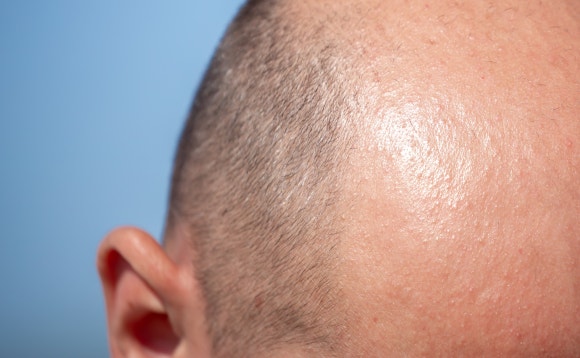
Is hereditary hair loss simply a problem of losing hair?
Or does it also affect our minds and lives?
In this post, I’ve organized the questions patients often ask into a Q&A format based on research findings.
Hereditary Hair Loss: How Does It Affect Quality of Life?
Summary
-
46% of patients with hereditary hair loss experience feelings of depression1.
-
About 12% experience body image concerns3.
-
Self-esteem is generally maintained, but some people show a clear decrease5.
-
More than half are not greatly affected in terms of quality of life, but some do experience discomfort6.
Q1. Is hereditary hair loss related to depression?
Yes, it is. According to one study, 46% of patients with hereditary hair loss showed depressive symptoms1.
Most were at a borderline or moderate level, and the more severe the hair loss, the stronger the feelings of depression. The study explains it this way.
"Hair loss can cause emotional stress and may lead to anxiety, lowered self-esteem, and a decline in life satisfaction.2.
Q2. Does it affect appearance or body image as well?
About 12% of patients experienced dissatisfaction with their appearance and body image concerns3. Behaviors such as spending time looking in the mirror, covering areas of hair loss with hats or other items, and avoiding social gatherings were observed.
In particular, for women, hair is connected to sexual attractiveness and identity, so the psychological impact is greater4.
"Women’s hair is regarded as an important part of sexual attractiveness and identity, and hair loss leads to reduced attractiveness and anxiety.4.
Q3. How does it affect self-esteem?
Most patients (88%) maintained average levels of self-esteem, but 12% showed low self-esteem5.
This shows that for some patients, hair loss can have a significant impact on their sense of self-worth.
Q4. To what extent does it lower quality of life?
Interestingly, more than half (62%) responded that there was "no major impact on quality of life."
However, the remaining roughly one-third of patients felt discomfort in social relationships or daily life6.
In other words, it shows that there is a wide difference depending on the individual.
Q5. What should doctors consider?
Hereditary hair loss is not simply a cosmetic issue, but a problem directly linked to the patient’s psychological and social health.
Therefore, when treating patients with hair loss, doctors should also consider mental health aspects and, if necessary, recommend consultation with a psychiatrist.
It's time to grow hairhair, this is Kim Jin-oh.
필생신모(必生新毛).
Written by: Kim Jin-oh, New Hair Plastic Surgery (Public Relations Director, Korean Society of Plastic and Reconstructive Surgeons / Academic Director, Korean Association of Laser Dermatology and Hair Restoration)
References
1 Singh S, Sawant N. “Does hair loss impact mood, self-esteem, body image, and quality of
life in patients of androgenetic alopecia?” Annals of Indian Psychiatry, 2025.
2 Tucker P. “Bald is beautiful? The psychosocial impact of alopecia areata.” Journal of
Health Psychology, 2009.
3 Littleton HL, Axsom D, Pury CL. “Development of the body image concern inventory.”
Behaviour Research and Therapy, 2005.
4 Dinh QQ, Sinclair R. “Female pattern hair loss: Current treatment concepts.” Clinical
Interventions in Aging, 2007.
5 Rosenberg M. Society and the Adolescent Self-Image. Princeton University Press, 1965.
6 Gupta S, Goyal I, Mahendra A. “Quality of life assessment in patients with androgenetic
alopecia.” International Journal of Trichology, 2019.
[This post is written directly by a plastic surgery specialist for informational purposes in accordance with Article 56, Paragraph 1 of the Medical Service Act. Hair loss surgery and treatment may have side effects, and you should make a careful decision after consulting with a specialist.]