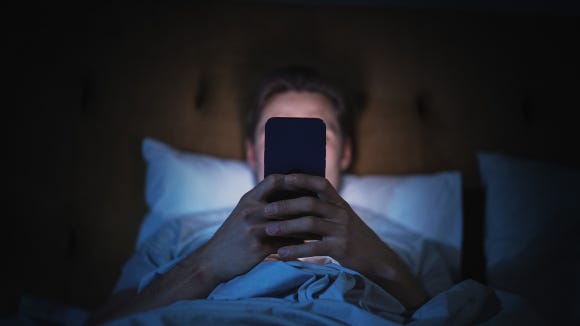
For those who scroll through their smartphone after finishing the day and end up falling asleep at dawn,
for those who always go to bed late because of overtime work and company dinners,
this kind of lifestyle does not just leave you tired.
Recently, several studies have drawn attention to the link between sleep patterns and hair health.
In particular, a lifestyle in which day and night are reversed is being analyzed as something that disrupts the body’s internal clock and can ultimately affect the growth rhythm of hair follicles.
In this article, based on actual research findings and clinical experience,
I have organized the question of how the habit of going to bed late changes hair in a frequently asked Q&A format.
Could hair loss be caused by your sleep habits?
Conclusion
The time you go to sleep is not just a matter of habit.
Hair follicles are time-based organs that grow and rest according to the rhythm of the biological clock.
A lifestyle of going to bed late throws this clock off balance, eventually reducing hair growth and regenerative capacity.
Sleep is not merely a supporting factor in hair loss treatment; it is the most basic treatment environment.
Going to bed just 30 minutes earlier can be the first step in slowing hair loss.
Q1. Does going to bed late really make hair fall out faster?
Yes. Several studies have reported delayed sleep rhythms as an independent risk factor for hair loss.
In particular, people with an evening-type (night owl) lifestyle showed a higher incidence of androgenetic alopecia (AGA), and the activity of circadian clock genes was lower¹.
In other words, as the body clock is delayed, the hair growth rhythm is also delayed, causing hair follicles to lose the time they need to rest and regenerate properly.
| Category | Normal sleep rhythm | Late sleep rhythm |
|---|
| Clock gene (PER3) activity | Normal | Reduced |
| Hair growth rate | Stable | Irregular |
| Fatigue/stress hormones | Low | Increased |
| Risk of hair loss | Low | High |
Q2. Does the hair follicle also have a “biological clock”?
Yes. A hair follicle is not just a mass of cells; it has an internal clock (hair clock) that self-regulates the cycle of anagen, catagen, and telogen.
This clock is made up of combinations of genes such as PER3, CLOCK, and BMAL1,
and it is strongly influenced by light, sleep, and hormones²,³.
In experiments, hair follicle cell division was most active in the morning, and the same stimulus responded more sensitively in the morning than at night.
Ultimately, when this clock is out of sync, the regeneration signals of the hair follicle also become misaligned, causing hair to grow when it should be resting or stop when it should be growing.
Q3. What is the mechanism by which sleep deprivation affects hair loss?
When sleep is insufficient, cortisol (the stress hormone) levels rise, which promotes inflammatory responses in the hair follicles.
In addition, reduced growth hormone secretion → decreased scalp blood flow → reduced nutrient supply to the hair follicle creates a vicious cycle.
During sleep, hair growth cells repair damaged DNA and protein synthesis becomes active, so if you do not get deep sleep, the recovery capacity of your hair decreases⁶,⁷.
| Item | During normal sleep | During sleep deprivation |
|---|
| Growth hormone secretion | ↑ High | ↓ Low |
| Cortisol | Normal | Increased |
| Scalp blood flow | Smooth | Reduced |
| Hair growth rate | Normal | Slowed |
| Progression of hair loss | Gradual | Accelerated |
Q4. Does a late-sleeping pattern in younger people also affect hair loss?
Yes. Among patients in their 20s and 30s recently, many say they feel alert at night but tired during the day.
In this kind of social jet lag, irregular rhythm is a bigger problem than sleep duration.
When the pattern of going to bed late because of smartphones, games, and OTT viewing and then forcing yourself to wake up for morning schedules repeats, the biological clock gradually shifts later, leading to scalp fatigue, uneven sebum secretion, and promotion of hair loss¹,⁴.
Q5. Can insomnia or early-morning awakening in middle-aged people also cause hair loss?
Yes. As people age, deep sleep (slow-wave sleep) decreases and frequent waking becomes more common.
As a result, scalp blood circulation declines and the recovery phase of the hair follicle becomes shorter.
A significant number of male and female patients in their 40s and 50s who say their hair falls out more easily than before also show chronic sleep deprivation or shallow sleep⁶.
Q6. Do blue light or late-night lighting also have an effect?
Yes. Artificial lighting and the blue light from smartphones suppress melatonin secretion and delay the time it takes to fall asleep.
Melatonin is not just a sleep hormone; it also suppresses oxidative stress in hair follicle cells and helps regulate growth signals.
Therefore, late-night lighting and smartphone use delay the hair growth rhythm itself.
Q7. How should lifestyle habits be corrected?
-
Keep your bedtime consistent. It is important to go to bed at a regular time, even if it is only 30 minutes earlier each day.
-
Avoid smartphones and TV for two hours before sleep, and change indoor lighting to a warmer color.
-
Monitoring your sleep rhythm with a smartwatch can help you objectively identify a “delayed pattern” in your biological clock⁴,⁵.
-
If possible, getting more than 10 minutes of morning sunlight can normalize the melatonin-to-serotonin conversion and help restore hair rhythm.
Could hair loss be caused by your sleep habits?
Key summary table
| Item | Normal rhythm | Delayed rhythm (habit of going to bed late) |
|---|
| Biological clock status | Stable | Delayed |
| Clock genes (PER3, BMAL1) | Active | Reduced |
| Growth hormone / melatonin | Sufficient | Decreased |
| Cortisol | Stable | Increased |
| Scalp blood flow | Smooth | Reduced |
| Risk of hair loss | Low | High |
Now it is time for hairhair, Kim Jin-oh.
Filsaengsinmo (必生新毛).

Written by: Kim Jin-oh of New Hair Plastic Surgery (Director of Public Relations, Korean Association of Plastic Surgeons / Academic Director, Korean Society of Laser Dermatology and Hair)
References
- Wu Q, Li M, Xiong Y, Li Y, Zheng Y-W, Liu L. Association between sleep patterns,
circadian rhythms, and hair loss in young adults. Chronobiology International.
-
Niu Y, et al. Overview of the circadian clock in the hair follicle cycle. International
Journal of Molecular Sciences. 2023.
- Plikus MV, et al. Local circadian clock gates cell cycle progression of transient
amplifying cells during regenerative hair cycling. PNAS. 2013.
- Huang Y, et al. Distinct circadian assessments from wearable data reveal internal
desynchrony. Frontiers in Physiology. 2021.
- Shim J, et al. Circadian rhythm analysis using wearable-based monitoring. npj
Digital Medicine. 2024.
- Liamsombut S, et al. Sleep quality in men with androgenetic alopecia. Sleep and
Breathing. 2023.
-
Shakoei S, et al. Sleep disturbance in alopecia areata. Dermatologic Therapy.
-
Rehan ST, et al. Two-way association between alopecia areata and sleep disorders.
Heliyon. 2022.
[This post is written directly by a plastic surgery specialist for the purpose of providing information, in accordance with Article 56, Paragraph 1 of the Medical Service Act. Hair loss surgery and treatment may involve side effects, and you should make a careful decision through consultation with a specialist.]