Many people, when they notice hair loss, first think, “Should I take medication?” or “Will I need a transplant?”
However, before that, what should be checked is the health of the scalp.
In clinical practice, many hair loss patients also report scalp inflammation, flaking, and itching.
This is not just a simple discomfort, but a sign that can directly damage the hair follicles.
Scalp Health: Can It Prevent Hair Loss?
A Summary of the Relationship Between the Scalp and Hair Through Science
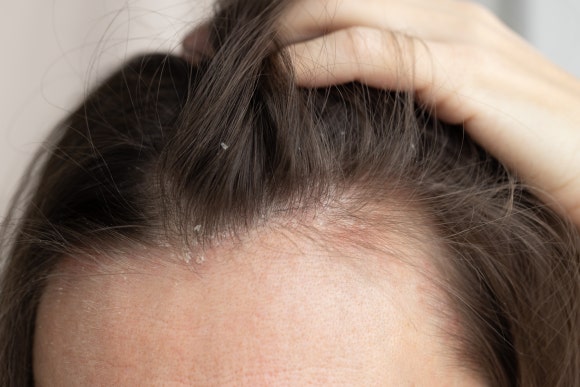
The scalp is not merely skin where hair grows, but a “hair life-support system” in which immunity, oxidation, and the microbial ecosystem interact in complex ways.
Scalp conditions such as dandruff, seborrheic dermatitis, psoriasis, and atopic dermatitis can increase oxidative stress and weaken follicle function, potentially leading to early hair loss¹²³.
In other words, when scalp health breaks down, the hair growth cycle becomes unstable and hair loss progresses more quickly.
Q1. Why does hair grow better when the scalp is healthy?
The scalp is like the “soil” of an ecosystem that protects hair follicles and supplies them with nutrients.
According to research, the level of oxidative stress in the scalp directly
affects the maintenance of hair growth¹.
When oxidative stress increases, DNA in follicle cells is damaged, the growth phase of hair shortens, and shedding accelerates.
On the other hand, in a scalp where antioxidant enzymes are actively working, hair grows thicker and longer.
In other words, a healthy scalp environment is the foundation of hair growth.
Q2. Why do dandruff and seborrheic dermatitis lead to hair loss?
The main cause of dandruff and seborrheic dermatitis is a fungus called Malassezia.
As this fungus breaks down sebum, the byproducts it produces trigger scalp inflammation, and
oxidative stress increases in the process²³.
Studies have shown that in scalps with severe dandruff, antioxidant defense enzymes decrease and lipid peroxidation (oxidation of sebum components) increases³.
As a result, inflammation around the hair follicles, damage to the hair roots caused by sebum oxidation, and early shedding of hairs in the growth phase occur, promoting hair loss.
Q3. Do psoriasis and atopic dermatitis also affect hair?
Yes. In a scalp with psoriasis, oxidized proteins and lipids accumulate excessively¹.
This damages the follicle cell membrane and prevents hair from growing sufficiently.
Atopic dermatitis causes the scalp to easily develop inflammatory reactions due to genetic factors and immune imbalance.
Persistent itching and scratching create micro-injuries and weaken the hair follicles.
Therefore, scalp skin conditions tend to speed up the progression of hair loss.
In clinical practice as well, cases are often observed in which the hair condition improves when the dermatitis is treated first.
Q4. What changes appear as the scalp ages?
As we age, the scalp’s antioxidant defenses weaken².
As a result, reactive oxygen species accumulate, capillaries constrict, and scalp elasticity decreases.
These changes reduce oxygen supply to follicle cells and slow the growth rate of hair.
In areas where hair loss has already progressed, aging tends to advance more quickly.
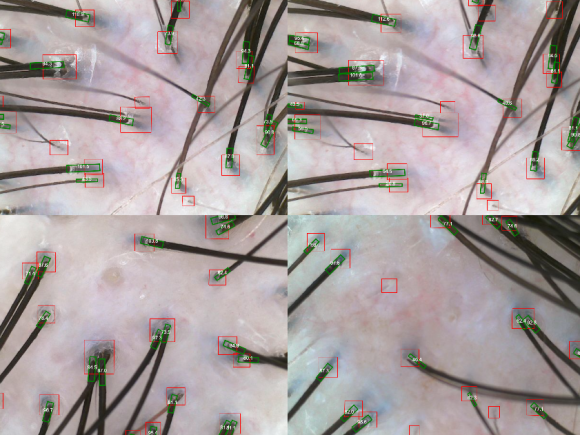
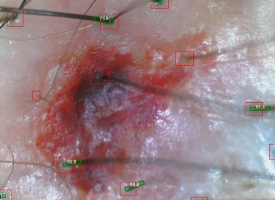
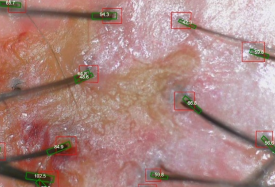
In actual microscopic examinations, an aging scalp shows fibrosis around the pores, making hair regeneration difficult.
Q5. How can we protect scalp health in everyday life?
-
Low-irritation cleansing: Use shampoo without silicone or strong surfactants
-
Antioxidant care: Use scalp serums containing vitamin E, green tea extract, caffeine, and similar ingredients
-
Lifestyle habits: Get enough sleep, eat a balanced diet, and manage stress
-
Scalp check: If an inflammatory condition is suspected, seek medical evaluation to identify the cause
If these measures are maintained, they help reduce oxidative stress and support the maintenance of the hair growth phase.
| Scalp condition / disease | Main cause | Effect on hair |
|---|
| Dandruff · seborrheic dermatitis | Malassezia, oxidative stress | Weakening of hair roots, promotion of hair loss |
| Psoriasis | Chronic inflammation, oxidized proteins and lipids | Damage to hair structure, weakened barrier |
| Atopic dermatitis | Genetics, immune abnormalities, environment | Scalp inflammation, impaired growth |
| Scalp aging | Weakened antioxidant defenses | Reduced recovery ability, early hair loss |
The scalp is not just “skin” where hair grows, but an ecosystem that determines the foundation of hair health.
We need to recognize that dandruff or inflammation is not simply a cosmetic issue, but a warning sign of hair follicle health, and early management can slow the progression of hair loss.
In the end, “protecting the scalp is the most scientific way to protect the hair.”
Now it’s time to hair hair, Kim Jino.
필생신모(必生新毛).
Written by: Kim Jino, Plastic Surgery, New Hair Hospital (Public Relations Director of the Korean Society of Plastic and Reconstructive Surgeons / Academic Director of the Korean Society for Laser, Dermatology and Hair)
References
-
Trueb, R., Henry, J., Davis, M., & Schwartz, J. (2018). Scalp condition impacts hair growth and retention via oxidative stress. International Journal of Trichology, 10(6), 262–270. https://doi.org/10.4103/ijt.ijt_57_18
-
Pizzino, G., Irrera, N., Cucinotta, M., Pallio, G., Mannino, F., Arcoraci, V., Squadrito, F., Altavilla, D., & Bitto, A. (2017). Oxidative Stress: Harms and Benefits for Human Health. Oxidative Medicine and Cellular Longevity, 2017, 8416763. https://doi.org/10.1155/2017/8416763
-
Schwartz, J. R., Messenger, A. G., Tosti, A., Todd, G., Hordinsky, M., Hay, R. J., Wang, X., Zachariae, C., Kerr, K. M., Henry, J. P., Rust, R. C., & Robinson, M. K. (2013). A comprehensive pathophysiology of dandruff and seborrheic dermatitis - towards a more precise definition of scalp health. Acta Dermato-Venereologica, 93(2), 131–137. https://doi.org/10.2340/00015555-1382
-
Saxena, R., Mittal, P., Clavaud, C., Dhakan, D. B., Hegde, P., Veeranagaiah, M. M., Saha, S., Souverain, L., Roy, N., Breton, L., Misra, N., & Sharma, V. K. (2018). Comparison of Healthy and Dandruff Scalp Microbiome Reveals the Role of Commensals in Scalp Health. Frontiers in Cellular and Infection Microbiology, 8, 346–346. https://doi.org/10.3389/fcimb.2018.00346
[This post is written directly by a board-certified plastic surgeon for informational purposes in accordance with Article 56, Paragraph 1 of the Medical Service Act. Hair loss surgery and treatment may have side effects, and please make a careful decision through consultation with a specialist.]