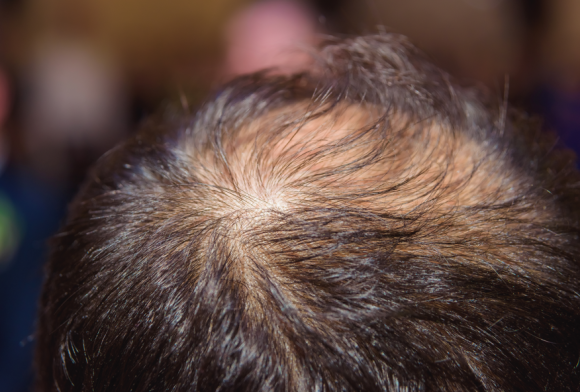
Many people notice that their hair becomes thinner or that their hair volume decreases after menopause.
This is not simply due to age alone, but because hormonal changes and changes in the hair follicles occur at the same time.
In particular, for middle-aged women, changes in hormonal balance also alter the scalp environment and hair physiology.
In this post, we will look at the causes of menopausal hair loss and how to manage it, focusing on scientific evidence.
Menopausal Hair Loss: Understanding Hair Changes in Middle-Aged Women
(Causes and Treatment) Summary Table
| Category | Key Points |
|---|
| Main causes | Hormonal changes, reduced blood flow, decreased follicle function |
| Main symptoms | Thinning hair, widening part line, reduced volume |
| Management methods | Scalp hygiene, follicle-stimulating treatments, hormonal balance, nutrition |
| Preventive habits | Adequate sleep, stress relief, sun protection |
Q1. Why does hair become thinner after menopause?
During menopause, the female hormone estrogen decreases and the relative influence of the male hormone (DHT) increases.
Estrogen helps maintain the growth phase of hair follicles, but when this balance is disrupted, the hair growth phase shortens and the hair becomes thinner¹.
Q2. What does the expression “the hair follicle ages” mean?
Hair follicles are organs that are very sensitive to blood flow and nutrient supply.
During menopause, as vascular elasticity declines, hair follicles do not receive enough oxygen and nutrients, and their function deteriorates².
Researchers describe this process by saying that the hair follicle itself goes through a kind of mini-menopause.
Q3. How common is menopausal hair loss?
According to studies, more than 70% of postmenopausal women experience thinning hair or reduced hair density³.
This change is more pronounced in cases of early menopause, chronic diseases (such as hypertension and diabetes), family history, and stress.
| Risk factor | Likelihood of hair loss |
|---|
| Early menopause | High |
| Chronic diseases (such as diabetes, hypertension, etc.) | High |
| Family history | High |
| Stress and lack of sleep | Medium |
| Regular care | Low |
Q4. How can it be managed?
- Improve the scalp environment
It is important to keep the scalp clean and avoid excessive heat or ultraviolet exposure.
- Stimulate the follicles and replenish nutrients
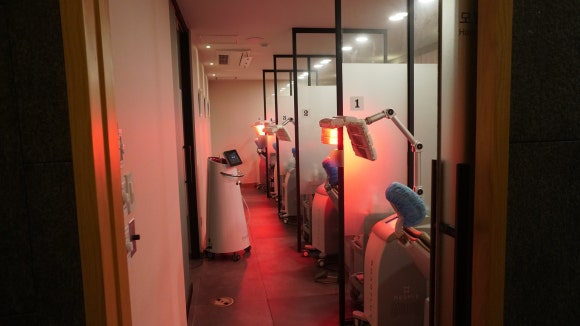
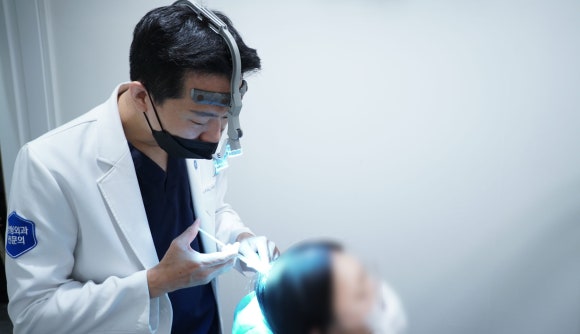
Minoxidil, growth factor injections, and low-level laser therapy (LLLT) can help increase follicle activity⁵⁶.
These treatments should be carried out only after a specialist’s diagnosis for safety.
- Restore hormonal balance
Hormone replacement therapy (HRT) may be considered if needed.
It may help not only with hair loss, but also with systemic symptoms such as sleep problems, hot flashes, and mood changes⁴.
- Manage lifestyle habits
A diet rich in protein, iron, zinc, vitamin D, and omega-3 fatty acids can help.
Regular exercise and adequate sleep improve blood flow and support scalp health.
Q5. Do psychological factors also have an effect?
Yes. Hair loss can cause lowered self-esteem or social withdrawal in women⁴.
When the stress hormone cortisol increases, blood flow decreases and follicle function declines, so emotional stability is also an important part of hair care.
It is now time for hairhair, this was Kim Jin-oh.
May new hair grow (必生新毛).
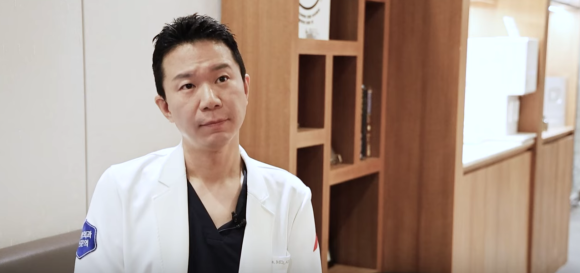
Written by: Kim Jin-oh of New Hair Plastic Surgery (Public Relations Director of the Korean Society of Plastic and Reconstructive Surgeons / Academic Director of the Korean Society for Laser, Dermatology and Hair)
References
-
Mirmirani, P. (2011). Hormonal changes in menopause: Do they contribute to a ‘midlife hair crisis’ in women? British Journal of Dermatology, 165(Suppl S3), 7–11. https://doi.org/10.1111/j.1365-2133.2011.10629.x
-
Rinaldi, F., Trink, A., Mondadori, G., Giuliani, G. & Pinto, D. (2023). The menopausal transition: Is the hair follicle “going through menopause”? International Journal of Molecular Sciences, 24(3), 10669803. https://pmc.ncbi.nlm.nih.gov/articles/PMC10669803/
-
Almasabi, G.Y.A., et al. (2025). Prevalence of female pattern hair loss in postmenopausal women. Majmaah Journal of Health Sciences, 13(4), 98-111. doi: 10.5455/mjhs.2025.04.009
-
Gupta, A.K. et al. (2025). Menopausal hair changes: Understanding the interplay between hormones and the follicle. Journal of Dermatological Science, 118(2), 45–56. https://www.maturitas.org/article/S0378-5122(25)00186-0/fulltext
-
Harvard Health Publishing. (2024, April 8). Treating female pattern hair loss. Harvard Medical School. https://www.health.harvard.edu/diseases-and-conditions/treating-female-pattern-hair-loss
-
Fabbrocini, G., Cantelli, M., Masarà, A., Annunziata, M.C., Marasca, C. & Cacciapuoti, S. (2018). Female pattern hair loss: A clinical, pathophysiologic, and therapeutic review. International Journal of Women’s Dermatology, 4(4), 203–211. https://doi.org/10.1016/j.ijwd.2018.05.001
[This post is written directly by a board-certified plastic surgeon for informational purposes in accordance with Article 56, Paragraph 1 of the Medical Service Act. Hair transplant surgery and treatment may have side effects, and you should make a careful decision after consulting with a specialist.]