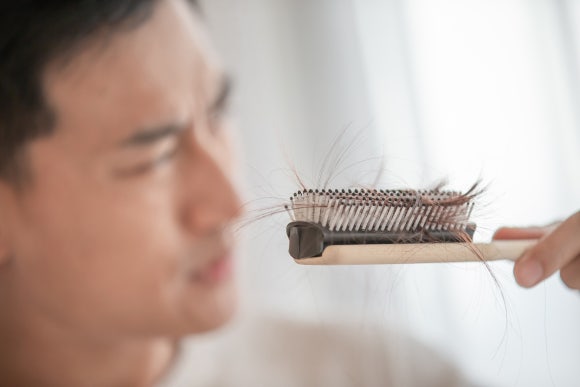
These days, in the clinic, I often hear people say, "I think my hair is falling out more because I’m stressed."
Many people suspect stress as the cause of hair loss, but they also wonder whether it really has an effect.
Recent studies are giving a clear answer to this question.
Stress is not just a matter of mood; it changes hormones and inflammatory responses and actually acts as a physiological factor that stops the hair growth cycle¹².
Mental tension can even lead to the shutdown of hair follicles.
If You Suspect Stress Hair Loss?
The Connection Between Hair Shedding and Mental Health: Conclusion
Stress is unavoidable, but its effects can be reduced.
Consistent sleep, a balanced diet, meditation, and light exercise all help lower cortisol and support hair follicle recovery.
In the end, the starting point of hair loss treatment is mental stability.
For hair to grow again, the body must first come out of crisis mode.
Q1. Does stress really cause hair to fall out?
Yes. When stress repeats, the body activates the HPA axis and secretes cortisol.
Short term, this hormone helps with survival, but long term, it suppresses the activity of hair follicle cells and shortens the hair growth phase².
As a result, hair follicles remain in a resting state and miss the period when they should be growing.
The typical condition that appears at this time is telogen effluvium.
| Stress response | Effect on hair follicles | Result |
|---|
| Increased cortisol | Cellular dormancy | Hair growth stops |
| Increased neuropeptides | Triggers inflammatory response | Hair follicle damage |
| Accumulated reactive oxygen species | Accelerates cellular aging | Increased fine hair |
Q2. Why does stress cause inflammation and lead to hair loss?
When you are stressed, a protein called substance P is released from nerve endings³.
This substance stimulates immune cells around the hair follicle, triggers an inflammatory response, and prevents the follicle from regenerating on its own.
In addition, excessive oxidative stress occurs, slowing the recovery rate of hair follicle cells³.
Stress does not directly pull hair out; it creates an environment that prevents hair follicles from growing.
Q3. Is alopecia areata also caused by stress?
Alopecia areata is caused by a disruption of the immune system, but stress is one of the triggers.
In a real study, about half of patients with alopecia areata reported experiencing severe psychological stress right before onset⁶.
At this time, overactivation of the sympathetic nervous system breaks down the immune privilege that protected the hair follicle, and immune cells begin attacking the follicle⁴⁵.
Q4. Can hair grow back if stress is reduced?
Yes. Psychological approaches such as meditation or cognitive behavioral therapy help lower cortisol levels and return hair follicles to the growth phase⁴.
In one clinical study, patients with alopecia areata who received such programs showed reduced anxiety and depression, along with improved hair regrowth⁴.
As the mind becomes more at ease, the body also sends recovery signals.
Q5. Is stress-related hair loss connected to lifestyle habits too?
When stress builds up, sleep, eating habits, and smoking patterns all fall apart.
If you do not get enough sleep, cortisol increases and the growth signals during the nighttime hours when hair grows (10 p.m. to 2 a.m.) are suppressed⁸.
Smoking blocks blood flow to the scalp, reduces nutrient delivery, increases reactive oxygen species, and causes hair follicle damage⁹.
If you skip meals because of stress, you become deficient in essential nutrients such as protein, iron, and zinc, and your hair weakens.
Lifestyle stress becomes hair loss stress, creating a vicious cycle.
Q6. Are there any new treatment studies for stress-related hair loss?
Recently, treatments that regulate the stress response itself have been drawing attention.
Research is underway to block the cortisol production pathway or inhibit CRH receptors so that hair follicles do not enter the resting phase prematurely¹⁰.
Results have also been reported showing that the antioxidant quercetin reduces hair follicle inflammation and promotes hair regrowth¹¹.
Now is the time for hairhair, Kim Jin-oh.
Pilsaengsinmo (必生新毛).
Written by: Kim Jin-oh, New Hair Plastic Surgery (Public Relations Director, Korean Society of Plastic and Reconstructive Surgeons / Academic Director, Korean Society of Laser Dermatology and Hair Research)
References
-
Bai JQA et al. The Role of Psychological Stress in Hair Loss: A Review. JAAD Reviews, 2025.
-
Choi S et al. Corticosterone inhibits GAS6 to govern hair follicle stem-cell quiescence. Nature, 2021.
-
Ma YQ et al. Oxidative stress and alopecia areata. Front Med, 2023.
-
Maloh J et al. Systematic Review of Psychological Interventions for Quality of Life, Mental Health, and Hair Growth in Alopecia Areata. J Clin Med, 2023.
-
Lee EY et al. The local hypothalamic–pituitary–adrenal axis in cultured human dermal papilla cells. BMC Mol Cell Biol, 2020.
-
Manolache L & Benea V. Stress in patients with alopecia areata and vitiligo. J Eur Acad Dermatol Venereol, 2007.
-
Cipriani R et al. Paroxetine in alopecia areata. Int J Dermatol, 2001.
-
Wright KP et al. Influence of sleep deprivation on cortisol and inflammatory markers. Brain Behav Immun, 2015.
-
Kavadya Y & Mysore V. Role of Smoking in Androgenetic Alopecia. Int J Trichology, 2022.
-
Nam YJ et al. CRH receptor antagonists from Pulsatilla chinensis prevent CRH-induced premature catagen transition. J Cosmet Dermatol, 2020.
-
Wikramanayake TC et al. Prevention and treatment of alopecia areata with quercetin in the C3H/HeJ mouse model. Cell Stress Chaperones, 2012.
[This post is written directly by a plastic surgery specialist for informational purposes in accordance with Article 56, Paragraph 1 of the Medical Services Act. Hair transplant surgery and treatment may have side effects, and you should make a careful decision after consulting a specialist.]