
Hair loss medication
Source - Hair Loss News
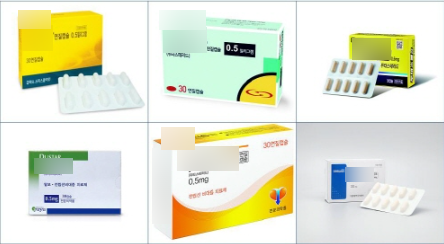
Hair loss medication
Source - Pharmacy Newspaper
Hair loss treatments are one of the most extensively studied areas in modern medicine.
Finasteride, dutasteride, and minoxidil are representative drugs that slow the progression of hair loss by restoring the growth signals of hair follicles, but in actual clinical settings, the same medication can produce very different effects from person to person.
The reason is simple: the environment in which hair grows is different.
To maximize the effect of medication, lifestyle habits must also be improved.
In this post, I have organized the scientific and practical lifestyle habits that can help increase the effectiveness of hair loss medication.
Can lifestyle habits increase the effectiveness of hair loss medication?
Summary of the medical evidence behind hair growth
| Key lifestyle habit | Relationship to hair loss medication effectiveness | Main evidence |
|---|
| Sleep | Promotes follicle growth by suppressing cortisol | Meerlo et al., Sleep Medicine Reviews (2008)¹ |
| Nutrition | Hair loss worsens when there is a deficiency of protein, iron, zinc, or vitamin D | Almohanna et al., Dermatology and Therapy (2019)² |
| Exercise | Improved oxygen and nutrient delivery to follicles through increased blood flow | Nieman & Wentz, Journal of Sport and Health Science (2019)³ |
| Stress management | Helps prevent telogen effluvium | Hadshiew et al., J. Investigative Dermatology (2004)⁴ |
| Scalp hygiene | Improves drug response by reducing inflammation | Pierard-Franchimont et al., J. Eur. Acad. Dermatol. Venereol (1998)⁵ |
| No smoking, moderate drinking | Reduces vasoconstriction and the burden on liver metabolism | Rodrigues-Barata et al., Int. J. Dermatology (2023)⁶ |
Q1. Why is the effect weak even when I keep taking hair loss medication regularly?
Medication restores growth signals in hair follicles, but if the body’s internal environment is unstable, the response decreases.
In particular, when sleep deprivation or chronic stress continues, cortisol increases and this suppresses the proliferation signals of follicle cells¹.
In actual clinical practice, patients with poor sleep quality often show delayed responses to medication.
- Key point: Getting at least 7 hours of quality sleep a day and maintaining a consistent sleep pattern helps the medication work.
Q2. Why is diet important during hair loss treatment?

Hair is made of keratin protein, and if the nutrients needed to synthesize this protein are lacking, the effect of medication is also limited.
Iron and zinc are essential for enzymatic reactions within the hair follicle, and vitamin D is related to the activity of follicle cells².
Clinically, patients with insufficient protein intake often show a slower treatment response.
- Recommendation: Maintain a diet rich in protein and micronutrients, such as eggs, tofu, chicken breast, spinach, nuts, and salmon.
Q3. Can exercise also help hair growth?
Yes. Regular aerobic exercise increases peripheral blood flow, allowing oxygen and nutrients to reach the scalp more smoothly³.
Exercise also has the added benefit of reducing stress and improving sleep quality,
which raises the overall response rate to hair loss medication.
- Tip: Rather than intense strength training, try to consistently do circulation-focused exercise such as walking, swimming, or yoga at least three times a week.
Q4. Does stress really affect hair loss?
Stress is one of the main causes of telogen effluvium, in which hair follicles are pushed prematurely from the growth phase into the resting phase⁴.
Psychological tension triggers neuroinflammatory responses, and this reduces the effectiveness of hair loss treatments.
Meditation, light hobbies, and sufficient rest have been reported in actual clinical practice as cases that improve medication response.
- Key point: Mental stability is a non-drug treatment just as important as taking medication.
Q5. What does scalp cleanliness have to do with medication effectiveness?
Seborrheic dermatitis, dandruff, and atopic scalp conditions cause inflammation and worsen the follicle environment⁵.
In such inflammatory conditions, the action of medication is not smooth, so if you have a scalp disorder, concurrent treatment is necessary.
- Management: Use a mild shampoo designed for the scalp and avoid excessive use of styling products.
Q6. Do smoking and drinking really affect hair loss?
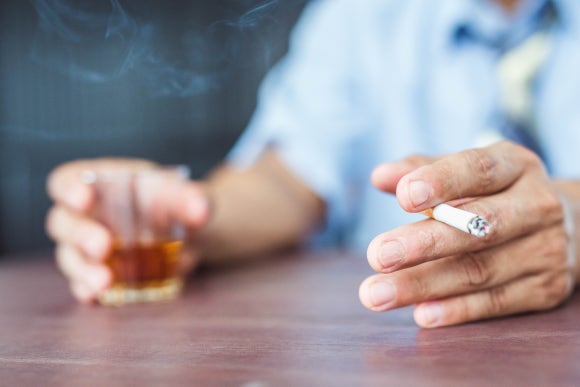
Smoking constricts scalp blood vessels and increases reactive oxygen species, promoting damage to hair follicles.
Excessive drinking, on the other hand, interferes with liver metabolism, preventing the medication from working properly⁶.
Alcohol and cigarettes are the invisible enemies of hair loss treatment.
If you are taking medication, reducing alcohol intake and quitting smoking are the most reliable supportive treatments.
The effectiveness of hair loss medication does not depend only on pharmacological action.
Lifestyle habits such as sleep, nutrition, exercise, stress management, scalp hygiene, and not smoking all determine the environment for hair growth.
Medication opens the path, and lifestyle habits are the force that helps hair grow healthily along that path.
Now it’s time to grow hairhair, this was Kim Jin-oh.
Pilsaengsinmo (必生新毛).
Written by: Kim Jin-oh of New Hair Plastic Surgery Clinic (Public Relations Director, Korean Society of Plastic and Reconstructive Surgeons / Academic Director, Korean Society of Laser Dermatology and Hair)
References
-
Meerlo, P., Sgoifo, A. and Suchecki, D. (2008) ‘Restricted and disrupted sleep: Effects on autonomic function, neuroendocrine stress systems and stress responsivity’, Sleep Medicine Reviews, 12(3), pp. 197–210. doi:10.1016/j.smrv.2007.07.007.
-
Almohanna, H.M., Ahmed, A.A., Tsatalis, J.P. and Tosti, A. (2019) ‘The role of vitamins and minerals in hair loss: A review’, Dermatology and Therapy, 9(1), pp. 51–70. doi:10.1007/s13555-018-0278-6.
-
Nieman, D.C. and Wentz, L.M. (2019) ‘The compelling link
between physical activity and the body’s defense system’, Journal of Sport and Health Science, 8(3), pp. 201–217. doi:10.1016/j.jshs.2018.09.009.
-
Hadshiew, I.M., Foitzik, K., Arck, P.C. and Paus, R. (2004) ‘Burden of hair loss: Stress and the underestimated psychosocial impact of telogen effluvium and androgenetic alopecia’, Journal of Investigative Dermatology, 123(3), pp. 455–457. doi:10.1111/j.0022-202X.2004.23237.x.
-
Pierard-Franchimont, C., Hermanns, J.F., Degreef, H. and Pierard, G.E. (1998) ‘From dandruff to seborrheic dermatitis: An overview’, Journal of the European Academy of Dermatology and Venereology, 12(1), pp. 1–11. doi:10.1016/S0926-9959(97)00091-0.
-
Rodrigues-Barata, A.R., Tosti, A., Goren, A. and Sinclair, R. (2023) ‘Low-dose oral minoxidil for hair loss: A review of efficacy and safety’, International Journal of Dermatology, 62(10), pp. 1212–1220. doi:10.1111/ijd.17317.
[This post is being written directly by a board-certified plastic surgeon for informational purposes in accordance with Article 56, Paragraph 1 of the Medical Service Act. Hair loss surgery and treatment may have side effects, and please make a careful decision through consultation with a specialist.]