※ Notice
For better understanding, this post includes before-and-after photos of an actual patient.
The person shown received surgery at New Hair Hair, and consent was obtained for the use of the photos.
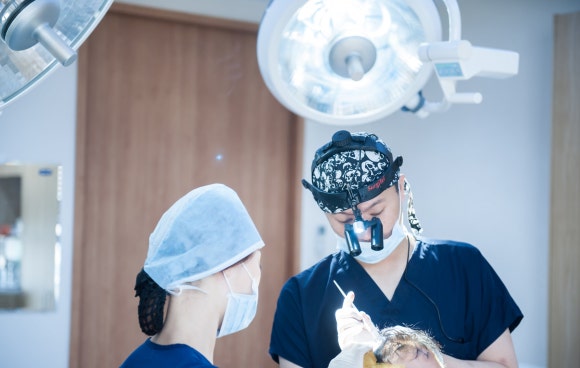
Hair transplantation is one of the treatment methods used to improve hair loss.
However, recent research has drawn attention to hair follicles not simply as organs that produce hair, but as miniature organs that induce skin regeneration.
Because they contain stem cells, blood vessels, nerves, melanocytes, and more, they have great potential for use in wound healing and improving skin diseases as well.
Based on actual papers and clinical experience, here is a summary of how hair transplantation is being used in regenerative medicine, organized around questions patients often ask.
Is hair transplantation also used to treat vitiligo or scars?
Summary table
| Treatment area | Expected effect | Main research results |
|---|
| Chronic wound healing | Stem cells, promotes recovery | Wounds that had not healed for years recovered within months¹² |
| Hyperhidrosis / bromhidrosis | Sweat gland removal effect | Average sweat secretion decreased by 80%³ |
| Scar remodeling | Reduced collagen, regeneration of blood vessels and nerves | Scar became softer and less noticeable⁴ |
| Vitiligo | Pigment recovery | Natural color restoration in 72.1% of patients⁵ |
| Keloid acne | Removal of follicles in the lesion | Lesion improved without recurrence⁶ |
Q1. Can hair transplantation really help wound healing?
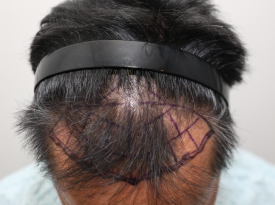
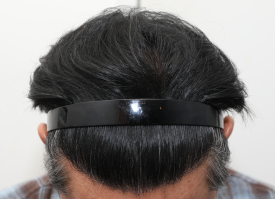
Shooting date: 2024-09-30 (before) / 2025-10-31 (after)
Photos after 1 year and 1 month
The photos above show the same patient who started and completed treatment at New Hair Plastic Surgery Clinic.
No separate manipulation was performed on the photos.
Yes. In fact, studies have shown that when hair follicles are transplanted into areas that do not heal well, such as diabetic ulcers or chronic wounds, the recovery speed improves rapidly.
It was reported that scalp tissue grafts containing hair follicles significantly increased ulcer healing speed compared with skin without hair follicles¹.
Hair follicles are rich in stem cells, vascular endothelial cells, and nerve growth factors, and they help regenerate damaged skin tissue².
In actual clinical practice, there have been cases where wounds that had not healed for years closed within months after hair transplantation, and epithelialization was maintained stably without repeat surgery.
Q2. Is it true that hair transplantation technology is also used for underarm sweating or odor (bromhidrosis)?
Yes. Recently, a method has been introduced that applies non-incisional hair transplantation techniques to remove underarm sweat glands at the same time.
This method works on the principle of microsampling in follicular units while also removing part of the subcutaneous tissue containing sweat glands.
Results have been reported showing that within 3 months after surgery, sweat secretion decreased by an average of 80%, and body odor also decreased significantly³.
Because there is no incision, there is almost no scarring, and recovery is fast.
Q3. If hair is transplanted into a scar area, does the scar really decrease?
Many people think it simply covers the area with hair, but in fact changes occur that regenerate the scar tissue itself.
Analysis of scar tissue after hair transplantation showed that thick collagen fibers decreased and new blood vessels and nerves formed⁴.
This process leads to a remodeling stage in which the texture of the scar becomes softer and the skin tone blends naturally with the surrounding area.
Clinically, there have also been reports of transplanted hair in scar areas formed after surgery or trauma leading to improved skin elasticity and recovery of sensation.
Q4. Can hair follicles help with vitiligo as well?
Yes. Vitiligo is a disease in which melanocyte function is reduced, but follicular melanocyte precursor cells still remain in the hair follicle.
In a study of patients who received hair follicle transplantation, pigmentation was naturally restored in 72.1% of patients⁵.
Melanocytes migrate from the hair follicle to the surrounding skin, redistributing pigment.
In particular, improvement has been seen even in vitiligo areas that did not respond to medication or phototherapy, and some hospitals currently use it together as an adjunctive treatment.
Q5. Is hair transplantation used for raised scars such as keloid acne?
Recently, research has been conducted based on the idea that the hair follicle itself acts as a cause of lesions that trigger inflammatory reactions (for example, Acne keloidalis nuchae), leading to selective removal of the follicles within the lesion.
A case was reported in which keloid lesions were removed by non-incisional hair transplantation and completely resolved without recurrence⁶.
Although there are not yet many studies, this method may be an alternative for treating intractable scars that do not respond to conventional drug or laser treatments.
Is hair transplantation also used to treat vitiligo or scars?
Conclusion
Hair transplantation is no longer a surgery only for hair loss.
Thanks to the regenerative features of hair follicles, which include stem cells and the ability to regenerate nerves and blood vessels, its use is expanding into various fields of regenerative medicine, such as wounds, scars, vitiligo, and hyperhidrosis.
If more clinical studies are conducted in the future, hair transplantation may establish itself as a key to skin regeneration.
It is now time for Hair hair, Kim Jin-oh.
Bilsaengsinmo (必生新毛).
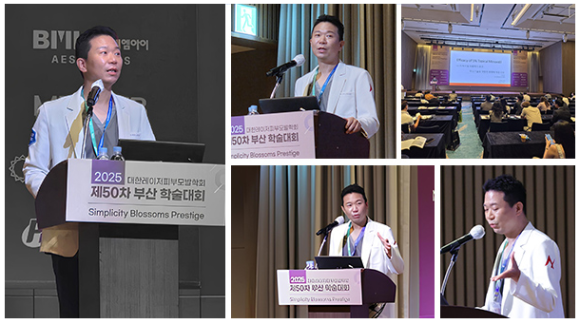
Written by: Kim Jin-oh, New Hair Plastic Surgery Clinic (Public Relations Director, Korean Association of Plastic Surgeons / Academic Director, Korean Laser, Dermatology, and Hair Society)
References
-
Martínez ML, Escario E, Poblet E, Sánchez D, et al. (2016) Hair follicle–containing punch grafts accelerate chronic ulcer healing: a randomized controlled trial. J Am Acad Dermatol, 75:1007–1014.
-
Saha D, Thannimangalath S, Budamakuntla L, Loganathan E, et al. (2021) Hair follicle grafting therapy promotes reemergence of critical skin components in chronic nonhealing wounds. JID Innov Skin Sci Mol Popul Health, 1:100041.
-
Schambach MA, Jimenez F. (2021) Elimination of sweat glands using the follicular unit excision technique: a pilot study showing its potential use for axillary hyperhidrosis. Dermatol Surg, 47:1666–1669.
-
Plotczyk M, Jiménez F, Limbu S, Boyle CJ, et al. (2023) Anagen hair follicles transplanted into mature human scars remodel fibrotic tissue. npj Regenerative Med, 8:1.
-
Thakur P, Sacchidanand S, Nataraj HV, Savitha AS. (2015) A study of hair follicular transplantation as a treatment option for vitiligo. J Cutan Aesthet Surg, 8:211–217.
-
Umar S, Khanna R. (2023) Papular acne keloidalis nuchae treatment success using follicular unit excision. JAAD Case Rep, 39:96–100.
[This post is written directly by a board-certified plastic surgeon for informational purposes in accordance with Article 56, Paragraph 1 of the Medical Service Act. Hair loss surgery and treatment may involve side effects, so please make a careful decision after consulting a specialist.]