Hair loss treatment is ultimately a battle over how well a drug can reach the hair follicles.
Existing topical agents (minoxidil, finasteride, etc.) often have uneven treatment responses because absorption is limited as they pass through the skin barrier, and they are also inefficient because they spread systemically.
Recently, the keyword that has stood out in many studies is liposomes.
Rather than simply being a container that holds a drug, they act as a delivery platform that carries the drug to the hair follicles along the pores, and they are being recognized as a technology that could change the overall direction of hair loss treatment¹²³.
I will explain the principles, advantages, and research evidence of liposome-based hair loss treatment in an easy way, focusing on the questions patients most often ask.
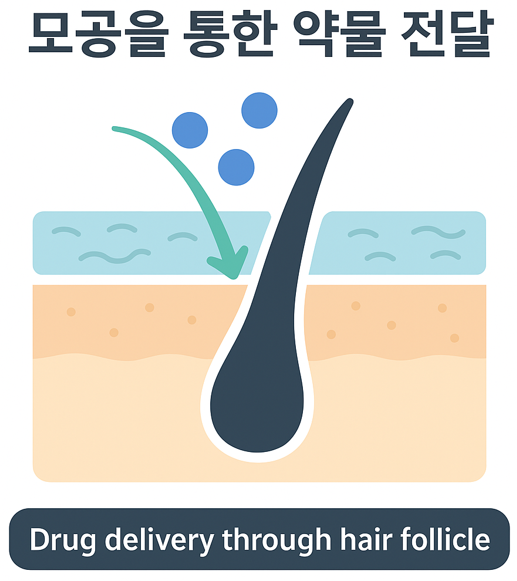
Hair Loss Treatment: What Possibilities Does Liposome Technology Using Pores Show? Summary
-
Liposome technology targets the pore pathway rather than the skin surface, allowing direct access to the hair follicles¹.
-
The pore pathway delivers drugs 10–100 times more efficiently than the conventional skin pathway¹.
-
When minoxidil, finasteride, and dutasteride are loaded into liposomes, follicular accumulation increases and skin irritation decreases²³.
-
Deformable liposomes penetrate more deeply than ordinary liposomes, resulting in stronger effects.
-
Combination strategies with nitric oxide, cedrol, and similar ingredients show additional effects on improving blood flow and the follicular environment².
-
In the future, more data on safety, mass production, and long-term clinical use will be needed, but this technology is expected to become a key tool in personalized treatment.
Q1. Why do existing topical hair loss treatments have such inconsistent effects?
Existing topical formulations often cannot sufficiently pass through the stratum corneum, the outermost layer of the skin.
Because this barrier has a very strong structure, it creates significant limitations for drugs to move down to the hair follicles.
In addition, the pathway through the skin is inefficient, so the amount of drug that reaches the follicles is small.
For these reasons, there are many patients who say that minoxidil did not work for them.
By contrast, one study reported that the pore pathway is 10–100 times more efficient than the skin pathway¹.
Q2. How are liposomes different from existing drugs? What are the main advantages?
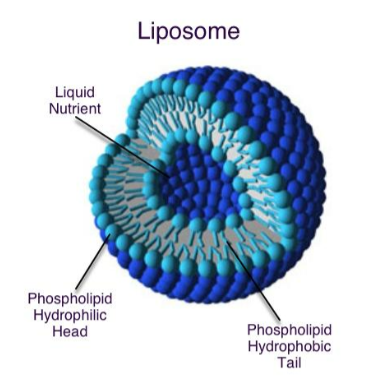
Liposome
Source - Healthcare Planit
Liposomes are small spherical structures made of phospholipids that wrap around a drug and deliver it stably to the desired area.
Their most important feature is that they can move deep into the hair follicles along the pores¹.
In particular, deformable liposomes have flexible membranes and are designed to penetrate deeper into skin gaps and pore pathways, giving them very strong penetration ability.
- Increased drug accumulation in the hair follicles
- Reduced systemic absorption → fewer side effects
- Concentration of the drug at the needed site
- Reduced skin irritation²
Q3. Does applying minoxidil in a liposome form actually work better?
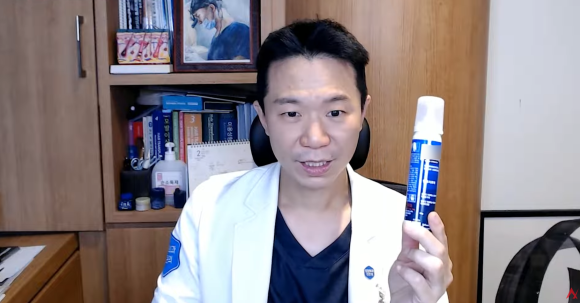
Several studies have found that liposome-minoxidil formulations show higher follicular accumulation than conventional formulations².
Even with the same amount applied, the concentration of the drug remaining in the hair follicles is higher, and the amount absorbed too much from the skin surface and spread systemically is reduced.
Expected changes include reduced scalp irritation, improved drug response rates, and better safety for long-term treatment.
In actual clinical settings, some patients who showed skin irritation or insufficient response with conventional formulations have shown more stable effects with liposomal formulations.
Q4. Can finasteride and dutasteride also be used topically in liposome form?
Would it be safer than taking them orally?


When taken orally, they act systemically, so there may be concerns such as sexual side effects.
However, when applied topically in liposome form, the drug is concentrated in the hair follicles and systemic exposure is greatly reduced, which is an advantage that improves safety³.
In particular, studies have observed the following results.
- Increased drug accumulation in the hair follicles
- Increased anagen phase ratio / reduced telogen phase
- Improved effects when used with penetration enhancers such as DMSO³
Q5. Why are ingredients like nitric oxide or cedrol used together?
Some studies have shown that combination strategies produce stronger hair-stimulating effects².
- Nitric oxide
- Improved blood flow
- Promotes minoxidil penetration
- Cedrol
- Juniper extract
- Potential to stabilize the follicular environment and increase growth signals
Ultimately, liposomes are the carrier, and the ingredients loaded inside them are the substances that produce the effect, so the combination of liposomes + functional ingredients has strong potential for synergy².
Q6. Why has liposome technology not yet become widely used?
The research results are very encouraging, but there are still clearly challenges to solve.
- Formulation stability (so the structure does not collapse over time)
- Mass production technology
- Lack of long-term safety data
- Need for large-scale clinical trials
Even so, many papers consistently suggest that liposome technology may become a core platform for personalized hair loss treatment in the future¹²³.
| Category | Existing topical treatment | Liposome-based treatment |
|---|
| Drug delivery route | Mainly through the skin barrier | Pores → direct access to hair follicles¹ |
| Drug delivery efficiency | Unstable, large individual differences | 10–100 times more efficient¹ |
| Representative ingredients | Minoxidil, finasteride, etc. | Same ingredients + combinations with NO, cedrol, and natural compounds |
| Follicular accumulation | Limited | Increased²³ |
| Skin irritation | Relatively high | Reduced² |
| Systemic side effects | Possible | Markedly reduced³ |
| Anagen/telogen ratio | Limited change | Anagen ↑ / telogen ↓³ |
| Clinical significance | Large variation in effect | Expected synergy in personalized and combination treatment |
Now it is time for hairhair, Kim Jin-oh.
Pilsaengsinmo (必生新毛).

Written by: Kim Jin-oh of New Hair Plastic Surgery (Public Relations Director, Korean Association of Plastic Surgeons / Academic Director, Korean Society for Laser, Skin and Hair)
References
-
Chew, E., Ling, T., Foo, C., et al. (2025). Hair follicle inspired therapies for wound healing and scar remodelling. Journal of Plastic, Reconstructive & Aesthetic Surgery, 78(2), 123-135.
-
Tuo-Kouassi, A.N., N’Guessan-Gnaman, K.C., Aka-Any-Grah, S., et al. (2025). Hair Follicles: Strategic Targets for Promoting Hair Growth. International Journal of Trichology, 17(4), 210-222.
-
Gandhi, S.M., Swarn, S., More, U.A., Saini, V., Kapoor, D.U. & Prajapati, B.G. (2025). Liposomal systems for targeted drug delivery to hair follicles in the topical treatment of androgenetic alopecia. Journal of Drug Delivery Science and Technology, 114 (Part B), 107624. https://doi.org/10.1016/j.jddst.2025.107624
[This post is written directly by a board-certified plastic surgeon for informational purposes in accordance with Article 56, Paragraph 1 of the Medical Service Act. Hair loss surgery and treatment may have side effects, and you should make a careful decision after consulting with a specialist.]