
Every time I see hair slipping between my fingers while shampooing, I start wondering, “Is this normal?”
When treating the scalp, many people feel anxious because they are overwhelmed by the numbers themselves, but in reality, due to the characteristics of the hair follicle growth cycle, everyone loses a certain amount of hair every day.
This post organizes the questions patients ask most often, based on research data and clinical experience.
It also explains why it is important to consider changes in patterns, not just a single number, and in what situations testing or consultation may be needed.
If I’m Losing a Lot of Hair, Is It Hair Loss? What Counts as Normal?
Summary
The daily natural shedding amount in a healthy adult is about 50 to 100 strands,
which is within the normal range of the hair follicle cycle.¹²³
The hair you notice during shampooing is resting-phase hair that has loosened during the day and falls out all at once,
so about 20 to 40 strands per shampoo can be considered well within the normal range.⁶
If the interval between shampoos gets longer (2 to 3 days), it is natural for the shedding to look greater,
and this should be distinguished from pathological hair loss.
If a sudden increase continues for several weeks, or a specific area looks sparse,
telangium effluvium or androgenetic hair loss should be considered.²⁵
High fever, childbirth, dieting, iron deficiency, thyroid abnormalities, and similar factors
can temporarily increase shedding to as much as 200 to 300 strands per day.⁵
Q1. How much hair loss per day is normal?
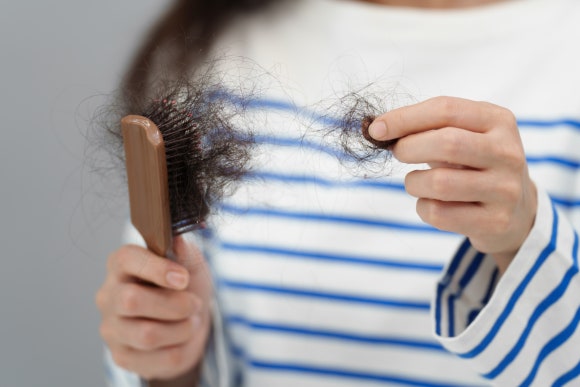
According to standards presented by various international organizations, even healthy people naturally shed about 50 to 100 strands per day.¹²³
This is a normal physiological phenomenon because each hair follicle moves through its own cycle.
Q2. How many strands are okay when shampooing?
According to the Refined Wash Test study conducted on normal participants without hair loss,
the average number of hairs shed per shampoo was reported as 27.9 ± 12.2 strands.⁶
Therefore, in clinical practice, shedding of about 20 to 40 strands is understood as within the natural range.
Because the hair that had already loosened during the day becomes visible during shampooing, it may feel like more hair is falling out than actually is.
Q3. If I don’t wash my hair for two or more days and then a lot of hair suddenly falls out,
is that hair loss?
This is a common misunderstanding.
It is simply the resting-phase hairs that were scheduled to shed during the period when you washed your hair less, getting caught among the other hairs and then falling out all at once during shampooing.
This is a natural shedding process unrelated to pathological hair loss.
Q4. If more hair is falling out than usual, what type of hair loss should I suspect?
The following two situations should be distinguished.
- If shedding suddenly increases → possible telogen effluvium
Childbirth, high fever, infection, dieting, stress, and iron or thyroid abnormalities can stress the hair follicles and increase shedding to as much as 200 to 300 strands per day.⁵
- If a specific area looks sparse → possible androgenetic hair loss
In this case, the important factors are not the “number,” but thinning hair shaft diameter, reduced density, shortening, and vellus-like miniaturization changes.²
Q5. How should I check the pattern of hair shedding?
You can use the following simple method at home.
-
Shampoo on the same day of the week and at the same time
-
Wash your hair in a similar way as before
-
Record only an approximate range
-
Check whether the degree of variation suddenly increases
-
Rather than counting every strand, whether the amount has increased compared to your usual level is more important.
Q6. How can I tell the difference between broken hair and shed hair?
Broken hair is short, has rough ends, and damage from dyeing, perming, or heat styling tools is common.⁷
On the other hand, actual shed hair has the root attached and its length is similar to the length of your existing hair.
This is a very important differential point in clinical practice.
Q7. In what cases is diagnosis or testing needed?




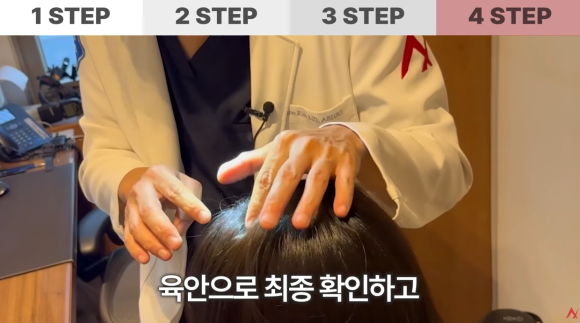

If the following changes are present, a scalp and hair examination may be helpful.²⁴⁵⁷
-
Increased shedding persists for 3 to 6 weeks or longer
-
The crown or hairline looks noticeably sparse
-
Scalp itching, redness, increased oiliness, or dandruff
-
Coin-shaped areas of hair loss
-
Sudden shedding that coincides with the postpartum period
Through examination, it is possible to objectively assess hair shaft thickness, density, follicle count, nutritional status, and hormonal influence.
If I’m Losing a Lot of Hair, Is It Hair Loss? What Counts as Normal?
Summary table
| Category | Normal range | Suspected abnormal range | Reference basis |
|---|
| Daily shedding | 50 to 100 strands¹²³ | 150 to 300 strands (possible telogen effluvium)⁵ | 1, 2, 3, 5 |
| Shedding per shampoo | 20 to 40 strands⁶ | If 60 or more strands continue, observe for changes | 6 |
| Shampoo interval | If it is more than two days, it may look increased | Repeated excessive shedding requires evaluation | 2, 4 |
| Androgenetic hair loss | Pattern remains consistent | Thinning hair shafts, reduced density, M-shaped hairline, crown changes² | 2 |
| Telogen effluvium | Begins 2 to 3 months after a life change | Sudden increase in extent, 200 to 300 strands⁵ | 5 |
It’s time to hairhair, Kim Jin-oh.
Be sure to grow new hair (必生新毛).
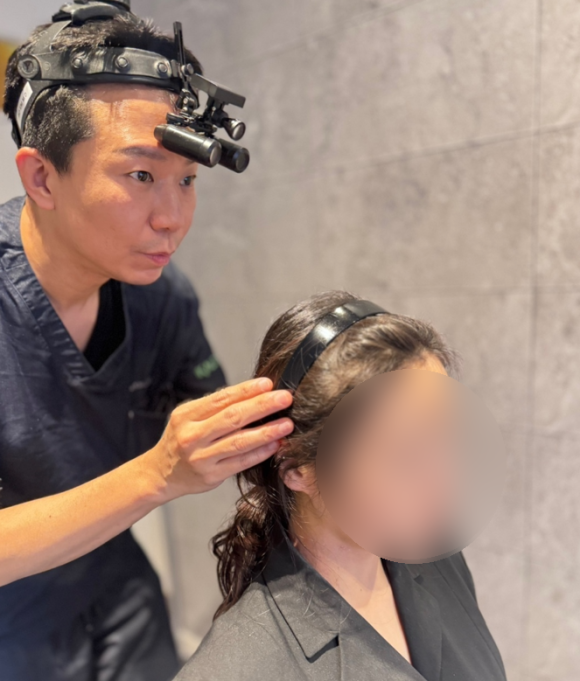
Written by: Kim Jin-oh of New Hair Plastic Surgery (Public Relations Director of the Korean Association of Plastic Surgeons / Academic Director of the Korean Hair Research Society)
References
- Liu, D., Li, W. and Chen, X. (2024). Status of research on the development and regeneration of hair follicles. International Journal of Medical Sciences, 21, pp.80–96.
Excerpt: Because the cycle of each hair follicle is not synchronized, the daily hair loss in normal individuals typically remains under 100.
- International Society of Hair Restoration Surgery (ISHRS). (2025). Hair loss and the hair growth cycle. Available at: https://ishrs.org/hair-loss-and-the-hair-growth-cycle/
Excerpt: On average, 50–100 telogen hairs are shed every day, and this normal shedding accounts for the hair seen in the shower or on combing.
- American Academy of Dermatology (AAD). (2025). Do you have hair loss or hair shedding? Available at: https://www.aad.org/public/diseases/hair-loss/insider/shedding
Excerpt: It’s normal to shed between 50 and 100 hairs a day.
- Chang, F.-L. and Oakley, A. (2019). Hair shedding. DermNet NZ. Available at: https://dermnetnz.org/topics/hair-shedding
Excerpt: Hair shedding is a normal part of the hair cycle and is an ongoing process that varies from person to person.
- Alopecia UK. (2022). Telogen Effluvium. Available at: https://www.alopecia.org.uk/telogen-effluvium
Excerpt: In telogen effluvium, instead of shedding around 100 hairs a day, you may lose up to 300 hairs a day.
- Li, R., Chen, Y., Zhu, S. et al. (2022). The refined wash test: a simple method to monitor chronic telogen effluvium. Skin Appendage Disorders, 8(5), pp.372–381.
Excerpt: Normal participants showed the lowest number of shed hairs during shampooing, with a mean of 27.9 ± 12.2 hairs.
- Cleveland Clinic. (2025). Here’s Why Your Hair Falls Out in the Shower. Available at: https://health.clevelandclinic.org/how-much-hair-is-normal-to-lose-in-the-shower
Excerpt: On average, you lose about 50 to 150 strands each day, and it’s fairly common to see most of those hairs in your shower.
[This post is written directly by a board-certified plastic surgeon for informational purposes in accordance with Article 56, Paragraph 1 of the Medical Service Act. Hair transplant surgery and treatment may have side effects, and please make a careful decision through consultation with a specialist.]