Hair loss is not a disease that suddenly causes dramatic shedding one day; rather, it is a change that gradually becomes more noticeable over several months to years.
So many people think, “It still seems about the same to me...” and then are surprised later when they compare photos.
For an accurate assessment, regular scalp and hair examinations, along with a comparable baseline, are key.
Hair loss tests: When should you start, and how often should you get them?
Summary
The interval for hair loss tests is not fixed; it varies depending on current condition, whether treatment is being used, age, sex, and accompanying conditions.
If hair loss is first suspected, establishing a baseline with a detailed examination →
one follow-up check after 6 months is the most realistic approach.
If stable after that, once a year is enough; if changes are rapid
(such as alopecia areata or telogen effluvium), every 2–3 months may be needed.
Standardized photos taken under the same lighting, angle, and distance are very helpful for checking treatment response and follow-up observation⁶.
For women, younger patients, and those with hormonal or autoimmune conditions, maintaining 6-month intervals is often recommended.
Q1. If hair loss is suspected, should I get tested right away?
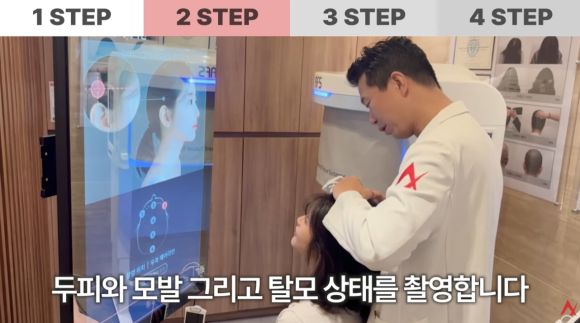
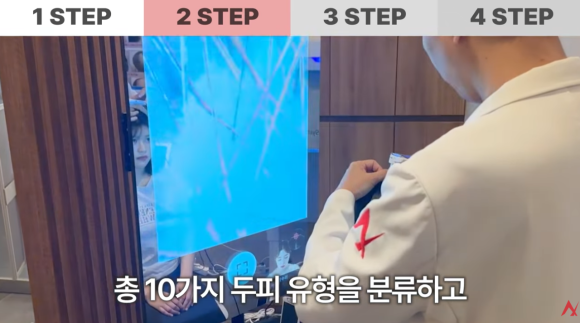
Hair loss often progresses gradually, so it is difficult to tell early on.
In particular, male-pattern and female-pattern hair loss are common enough to be observed in about 30% of men in their 30s and about half of people in their 50s¹², and if the early stage is missed, it becomes difficult to evaluate treatment response.
The purpose of the initial examination is to
These factors are recorded in detail to create a baseline.
The earlier the first examination, the better.
Q2. How should the interval between tests be set?
Because hair grows in cycles, checking too often makes changes seem almost invisible.
Most guidelines and studies suggest a 6- to 12-month interval as the most practical schedule³⁴⁵.
If treatment has just started: check for changes after 6 months
Entering the stable phase: once every 12 months
Women and younger patients: a 6-month interval is recommended because hormonal effects are greater
Alopecia areata or rapid telogen shedding: every 2–3 months during the active phase
Q3. Why is standardized photography important?
Standardized scalp photos are a more powerful diagnostic tool than you might think.
Photos taken in the same place, angle, lighting, and distance accurately show even small changes.
In actual studies, the patient group that kept standardized photos had a higher follow-up visit rate, and it was reported that agreement between doctors and patients was higher when evaluating treatment⁶.
-
Right before changing medication
-
Before and after a procedure
-
Regular checkup once a year
These three time points are especially worth photographing.
Q4. What can trichoscopy show?
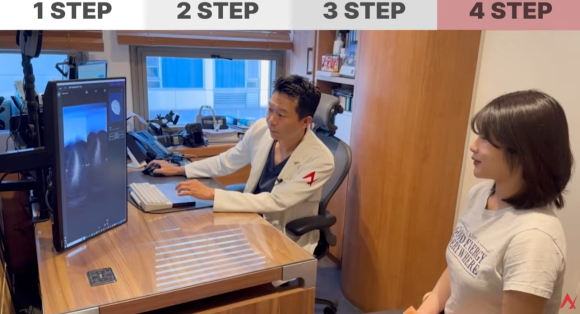
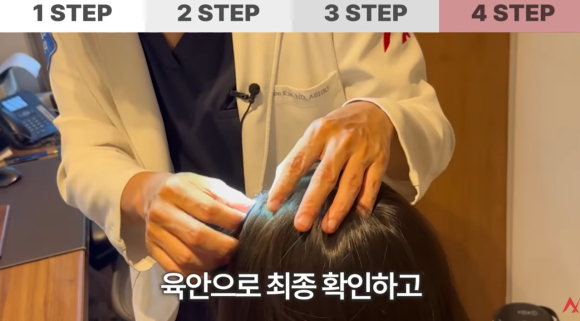
With magnified images, trichoscopy can examine in very fine detail
-
uniformity of hair shaft thickness
-
whether miniaturization is present
-
redness and scaling around hair follicles
-
inflammatory changes
-
newly growing fine hairs
This has been recognized in many papers as one of the most useful evaluation tools for sensitively detecting treatment response in male-pattern and female-pattern hair loss patients.
Q5. Is a blood test always necessary?
It is not repeatedly needed for all patients.
-
female hair loss
-
suspected iron deficiency, thyroid disease, or autoimmune disease
-
rapidly spreading diffuse hair loss
In these cases only, it is generally performed once during the initial diagnostic process.
After that, additional testing can be done if changes occur.
Q6. What is the significance of devices such as ultrasound or 3D scalp scanners for hair loss?

Recent studies have reported that high-frequency scalp ultrasound helps observe hair follicle structures⁷.
However, it has not yet been standardized enough to be used for routine follow-up testing in everyday practice.
By contrast, a 3D scalp scanner for hair loss automatically adjusts lighting, distance, angle, and resolution, making it very advantageous for comparing progress.
Q7. Would frequently changing clinics affect the examination?
There is a strong possibility that it would.
Because the imaging equipment, lighting, magnification, and analysis standards differ slightly from one clinic to another, the results can become non-comparable data.
The more records are accumulated in a consistent care environment, the more accurately the direction of hair loss progression and treatment effects can be judged.
Q8. Is it okay to receive trichoscopy remotely?
Recent studies have reported that follow-up management based on remote trichoscopy was almost as effective as outpatient visits⁹.
It is increasingly being used as a way to greatly reduce the burden for people who have difficulty visiting a clinic.
| Situation | Recommended test interval | Notes |
|---|
| Early suspected hair loss | 6 months after establishing a baseline | Check thickness, density, and inflammation |
| Early treatment phase (starting medication/procedures) | 6 months | Check response |
| Entering the stable phase | 12 months | Standardized photos required |
| Women, younger patients, or cases with strong hormonal influence | 6 months | High variability |
| Alopecia areata or rapidly progressive telogen effluvium | 2–3 months | During the active phase |
| Family history only, with no changes | 1 year | Preventive check |
Now it is time for hair hair, Kim Jin-oh.
필생신모(必生新毛).
Written by: Kim Jin-oh of New Hair Plastic Surgery Clinic (Public Relations Director, Korean Society of Plastic and Reconstructive Surgeons / Academic Director, Korean Laser Dermatology and Hair Society)
References
-
Jang WS, et al. 2013. A clinical study of androgenetic alopecia in Korean patients. Annals of Dermatology, 25(2):181–188. cited: “By the age of 30 years approximately 30% of men will have AGA and this will increase to approximately 50% by 50 years of age.”
-
Asfour L, et al. 2023. Male androgenetic alopecia. In: Feingold KR, et al., editors. Endotext [Internet]. MDText.com, Inc. cited: “Male androgenetic alopecia is the most common form of hair loss in men, affecting 30–50% of men by age 50.”
-
Mazur KJ. 2024. Trichoscopy as a diagnostic method in non-scarring alopecia. Archiv Euromedica, 4:68–73. cited: “Additionally, trichoscopy thoroughly allows for monitoring the response to treatment for various types of hair loss.”
-
Krishnegowda R, et al. 2022. Utility of trichoscopy in various types of alopecia. Journal of Skin and Sexually Transmitted Diseases, 4(2):69–77. cited: “In a busy OPD, trichoscopy helps to have an accurate diagnosis and helps to monitor the response to treatment.”
-
Iritaş SY, Özcan D. 2024. The value of trichoscopy in the follow-up of treatment response in androgenetic alopecia. Dermatology Practical & Conceptual, 14(1):e2024001. cited: “Trichoscopy… can be used as a sensitive method in monitoring the treatment response in patients with AGA.”
-
Lee S, Lee H, Lee CH, Lee WS. 2019. Photographic assessment improves adherence to recommended follow-up in patients with androgenetic alopecia and alopecia areata: a retrospective cohort study. Indian J Dermatol Venereol Leprol, 85(4):431–433. cited: “Photographic assessment improves adherence to recommended follow-up…”
-
Wanitphakdeedecha R, et al. 2024. High-frequency ultrasonography of the scalp: a practical guide. Skin Research and Technology, 30(4):e13863. cited: “High-frequency ultrasonography can be employed to visualize the entrance echo, dermis, subcutaneous tissue, and hair follicles.”
-
Bortone G, et al. 2024. A new method for the follow-up of patients with alopecia: telemedicine applied to trichology. Journal of Clinical Medicine, 13(13):3901. cited: “Telemedicine applied to trichology… was proven to be a valid system for managing the follow-up.”
[This post is written directly by a board-certified plastic surgeon for informational purposes in accordance with Article 56, Paragraph 1 of the Medical Service Act. Hair loss surgery and treatment may have side effects, and please make a careful decision through consultation with a specialist.]