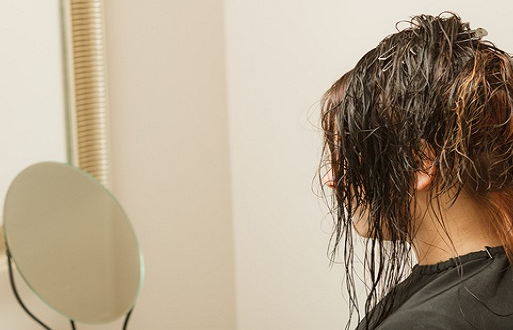
Wet hair
Source - Hidoc
Simply partially drying a wet scalp can often lead to repeated discomfort such as itching, dandruff, and redness.
Even though it may seem like a simple habit, the scalp is structurally an environment sensitive to moisture, sebum, and heat, so its condition can vary greatly depending on how it is cared for.
In this post, we summarized the relationship between scalp inflammation, dandruff, hair damage, and a wet scalp, as well as why proper drying habits matter.
Wet Scalp Inflammation: Does Not Drying Your Hair Really Make It Worse?
Summary
If the scalp stays wet for a long time, Malassezia growth¹²,
sebum breakdown, and worsening inflammation can easily occur
Sleeping with wet hair creates an environment where fungi and bacteria
increase as scalp temperature and humidity rise³⁴
When hair absorbs water, it expands by 12–18%⁸, and repeated drying can lead to cuticle damage, splitting, and breakage
Drying quickly with hot air can also cause heat damage, according to research¹⁰
If scalp inflammation and dandruff keep recurring, simply adjusting the drying method rather than changing shampoo alone often leads to improvement (clinical experience)
Q1. Why does a wet scalp make dandruff and scalp inflammation worse?
A wet scalp is an environment where sebum, moisture, and warmth exist together.
This combination creates conditions that are favorable for Malassezia, a yeast naturally present on the scalp, to multiply.
According to studies, a higher proportion of Malassezia has been observed on the scalps of patients with seborrheic dermatitis⁵, and the longer sebum and moisture remain, the more actively the fungus proliferates¹².
If the wet condition lasts too long, sebum becomes food for the fungus, moisture increases its activity, and when you lie down at night, scalp temperature rises³, creating a structure in which the fungus can settle quickly.
In clinical practice, there are many cases where simply correcting the habit of going to bed with wet hair reduces itching and flaking.
Q2. What changes happen to the scalp if you sleep without drying your hair?
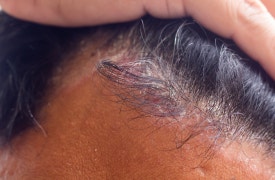
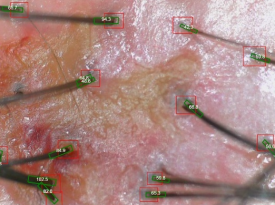
Scalp inflammation
When you sleep, the scalp comes into close contact with the pillow, and heat and humidity rise together.
University of Utah Health also explains that sleeping with wet hair creates an environment that helps bacteria and fungi proliferate³.
In this process, byproducts of sebum breakdown increase and the scalp barrier is irritated, leading to a tendency for itching, redness, and increased flaking to recur⁴.
In particular, people with seborrheic dermatitis, sensitive scalps, or frequent dandruff are more strongly affected by these factors, and symptom relief is often observed simply by adjusting drying habits.
Q3. Is it true that repeated wet hair leads to accumulated damage?
Yes. When hair absorbs water, it expands by about 12–18%⁸, and at that point the internal hydrogen bonds loosen, leaving it in a state with reduced elasticity.
If towel friction, pillow friction, or combing is applied in this state, the cuticle is more likely to lift or become damaged easily.
In addition, repeated cycles of “wet → dry → wet” reduce the structural stability of the hair and can lead to splitting, breakage, and roughness⁷⁹.
Q4. Then is it even worse to dry it quickly with hot air?
Hot air can create another problem.
According to studies, high-temperature dryers cause cuticle splitting and heat damage¹⁰
and can also irritate the scalp with dryness and tightness.
Therefore, the best method is to dry the scalp thoroughly while avoiding overheating: lukewarm air, followed by a cool-air finish.
Q5. What is the proper way to dry hair for people who often develop scalp inflammation?
The principles that were effective in clinical practice are as follows.
| Hair-drying principles for scalp health | Reason |
|---|
| Dry the scalp first | Block the environment that promotes Malassezia growth¹² |
| 80% lukewarm air + 20% cool air | Reduce heat damage¹⁰ |
| Lift the hair with your fingers and check all the way to the scalp | Prevent the mistake of confusing surface dryness with true dryness |
| Shampoo 1–2 hours before bed | Block the effects of rising temperature and humidity during sleep³ |
| Never go to sleep with wet hair X | Help prevent worsening of scalp inflammation and dandruff³⁴ |
There is a lot of clinical experience showing that these habits help reduce scalp itching and flaking even without medication.
Q6. What sequence is the most efficient for drying quickly?
-
Remove moisture by gently pressing with a towel (do not rub)
-
Dry the scalp first with lukewarm air to about 70%
-
Dry the mid-lengths and then the ends of the hair
-
Finish with cool air when the whole head is almost dry
This method is the pattern that dries the scalp most stably while avoiding overheating.
Wet Scalp Inflammation: Does Not Drying Your Hair Really Make It Worse?
Conclusion
The scalp is a very sensitive structure, like the soil in which hair grows.
If humidity remains for a long time, fungi can easily proliferate, and hair can be damaged by repeated expansion and contraction.
The clinical experience that the way you dry your hair often affects scalp condition more than shampoo is also consistent with this research-based evidence.
In daily life, even a small habit of drying the scalp completely, but without overheating, can help the scalp and hair stay much more stable.
It is now time for hair, Kim Jin-oh.
Pilsaengsinmo (必生新毛).
Written by: Kim Jin-oh of New Hair Plastic Surgery Clinic (Public Relations Director of the Korean Association of Plastic Surgeons / Academic Director of the Korean Society of Laser Dermatology and Hair)
References
-
Borda LJ, Wikramanayake TC. (2015). Seborrheic dermatitis and dandruff: A comprehensive review. J Clin Investig Dermatol.
-
Saunte DML et al. (2020). Malassezia-associated skin diseases, diagnostics and treatments. Front Cell Infect Microbiol.
-
Schmidt C. (2023). Is it bad to sleep with wet hair? University of Utah Health.
-
Cleveland Clinic. (2021). Can wet hair actually make you sick?
-
Lee YW et al. (2011). Distribution of Malassezia species on the scalp in Korean seborrheic dermatitis patients. Ann Dermatol.
-
Healthline. (2020). Hygral fatigue: Causes, treatments and prevention.
-
Sinclair RD. (2007). Healthy hair: What is it? J Am Acad Dermatol.
-
Healthline. (2020). Hygral fatigue: Causes, treatments and prevention.
-
Lab Muffin. (2024). How to dry your hair, according to science.
-
Lee Y et al. (2011). Hair shaft damage from heat and drying time of hair dryer. Ann Dermatol.
[In accordance with Article 56, Paragraph 1 of the Medical Service Act, this post is written directly by a board-certified plastic surgeon for informational purposes. Hair loss surgery and treatment may involve side effects, and should be carefully decided upon through consultation with a specialist.]