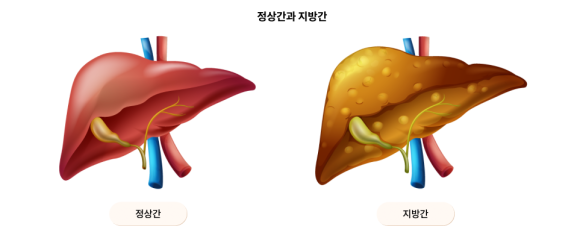
Normal Liver and Fatty Liver
Source - My Puzzle
As metabolic health problems become more common, many people are asking about the connection between fatty liver and hair loss.
Recently, a large-scale study was published showing that genetic hair loss (male-pattern and female-pattern hair loss) occurs more often in adults with fatty liver, which has drawn even more attention¹.
Hair loss cannot be explained by changes in the hair follicle alone.
Because the liver plays important roles in hormone metabolism, inflammation control, and energy balance, fatty liver can also disrupt the environment around hair follicles.
In today’s post, I have summarized the relationship between fatty liver and hair loss based on the questions patients often ask in the clinic.
Is It True That Fatty Liver Raises the Risk of Hair Loss?
Summary
Adults with fatty liver have about a 31% higher risk of genetic hair loss,
and women have a 62% increase¹
Main links: insulin resistance⁵⁶, decreased SHBG⁷⁸,
increased chronic inflammation⁹, and abnormal lipid metabolism
Excess carbohydrate intake and fructose intake strengthen the fatty liver–hair loss association¹⁰¹¹
Regular exercise and weight control reduce the risk¹², and in some
people taking lipid-lowering drugs, the association becomes weaker¹³
Hair loss that progresses quickly may have underlying signs of metabolic abnormalities (systemic issues), so checking lifestyle habits becomes an important part of treatment
Q1. If you have fatty liver, is hair loss really more likely?
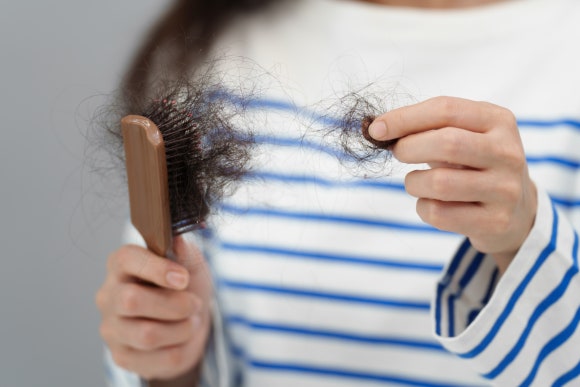
In a large analysis including multiple countries, adults with fatty liver were found to have a significantly higher likelihood of genetic hair loss¹.
The effect was especially greater in women, because female hair follicles tend to respond more sensitively to hormonal changes and liver function changes.
In clinical practice, there are many patients who report that their hair loss has accelerated along with weight gain and abdominal obesity, and blood tests often show elevated liver enzyme levels along with findings of fatty liver.
Q2. What is the key mechanism by which fatty liver causes hair loss?
The important metabolic changes directly linked to hair loss are as follows.
This is a central change in fatty liver that disrupts the body’s overall energy metabolism.
When insulin resistance increases, the energy supply needed for hair follicles to grow becomes unstable, and the growth phase tends to become shorter⁵⁶.
- Increased free androgens due to decreased sex hormone-binding globulin (SHBG)
The liver produces sex hormone-binding globulin, which helps regulate hormone levels.
When fatty liver develops, sex hormone-binding globulin decreases, and as a result, the proportion of free, active androgens increases⁷⁸.
This is an important factor that speeds up hair loss in androgen-sensitive hair follicles.
- Low-grade chronic inflammation
In fatty liver, inflammatory cytokines are continuously released.
These signals are known to alter the microenvironment of hair follicles and advance the transition from the growth phase to the resting phase, increasing shedding⁹.
- Abnormal lipid metabolism
Higher triglycerides, LDL, and hormonal imbalance in adipose tissue affect blood flow and follicular stability.
In fact, studies have reported that changes in adipose tissue hormones are associated with hair loss.
Q3. How much can diet strengthen the fatty liver–hair loss relationship?
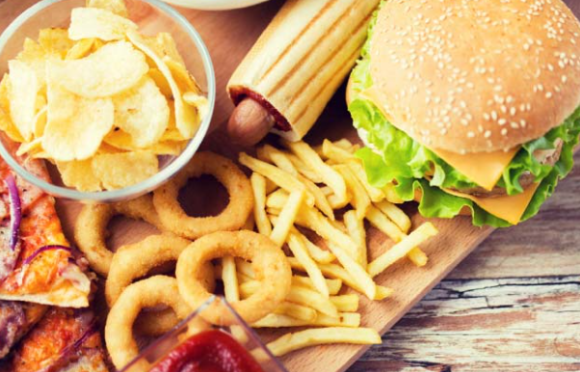
Refined carbohydrates
Source - Health Chosun
In groups with high carbohydrate intake, the risk of hair loss increased more when fatty liver was present¹⁰.
Fructose promotes de novo fat production in the liver, worsens fatty liver¹¹, and ultimately makes the warning signs of hair loss stronger.
On the other hand, reducing refined carbohydrate intake and changing the diet to focus on protein and fiber can help improve fatty liver and slow the progression of hair loss.
Q4. Does exercise reduce the risk of hair loss even if you have fatty liver?
Exercise is the most effective non-drug treatment for improving fatty liver.
Studies have also shown that people who exercise regularly do not experience a major increase in hair loss risk even if they have fatty liver¹².
Exercise helps reduce liver fat, improve insulin resistance, and lower systemic inflammation at the same time, contributing to a more stable hair follicle environment.
Q5. Does taking fatty liver medication (for example, statins) change the risk of hair loss?
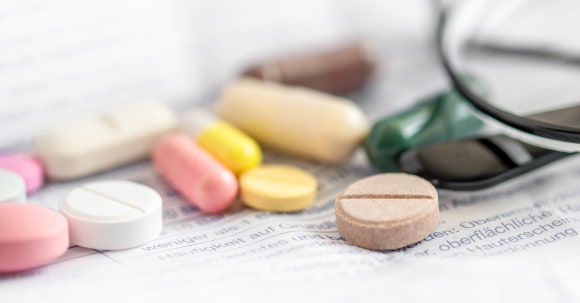
In some people taking lipid-lowering drugs, almost no increase in hair loss risk was observed even when fatty liver was present¹³.
Statins appear to weaken the fatty liver–hair loss link because they improve liver fat, inflammation, and lipid metabolism.
However, medication is not necessary or appropriate for every patient, and lifestyle improvement is the foundation.
Is It True That Fatty Liver Raises the Risk of Hair Loss?
Summary Table
| Mechanism | Changes in fatty liver | Effect on hair loss |
|---|
| Insulin resistance⁵⁶ | Unstable energy metabolism | Shortened growth phase, hair thinning |
| Decreased SHBG⁷⁸ | Increased free androgens | Promotes hair loss in androgen-sensitive areas |
| Chronic inflammation⁹ | Damage to the microenvironment | Increased shedding, higher proportion of resting hairs |
| High-carbohydrate diet¹⁰¹¹ | Worsened liver fat accumulation | Reinforces metabolic abnormalities related to hair loss |
| Lack of exercise¹² | Worsening fatty liver | Reduced follicular resilience |
| Abnormal lipid metabolism | Increased LDL and TG | Unstable blood flow and metabolism in hair follicles |
Now it is time for hairhair, Kim Jin-oh.
Pilsaengsinmo (必生新毛).
Written by: Kim Jin-oh of New Hair Plastic Surgery (Public Relations Director of the Korean Society of Plastic Surgeons / Academic Director of the Korean Society of Laser Dermatology and Hair)
References
-
Bazmi, S. et al. (2025) Metabolic dysfunction-associated steatotic liver disease is associated with androgenetic alopecia in adults with stronger effects in women and unhealthy lifestyles. Scientific Reports, 15, Article 42399. cited:"MASLD was significantly associated with increased odds of AGA, with stronger effects observed in females."
-
Younossi, Z. et al. (2018) Global epidemiology of nonalcoholic fatty liver disease. Nature Reviews Gastroenterology & Hepatology, 15, 11–20. cited:"NAFLD affects nearly one quarter of the global adult population."
-
Paik, J. et al. (2020) The worldwide burden of NAFLD. Hepatology, 72(5), 1580–1590.
cited:"Global prevalence estimates continue to rise."
-
Samuel, V.T. & Shulman, G.I. (2016) The pathophysiology of insulin resistance. Cell, 164(6), 1231–1244. cited:"Hepatic lipid accumulation plays a central role in insulin resistance."
-
Petersen, K.F. et al. (2007) The role of muscle insulin resistance. Science, 316(5826), 1341–1345. cited:"Peripheral insulin resistance disrupts glucose uptake and metabolic signaling."
-
Miedzybrodzka, E. et al. (2019) Sex hormone-binding globulin regulation and liver health. Clinical Endocrinology, 90(2), 220–227. cited:"SHBG levels decrease in individuals with hepatic steatosis."
-
Lizneva, D. et al. (2016) Hormonal and metabolic determinants of SHBG. Human Reproduction Update, 22(5), 723–740. cited:"SHBG is highly sensitive to metabolic and hormonal fluctuations."
-
Trüeb, R. (2015) Inflammation and hair follicle biology. Dermatology, 231(1), 1–8.
cited:"Inflammatory mediators can induce premature catagen and hair shedding."
-
Le, K.A. et al. (2006) Effects of dietary carbohydrates on liver fat. American Journal of Clinical Nutrition, 84(5), 1135–1141. cited:"High carbohydrate intake increases hepatic de novo lipogenesis."
-
Lim, J. et al. (2015) Fructose-induced lipogenesis. Hepatobiliary Surgery and Nutrition, 4(2), 109–121. cited:"High fructose diets substantially increase NAFLD risk."
-
Keating, S.E. et al. (2025) Exercise and liver fat reduction. Sports Medicine, 55, 123–136. cited:"Exercise improves hepatic fat and insulin sensitivity."
-
Athyros, V.G. et al. (2021) Lipid-lowering therapy and hepatic outcomes. Current Medical Research and Opinion, 37(8), 1301–1310. cited:"Statins may reduce liver fat and improve metabolic parameters."
[This post is written directly by a board-certified plastic surgeon for the purpose of providing information, in accordance with Article 56, Paragraph 1 of the Medical Services Act. Hair transplant surgery and treatment may have side effects, and please make a careful decision after consulting with a specialist.]