Hair loss treatment is not only about effectiveness; sustainability is just as important.
Topical minoxidil is a proven medication, but in actual clinical practice, it is very common for patients not to keep using it for long.
There are clear real-world barriers such as stickiness, scalp irritation, and styling inconvenience.
Against this background, low-dose oral minoxidil (LDOM) has recently become one treatment option among hair-loss specialists worldwide, and with the release of the 2025 international consensus guideline, the clinical standards are gradually being organized³.
Low-Dose Oral Minoxidil: What Is the Key Point of the Recent International Guidelines?
Summary
Low-dose oral minoxidil is used as an alternative to compensate for the low continuation rate of topical minoxidil
The international consensus recommendation is to start at 1–2 mg for men and 0.5–1 mg for women³
A very low dose, about 1/10 to 1/40 of the dose used for hypertension treatment
Effects are usually observed gradually after 4–6 months
Most side effects are mild and manageable, but caution is needed in patients with heart disease
It is also a meaningful adjunct treatment for hair transplant patients in terms of maintaining existing hair
Q1. Why is low-dose oral minoxidil being used so much these days?
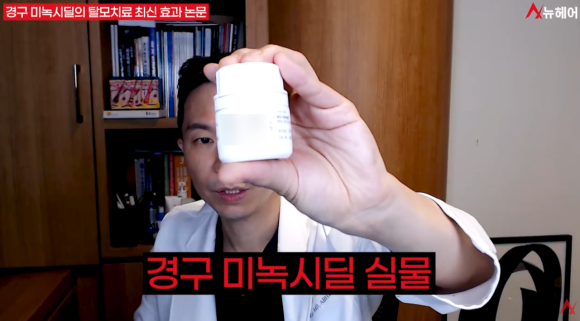
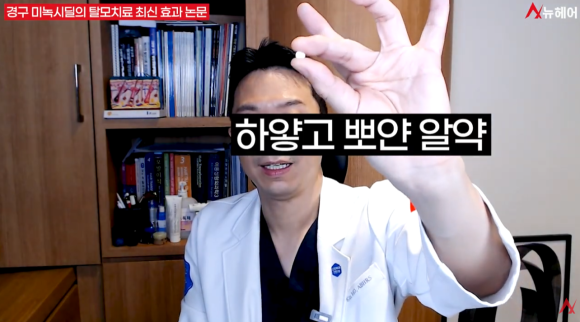
The biggest reason is convenience in taking it.
Although topical minoxidil is effective, research has shown that only about 15% of patients continue using it for more than 6 months¹.
In contrast, the oral form requires only one dose a day, so it is less burdensome to manage and is more suitable for long-term treatment.
A multicenter study also confirmed the safety and effectiveness of low-dose oral minoxidil².
Q2. What dose is safe to start with per day?
According to a Delphi consensus involving more than 30 international hair-loss experts³,
it is recommended to start at 1–2 mg per day for men and 0.5–1 mg per day for women.
Compared with the 10–40 mg doses used for hypertension treatment, this is an extremely low dose, optimized for the purpose of hair-loss treatment.
Q3. When can effects be felt?
In most cases, changes in hair thickness, density, and volume are gradually observed around 4–6 months after starting treatment²⁴.
In clinical experience, rather than suddenly growing a lot of hair, many patients first say that the hair that was becoming thinner seems to shed less and hold on better.
Q4. Can hair fall out more at first?
Yes. In the beginning, it may temporarily seem like hair loss has increased.
This is a shedding phenomenon, a natural change that occurs as hairs in the resting phase fall out and transition into a new growth cycle.
In most cases, it stabilizes over time.
Q5. What side effect is most common?
Among the reported side effects, the most common are increased fine body hair on the face, arms, and legs, dizziness, headache, and mild swelling of the feet or face¹⁵.
In most cases, these were manageable through dose adjustment or observation over time.
Q6. Are there cases where it should never be taken?
Yes. The consensus guideline does not recommend use in patients with pericarditis, pericardial effusion, heart failure, or severe valvular disease³.
Also, if you normally have low blood pressure or a history of palpitations, a more cautious approach is needed.
Q7. Is there any point in taking it after a hair transplant?
Yes, there is. Over time after a hair transplant, the existing hair often becomes weaker first.
Low-dose oral minoxidil helps preserve the original hair rather than the transplanted hair, contributing to overall density and balance.
Q8. Can it be used together with finasteride or dutasteride?
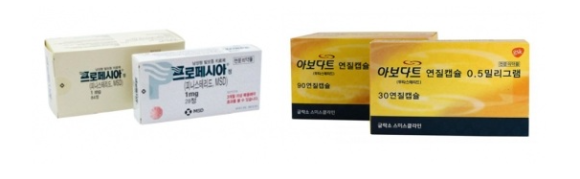
Finasteride/dutasteride
Source - Dailypharm
Because the mechanisms are different, they can be used together.
However, the combination may vary depending on age, type of hair loss, and rate of progression.
Low-Dose Oral Minoxidil: What Is the Key Point of the Recent International Guidelines?
Summary Table
| Item | Key Point |
|---|
| Recommended starting dose | Men 1–2 mg / Women 0.5–1 mg |
| When effects are felt | After 4–6 months |
| Main advantages | Convenience in taking it, maintaining existing hair |
| Common side effects | Increased fine body hair, dizziness, swelling |
| People who need caution | Patients with heart disease, low blood pressure |
| Combination therapy | Can be combined with finasteride/dutasteride |
Low-dose oral minoxidil is less a treatment that creates new hair than a tool that helps preserve already weakening hair for longer.
Now that the international consensus guideline has been released, using it at the right dose for the right candidates can be seen as a practical option that broadens the choices for hair-loss treatment.
It is time for hair growth. This was Kim Jin-oh.
필생신모(必生新毛).

Written by: Kim Jin-oh, New Hair Plastic Surgery (Public Relations Director, Korean Society of Plastic and Reconstructive Surgeons / Academic Director, Korean Society of Laser Dermatology and Hair)
References
-
Suchonwanit, P., Thammarucha, S., Leerunyakul, K. (2019). Topical minoxidil compliance in patients with androgenetic alopecia. Clinical, Cosmetic and Investigational Dermatology, 12, 981–988. cited:"The overall continuation rate of topical minoxidil was approximately 15% after extended follow-up."
-
Vañó-Galván, S. et al. (2021). Safety of low-dose oral minoxidil for hair loss: A multicenter study of 1404 patients. Journal of the American Academy of Dermatology, 84(6), 1644–1651. cited:"Low-dose oral minoxidil has a good safety profile as a treatment for hair loss."
-
Akiska, Y.M. et al. (2025). Low-dose oral minoxidil initiation for patients with hair loss: An international modified Delphi consensus statement. JAMA Dermatology, 161(1), 87–95. cited:"Low-dose oral minoxidil is an increasingly popular off-label treatment for patients with hair loss."
-
Panchaprateep, R. & Lueangarun, S. (2020). Efficacy and safety of oral minoxidil 5 mg once daily in males with androgenetic alopecia. Dermatology and Therapy, 10(6), 1345–1357. cited:"Oral minoxidil 5 mg once daily increased hair growth and had a good safety profile."
-
Jimenez-Cauhe, J. et al. (2025). Characterization of adverse events of low-dose oral minoxidil. Journal of Clinical Medicine, 14(6), 1805. cited:"Low-dose oral minoxidil has a favorable safety profile with manageable side effects."
-
Jimenez-Cauhe, J. et al. (2020). Safety of low-dose oral minoxidil: Systematic review. Dermatologic Therapy, 33(6), e14106. cited:"Low dose oral minoxidil is a safe and well-tolerated treatment for hair loss."
[This post is written directly by a board-certified plastic surgeon for informational purposes in accordance with Article 56, Paragraph 1 of the Medical Services Act. Hair transplant surgery and treatment may have side effects, and decisions should be made carefully through consultation with a specialist.]