One of the most common questions I hear in the clinic.
It’s that ambiguous stage when it seems clear that hair loss is progressing, but it still feels too early to start medication.
At this stage, many people go back and forth between anxiety and waiting.
The important point is whether you spend this time doing nothing, or use it as a preparation period to organize the situation and decide on a direction.
In the post below, I will organize the most frequently asked questions around academic evidence, along with practical decision-making criteria felt in clinical practice.
Hair loss medication: What should you look at first when you're unsure whether to take it?
Summary
The time spent hesitating about hair loss medication is a normal part of the process
At this stage, checking the pattern + assessing overall health is key
Non-drug management is not an ineffective alternative either
A few months of records can make the basis for deciding on medication clearer
Q1. It still feels unclear... Do I really need to start hair loss medication now?

Finasteride
Source - Medipana News

Dutasteride
Source - Pharm News
Many people say they seem to be losing hair, but they are not sure.
The important criterion in situations like this is the pattern, rather than the mere presence of hair loss.
With closer observation, androgenetic alopecia shows a characteristic gradual shift in the ratio of thick hairs to thin hairs¹.
Clinically, a key deciding factor is whether there is an increase in noticeably thinner hair, especially in the crown or M-shaped hairline area.
If this change is clear, drug treatment is a natural choice. On the other hand, if the pattern is unclear, it is possible to monitor the course with non-drug management.
Q2. While postponing hair loss medication, is it completely meaningless?
Not at all. In fact, this is the best time to check the balance of the whole body.
In studies of patients with telogen effluvium, deficiencies in iron, vitamin D, and vitamin B12 have been repeatedly observed²³.
In actual practice, many people complain of hair loss after childbirth, rapid dieting, or disrupted sleep.
In such cases, there are clearly people whose condition improves with correction of the deficiency alone, before medication.
Q3. Is hair loss really related to lifestyle habits?
It is true that genetics is the biggest factor, but lifestyle habits can act as a factor that brings on hair loss signals earlier.
Large-scale analyses have confirmed an association between male pattern hair loss and metabolic syndrome⁴,
and reports have also shown that smoking, irregular eating habits, and a high BMI are related to early hair loss⁵.
Clinically as well, there are many cases where people notice hair loss after a period of significant weight changes or disrupted sleep.
Q4. Wouldn't it be better to take supplements in advance?
The key is not to take a lot, but to take the right ones.
Vitamin D, B12, and iron have shown meaningful improvement when there is a deficiency²³,
but biotin has limited perceived effect when there is no actual deficiency³.
Unnecessary high-dose supplementation can actually make test interpretation more difficult.
Q5. How much help can scalp care or topical products provide instead of medication?
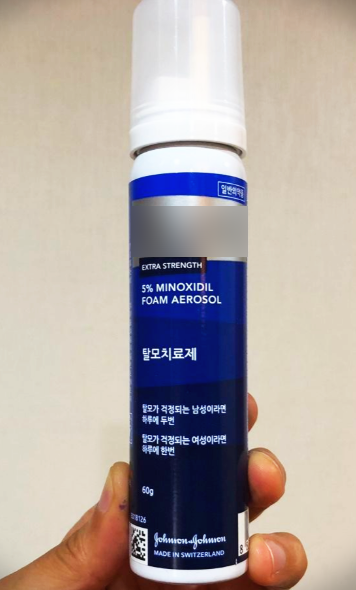
Minoxidil
In some cases, simply stabilizing scalp inflammation, flaking, and sebum conditions first can reduce the rate of shedding.
Topical minoxidil is often chosen at this stage because it is less burdensome than oral medication, and there are also studies reporting that caffeine topical products were not inferior to minoxidil 5%⁶.
It is appropriate to understand this not as a powerful substitute, but as a strategy for stabilizing the environment.
Q6. Is there scientific evidence for laser or microneedling treatment?
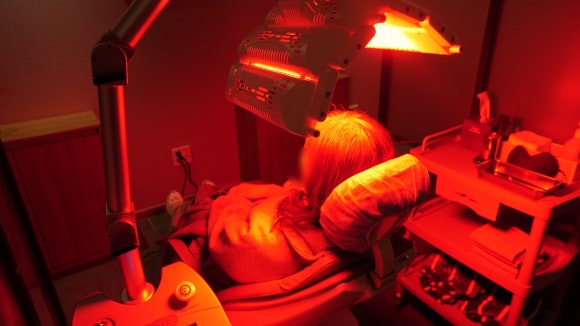
Low-level laser therapy has randomized studies showing increased hair thickness and density⁷, and it involves almost no pain or recovery burden.
Microneedling is described as an adjunct strategy that increases topical absorption and stimulates growth signals⁸, and in female pattern hair loss, increased hair density has been reported⁹.
These are areas that can be chosen as complementary management while postponing medication.
Hair loss medication: What should you look at first when you're unsure whether to take it?
Summary table
| Management area | Expected effect | Evidence |
|---|
| Photo records | Objectify the course of change | Clinical observation |
| Blood tests | Correct deficiencies | ²³ |
| Lifestyle improvement | Delay hair loss signals | ⁴⁵ |
| Topical products | Stabilize the scalp environment | ⁶ |
| Low-level laser therapy | Increase density and thickness | ⁷ |
| Microneedling | Absorption and growth signals | ⁸⁹ |
The time spent hesitating about hair loss medication is not time spent postponing a decision; it is time spent building criteria.
Just a few months of records and management can make it clear whether the course points to a need for medication or whether non-drug management is enough.
The most regrettable choice is letting time pass without making any judgment.
Making good use of this ambiguous period is already the start of important management.
This was Kim Jin-oh, the one who says it's time to grow hair hair.
Pilsaengsinmo (必生新毛).

Written by: Kim Jin-oh, New Hair Plastic Surgery (Public Relations Director of the Korean Association of Plastic Surgeons / Academic Director of the Korean Society of Laser Dermatology and Hair Research)
References
-
Miteva, M. & Tosti, A. (2012) Dermoscopy of hair with dermoscopy overview, Dermatologic Clinics, 30(4), pp. 643–658. cited:"Miniaturized hairs are a key feature of androgenetic alopecia."
-
Durusu Turkoglu, I. N. et al. (2024) A comprehensive investigation of biochemical status in patients with telogen effluvium, Journal of Cosmetic Dermatology. cited:"Laboratory abnormalities were detected least in the hair loss group compared to telogen effluvium cases."
-
Alves, D. K. et al. (2022) Use of vitamins and minerals in telogen effluvium: a review, Research, Society and Development, 11(14). cited:"A large percentage of cases with telogen effluvium are vitamin D deficient."
-
Qiu, Y. et al. (2022) Association between androgenetic alopecia and metabolic syndrome: a systematic review, Acta Dermato-Venereologica. cited:"Androgenetic alopecia was associated with a high risk of metabolic syndrome."
-
Liu, L. P. et al. (2024) Factors associated with early-onset androgenetic alopecia: a systematic review, PLOS ONE. cited:"Risk factors included cigarette smoking, unhealthy dietary habits, and a high body mass index."
-
Dhurat, R. et al. (2017) Caffeine-based topical liquid versus minoxidil 5% in male androgenetic alopecia, Clinical, Cosmetic and Investigational Dermatology, 10, pp. 167–175. cited:"A caffeine-based topical liquid should be considered as not inferior to minoxidil 5% solution."
-
Suchonwanit, P. et al. (2019) Low-level laser therapy for androgenetic alopecia: randomized double-blind trial, Lasers in Medical Science, 34(6). cited:"Low-level laser therapy significantly increased hair density and hair thickness."
-
Nestor, M. S. et al. (2021) Treatment options for androgenetic alopecia, Journal of Cosmetic Dermatology, 20(6). cited:"Microneedling appears to be a safe and effective adjuvant therapy."
-
Ramos, P. M. et al. (2023) Female-pattern hair loss: therapeutic update, Anais Brasileiros de Dermatologia. cited:"Patients showed an increased density of 19.57 hairs per cm² after microneedling."
[This post is written directly by a board-certified plastic surgeon for informational purposes in accordance with Article 56, Paragraph 1 of the Medical Service Act. Hair loss surgery and treatment may have side effects, and please make a careful decision through consultation with a specialist.]