The question I hear most often in the clinic is simple.
“Why do I change so quickly when they say it’s the same type of hair loss?”
Or, on the other hand: “My parents had severe hair loss, so why am I still okay?”
If you understand hair loss simply as something that progresses with age, it is hard to answer this question.
In actual clinical practice, even when the age, diagnosis, and even the treatment are the same, the rate of progression often differs dramatically.
That difference cannot be explained only by whether a person’s lifestyle is good or bad.
Hair loss is a matter of differences in biological speed occurring inside the scalp.
Why Does Hair Loss Progress at Different Speeds? Why Is It Different for Each Person?
Summary
Hair loss is a polygenic disorder not determined by genetics alone¹²
The progression speed differs depending on DHT signal sensitivity, the speed of follicle miniaturization, and the accumulation of inflammation and fibrosis³⁴⁵
Even with the same medication, the perceived effect differs depending on the timing of treatment intervention³⁹
The key to hair loss is “how quickly it accumulates”
Q1. If male-pattern and female-pattern hair loss are the same, why do some people worsen within just a few years?
The biggest difference is the genetic combination.
Male-pattern and female-pattern hair loss are known as polygenic disorders in which multiple gene variants act together, rather than a single gene¹.
Large-scale genome studies have identified dozens of gene locations related to hair-loss risk², and the combination affects both the starting point and the speed of progression.
In clinical practice, it is common to see very different progression patterns even among siblings within the same family.
This is better understood not as a matter of whether one has the hair-loss gene or not, but as a difference in which combination one is born with.
Q2. Can hair loss progress rapidly even when hormone levels are normal?
Yes. What matters in hair loss is not the blood hormone level itself, but how the scalp interprets hormonal signals.
In androgenetic alopecia, testosterone is converted into DHT, and the activity of 5-alpha reductase and the responsiveness of androgen receptors play key roles in receiving that DHT signal³.
Even in the same hormonal environment, some scalps are insensitive to DHT signals, while others are overly sensitive.
This difference leads to differences in the speed of follicle atrophy.
Q3. Does hair loss mean the same thing as shedding a lot of hair?
No. The essence of hair loss is miniaturization³.
Thick hair gradually becomes thinner, the growth phase shortens, and eventually the hair turns into fine vellus-like hair.
Clinically,
The key is not the number of hairs shed, but the speed of changes in thickness and the growth cycle.
Q4. Can scalp inflammation or fibrosis affect the speed of hair loss?
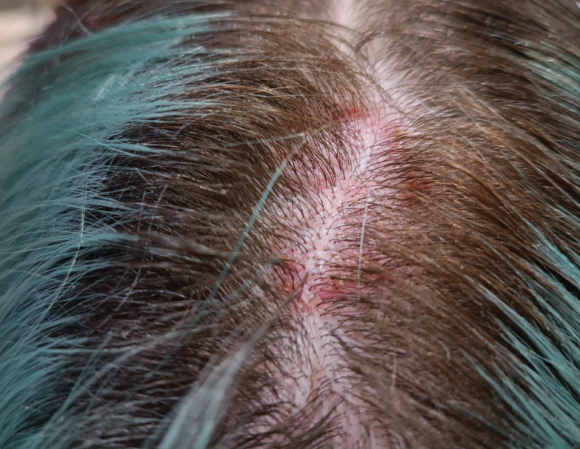
According to histological studies, lymphocytic inflammation and fibrosis are very commonly seen around hair follicles in the scalp of androgenetic alopecia patients⁴⁵.
These changes are invisible from the outside, but they gradually worsen the environment in which follicles exchange recovery signals.
Recent studies have also suggested the view that fibrosis may act not merely as a result, but as a mechanism that fixes follicular miniaturization in place⁶.
The faster inflammation and fibrosis accumulate, the earlier the hair-loss timeline moves forward.
Q5. Why does the effect feel different even when taking the same medication?

Finasteride, Dutasteride
Source - DailyPharm
Finasteride and dutasteride are medications that effectively suppress the DHT pathway³⁹.
However, at a stage where inflammation and fibrosis have already accumulated significantly, the effect may feel closer to slowing further worsening than to seeing hair regrow.
Conversely, when miniaturization is still in an early stage, the course often appears very stable.
This is more realistically understood as a difference in the timing of intervention rather than a problem with the medication itself.
Why Does Hair Loss Progress at Different Speeds? Why Is It Different for Each Person?
Summary table
| Category | Key factor creating individual differences |
|---|
| Genetics | Differences in polygenic combinations¹² |
| Hormonal response | DHT receptor sensitivity³ |
| Follicle changes | Speed of repeated miniaturization³ |
| Tissue environment | Accumulation of inflammation and fibrosis⁴⁵⁶ |
| Biochemical signals | Growth-inhibiting signals such as PGD2⁷ |
| Timing of treatment | Early intervention vs. intervention after accumulation³⁹ |
Hair loss may seem like one disease with the same diagnosis, but in reality it is the result of each person’s scalp biological conditions responding over time.
The reason hair loss progresses at different speeds from person to person is not a matter of luck or grooming.
-
Sensitivity to hormonal signals
-
The way follicles adapt to change
-
The speed at which inflammation and fibrosis accumulate
-
The timing of treatment intervention
All of these factors move on different timelines.
So when looking at hair loss, the most important question is how quickly it is accumulating.
It is time to hairhair, Kim Jin-oh.
Pilsaengsinmo (必生新毛).
Written by: Kim Jin-oh of New Hair Plastic Surgery (Public Relations Director of the Korean Society of Plastic and Reconstructive Surgeons / Academic Director of the Korean Society for Laser, Dermatology, and Hair)
References
- Hagenaars, S.P. et al. (2017) Genetic prediction of male pattern baldness. PLOS Genetics.
cited:"Of those with a polygenic score below the median, 14% had severe hair loss and 39% no hair loss."
- Pirastu, N. et al. (2017) GWAS for male-pattern baldness identifies 71 susceptibility loci. Nature Communications.
cited:"We present the results of a genome-wide association study including more than 70,000 men, identifying 71 independently replicated loci."
- Ho, C.H. et al. (2024) Androgenetic Alopecia. StatPearls (NCBI Bookshelf).
cited:"Individuals with androgenetic alopecia exhibit elevated dihydrotestosterone (DHT) production, heightened levels of 5 alpha-reductase, and an increased abundance of androgen receptors."
- Plante, J. et al. (2022) Perifollicular inflammation and follicular spongiosis in androgenetic alopecia. Journal of the American Academy of Dermatology.
cited:"A prior study demonstrated perifollicular infiltrates in 73% of androgenetic alopecia cases."
- Nirmal, B. et al. (2013) Evaluation of perifollicular inflammation and fibrosis in androgenetic alopecia. Journal of Cutaneous and Aesthetic Surgery.
cited:"Perifollicular lymphocytic inflammation and fibrosis were observed in androgenetic alopecia patients."
- The Role of Fibrosis in Androgenetic Alopecia (2025). Skin Appendage Disorders.
cited:"Perifollicular fibrosis drives hair-follicle miniaturization."
- Garza, L.A. et al. (2012) Prostaglandin D2 inhibits hair growth and is elevated in bald scalp. Science Translational Medicine.
cited:"Prostaglandin D2 synthase is elevated in bald scalp compared with haired scalp."
- Chen, S. et al. (2025) Androgenetic Alopecia: An Update on Pathogenesis and Pharmacological Treatment. Drug Design, Development and Therapy.
cited:"The main pathogenesis of AGA includes androgen metabolism, local inflammatory response, perifollicular fibrosis, and hair follicle energy metabolism disorders."
- Shin, J.W. et al. (2024) Updates in Treatment for Androgenetic Alopecia. Annals of Dermatology.
cited:"Dutasteride is approximately 100 times more effective at inhibiting type 1 and three times more effective at inhibiting type 2 5α-reductase."
[This post was written directly by a board-certified plastic surgeon for informational purposes in accordance with Article 56, Paragraph 1 of the Medical Services Act. Hair transplantation surgery and treatment may have side effects, so please make a careful decision after consulting with a specialist.]