
When seeing patients in the clinic, many people commonly say this:
“Things seemed fine before, but lately it feels like it has gotten especially fast.”
The important point is not that hair loss suddenly appeared, but that there was a point when the perceived speed increased sharply.
If you look closely at the period before and after that point, many people also show changes in lifestyle patterns such as smoking, sleep disruption, stress, changes in eating habits, and weight gain.
In today’s post, instead of discussing causes that create new hair loss, I will organize the question most often asked by patients: why ongoing hair loss can suddenly feel like it is progressing faster.
Factors That Accelerate Hair Loss: Can Lifestyle Changes Affect How Fast It Feels?
Summary
Smoking is the factor that most strongly brings hair loss forward¹²
Lack of sleep and chronic stress can lead to a greater perceived increase in hair loss after several months³
Blood sugar fluctuations, weight gain, and insulin resistance have a direct effect on hair thickness and density⁴⁵⁶
Lifestyle is not just a secondary factor; it is a background condition that affects the results of hair loss treatment
Q1. Does smoking really make hair loss progress that much faster?
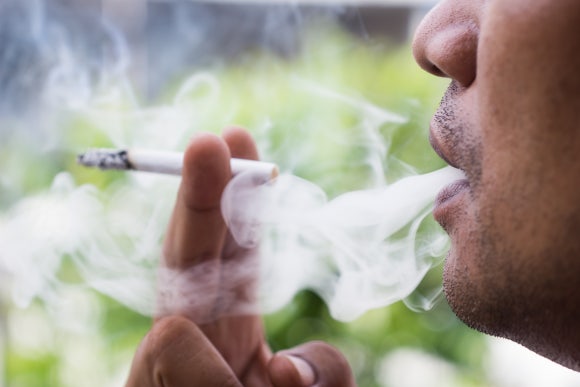
Many people wonder whether smoking should be considered a direct cause of hair loss.
Clinically, a more accurate way to put it is that smoking is a factor that brings hair loss forward.
According to studies, the heavier the smoking, the significantly higher the risk and severity of androgenetic alopecia¹.
Nicotine constricts peripheral blood vessels, and the oxidative substances contained in cigarette smoke increase inflammatory responses and oxidative stress in the scalp.
Because hair follicles are very sensitive to these environmental changes, if there is already a genetic predisposition,
the progression of hair loss can noticeably speed up.
In particular, epidemiological studies have also reported that when smoking and overweight coexist, the severity of hair loss is higher².
In clinical practice as well, patients who continue smoking often have unstable treatment responses.
Q2. If you quit smoking, will your hair grow back?
This is a question I receive very often.
To give the conclusion first, quitting smoking does not immediately create hair regrowth.
However, the changes observed clinically are clear.
After quitting smoking, the rate at which hair becomes thinner often slows down
Scalp inflammation and excess oil imbalance are relieved
Responses to medication or procedures often become more stable
Quitting smoking is less of a way to reverse hair loss and more of a way to block the environment that prevents hair loss from progressing further.
Q3. If you do not sleep well, will hair loss appear right away?
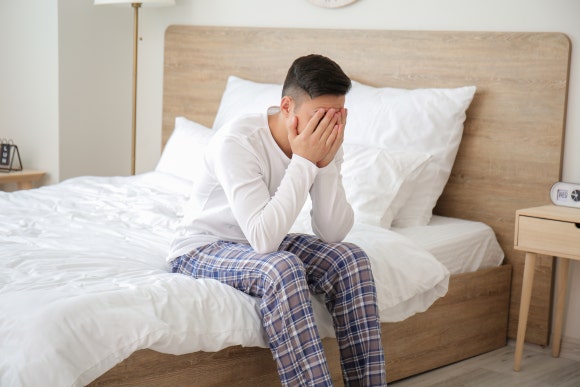
If sleep deprivation continues for only a few days, hair does not fall out immediately.
The problem is the cumulative effect.
When sleep is disrupted, the cortisol rhythm becomes disturbed and the function that regulates inflammation weakens.
These changes often appear weeks to months later as increased shedding, reduced hair thickness, and lower overall volume.
In a study on female pattern hair loss, an analysis also reported that sleep acts as an important mediating variable in the relationship between certain beverage-drinking habits and hair loss³.
In the clinic, we also often see cases where the point when sleep broke down overlaps with the point when hair loss felt noticeably worse.
Q4. Can stress alone make hair loss worse?

Source - Komedi.com
It is difficult to say definitively that stress is the sole cause of hair loss.
But the flow that acts to accelerate hair loss is very clear.
Stress → poorer sleep quality → disrupted eating habits → worsened metabolic state → worsened scalp environment
This chain is repeatedly observed in clinical practice.
In particular, during stressful periods, people often consume more sugary drinks, caffeine, and late-night snacks,
and these changes in turn disrupt sleep again, increasing the perceived speed of hair loss.
Q5. Can blood sugar or body weight affect hair too?

Source - Health Chosun
Hair follicles are not essential organs for survival.
When energy supply becomes unstable, the body is the first to move hair follicles down the priority list.
There is a study showing that androgenetic alopecia was observed more often in young men who frequently consumed sugar-sweetened beverages⁴, and there are also reports that insulin resistance is more commonly present in patients with early-onset androgenetic alopecia⁵.
Recently, a study analyzing the potential causality between fasting insulin levels and hair loss through genetic epidemiology has also emerged⁶, expanding the discussion that metabolic status may not be a simple accompanying factor.
Factors That Accelerate Hair Loss: Can Lifestyle Changes Affect How Fast It Feels?
Summary Table
| Lifestyle factor | Effect on hair loss | Evidence |
|---|
| Smoking | Faster progression and greater severity of hair loss | ¹² |
| Lack of sleep | Increased shedding and reduced thickness after several months | ³ |
| Chronic stress | Indirect acceleration through worsened sleep and metabolism | ³ |
| Sugary drinks and blood sugar fluctuations | Reduced hair thickness and density | ⁴ |
| Weight gain and insulin resistance | Associated with early and severe hair loss | ⁵⁶ |
Lifestyle is a background condition for hair loss treatment.
Hair loss treatment is not a short-term battle.
In this kind of long-term effort, sustainable changes are much more important than a perfect lifestyle.
Reducing smoking, switching sugary drinks to water, or simply regularizing sleep time a little.
These small changes create an environment that hair follicles can better endure, and under that environment, the effects of medication or procedures also appear much more stably.
It may be helpful to remember that lifestyle is not a secondary element of hair loss treatment, but a key background condition that determines treatment outcomes.
Now it is time for hairhair, Kim Jin-oh.
Be sure to grow new hair (必生新毛).

Written by: Kim Jin-oh, New Hair Plastic Surgery (Public Relations Director, Korean Society of Plastic and Reconstructive Surgeons / Academic Director, Korean Society of Laser Dermatology and Hair)
References
- Gupta, A.K. & Foley, K.A. (2024). Meta-analysis study on the association between smoking and androgenetic alopecia. Journal of Cosmetic Dermatology.
cited:"This meta-analysis shows that men who smoke more have significantly higher odds of developing androgenetic alopecia."
- Gupta, A.K. et al. (2025). Epidemiological landscape of androgenetic alopecia in the US. PLOS ONE.
cited:"The combination of overweight and smoking increases the severity of androgenetic alopecia."
- Liu, S. et al. (2024). The mediation role of sleep on the relationship between drinks behavior and female androgenetic alopecia. PeerJ.
cited:"Sleep plays a mediating role between lifestyle behaviors and female pattern hair loss."
- Shi, X. et al. (2023). The association between sugar-sweetened beverages and male pattern hair loss in young men. Nutrients.
cited:"Sugar-sweetened beverage consumption was positively associated with male pattern hair loss."
- Erden, O. et al. (2025). Increased prevalence of insulin resistance in men with early-onset androgenetic alopecia.
cited:"Early-onset androgenetic alopecia was associated with a higher prevalence of insulin resistance."
- Ding, X. et al. (2025). Exploring the causal relationship between fasting insulin levels and androgenetic alopecia. Clinical, Cosmetic and Investigational Dermatology.
cited:"This study demonstrated a potential causal link between fasting insulin levels and androgenetic alopecia."
[This post is written directly by a board-certified plastic surgeon for informational purposes in accordance with Article 56, Paragraph 1 of the Medical Service Act. Hair loss surgery and treatment may have side effects, and you should make a careful decision after consulting with a specialist.]