When treating patients in the clinic, I often hear the same questions repeatedly.
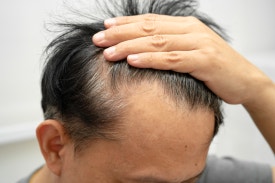
“Why does it seem like my hair started thinning at the front?”
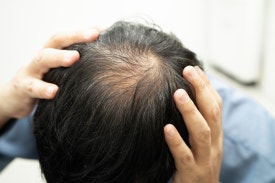
“Why does my crown seem to be showing first—is that normal?”
Even with the same diagnosis of hair loss, some people first become anxious about changes in the front hairline, while others first notice abnormalities at the crown.
This difference is not simply a matter of misunderstanding or mood. It is the result of a combination of observation patterns, the biological response of hair follicles, and genetic sensitivity.
In today’s post, I will discuss the questions patients ask most often, along with research evidence and experience from the clinical setting.
Why Does the Starting Point of Hair Loss (Frontal Hairline vs. Crown) Differ From Person to Person?
Summary
The starting area of hair loss is closer to the place first recognized than the actual point where the disease began.
The front hairline is easier to notice early because it is observed frequently, while the crown tends to be noticed later.
The frontal scalp and crown differ in how sensitive their hair follicles are to hormonal signals.
Differences in genetics, inflammation, immune response, and physical environment change the area that feels like the starting point.
What matters is not the location, but the current stage and progression of the hair loss.
Q1. Does hair loss always start at the front hairline?
Many people think so, but there is no absolute rule.
That said, the typical pattern of male pattern hair loss is often described as bilateral temple and hairline recession → expansion at the crown.¹ Because of this, even in clinical practice, the vast majority of patients first notice changes in the front hairline and visit the clinic.
The front hairline is directly tied to facial contours and is repeatedly checked every day during mirrors, photos, and styling.
As a result, even subtle changes of 2–3 mm are recognized quickly.
This is the most realistic reason it feels like hair loss starts in the front.
Q2. Then why do some people feel like hair loss starts at the crown?
The crown is structurally difficult to observe on your own.
It looks different depending on the mirror angle, lighting, and hair length, and it is also checked less often in daily life.
In actual practice, many patients with crown hair loss do not visit until the condition has already progressed to a certain extent.
Then, when scalp visibility becomes noticeable in photos or under strong lighting, they remember it as having started at the crown.
In many cases, this is more a difference in the time of recognition than a difference in the order of progression.
Q3. Are the hair follicles themselves different between the front hairline and the crown?
Yes, there are biological differences.
The key issue in androgenetic alopecia is not the amount of male hormones, but how sensitively hair follicles respond to DHT signals.
Studies have shown that frontal hair follicles tend to have higher androgen receptor levels and 5α-reductase activity than occipital follicles.²
Because of this difference, hair loss is more commonly observed in the front and on the top of the scalp.
However, the distribution of this sensitivity varies greatly from person to person, so in some people the crown follicles may respond earlier.
Q4. Can inflammation or immune responses also affect the starting point?
Yes. Recent studies have shown that changes in the local immune environment and inflammatory responses accompany hair loss in the scalp.³⁴
These changes are not visible at first, but as time accumulates, they may appear as thinning of specific follicles before others.
In clinical practice as well, patients who have scalp heat, itching, or sebum imbalance concentrated in certain areas often notice hair loss in those areas first.
Q5. Are scalp structure or physical factors also related?
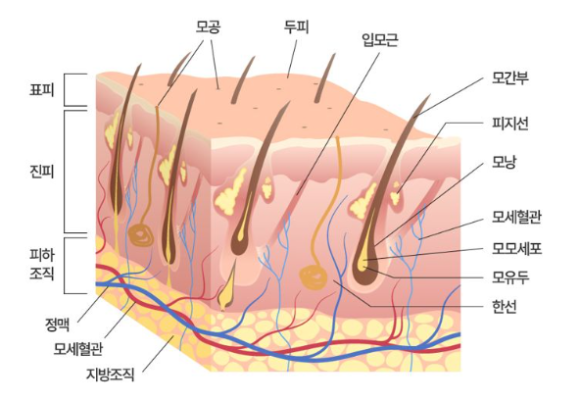
Scalp structure
Source - Financial News
The forehead and crown differ in skull shape and fascial structure.
Some studies have suggested the hypothesis that long-term accumulated mechanical stress may be involved in forming hair loss patterns.⁵
It is appropriate to understand this as environmental factors being added on top of genetic predisposition.
Q6. Why can the starting point differ even with the same family history?
Male pattern hair loss is strongly influenced by genetics related to the androgen pathway.⁶
However, even within the same family, there are individual differences in which area of the follicles responds first.
This is because the same hair-loss predisposition is combined with each person’s own scalp reactivity.
Why Does the Starting Point of Hair Loss (Frontal Hairline vs. Crown) Differ From Person to Person?
Summary Table
| Category | Front Hairline | Crown |
|---|
| Frequency of observation | Very high | Low |
| Time of recognition | Early | After moderate progression |
| Hormone sensitivity | Relatively high² | Varies by individual |
| How it is noticed | Mirror, photos | Lighting, comments from others |
| Clinical features | Early anxiety | Visit after progression |
Whether it is first felt at the front hairline or at the crown, hair loss usually progresses within a single continuous process.
The starting point is closer to the first place you noticed it than to the diagnosis itself.
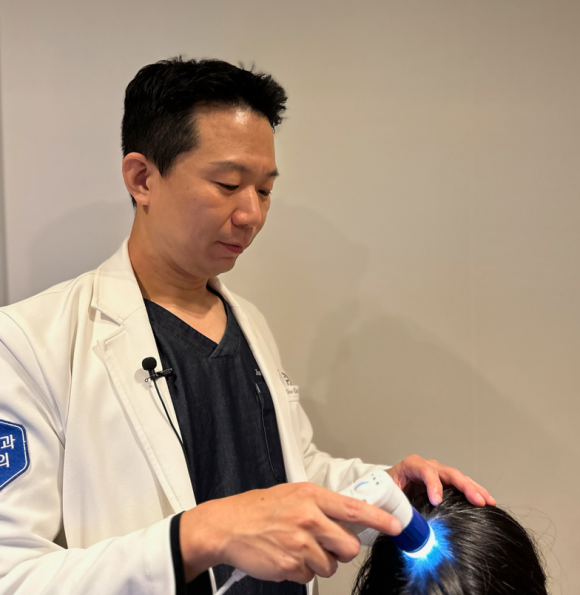
The important question is not where it started, but what stage the hair loss is at now,
and how to manage the speed of future changes.
Now it is time for hairhair, Kim Jin-Oh.
May new hair be born.

Written by: Kim Jin-Oh, New Hair Plastic Surgery (Public Relations Director, Korean Association of Plastic Surgeons / Academic Director, Korean Society for Laser, Dermatology and Hair Restoration)
References
- Gupta, M., Mysore, V. (2016). Classifications of Patterned Hair Loss: A Review. Journal of Cutaneous and Aesthetic Surgery.
cited:"Androgenetic alopecia in men typically begins with bitemporal recession of the frontal hairline and progresses to involve the vertex scalp."
- Sawaya, M.E., Price, V.H. (1997). Different Levels of 5α-Reductase Type I and II, Aromatase, and Androgen Receptor in Hair Follicles of Women and Men with Androgenetic Alopecia. Journal of Investigative Dermatology.
cited:"Higher levels of androgen receptors and 5α-reductase were found in frontal hair follicles compared with occipital follicles."
- Chen, S. et al. (2025). Androgenetic Alopecia: An Update on Pathogenesis and Pharmacological Treatment.
cited:"Pathogenesis of androgenetic alopecia involves androgen metabolism as well as local inflammatory responses."
- Fu, H. et al. (2025). Single-Nucleus and Bulk RNA Sequencing Reveals Immune Microenvironment Differences in Androgenetic Alopecia Scalp.
cited:"Significant differences were observed in immune cell composition between balding and non-balding scalp."
- Tellez-Segura, R. et al. (2015). Involvement of Mechanical Stress in Androgenetic Alopecia.
cited:"Mechanical stress may contribute to the patterning and progression of androgenetic alopecia."
- Lee, J. et al. (2024). Genetic Differences between Male and Female Pattern Hair Loss. Life.
cited:"Male pattern hair loss is strongly associated with genetic factors related to androgen signaling pathways."
[This post is written directly by a board-certified plastic surgeon for informational purposes in accordance with Article 56, Paragraph 1 of the Medical Service Act. Hair loss surgery and treatment may have side effects, and they should be carefully decided upon through consultation with a specialist.]