Hair loss does not occur for just one reason.
As the hair growth process is disrupted, gradual changes accumulate, and as a result,
it often appears in the form of reduced density, changes in thickness, and slower growth.
Because various factors such as genetic factors, hormonal changes, scalp condition, overall physical condition, stress, and lifestyle habits can work together,
it is difficult to view hair loss simply as the phenomenon of hair falling out.
This is why, when managing hair loss, the process of first understanding the causes and progression pattern is important.
What signal does hair loss start with?
Hair loss often begins with small changes in everyday life rather than all at once.
-
When you feel that your hair lacks strength while shampooing or combing
-
When the amount of hair left on the pillow or in the drain increases compared to before
-
When the part line looks wider or the scalp at the crown becomes more visible
-
When you feel that the front hairline is slowly changing
All of these changes can be interpreted as signs that the hair growth environment is changing.
However, because individual differences are large, making a judgment about your own condition based only on information from the internet
can actually increase confusion.
Why should hair loss types be classified?
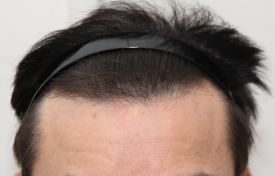
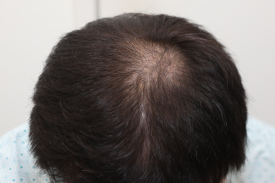
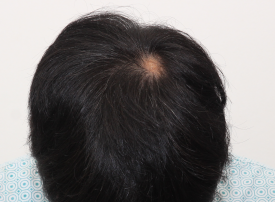
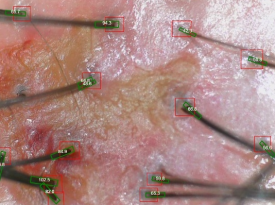
Hair loss is classified into several types depending on the cause and pattern.
-
Cases involving hormonal and genetic factors, such as male-pattern or female-pattern hair loss
-
Cases associated with abnormalities in immune response, such as alopecia areata
-
Cases accompanied by scalp inflammation, sebum imbalance, or environmental irritation
-
Acute hair loss and hair loss that progresses over a long period of time
Because hair loss is a condition in which the approach may differ depending on the cause,
it is necessary to look at which type and pattern it belongs to before setting a management plan.
What are the important criteria in a hair loss management plan?
Hair loss management is not just about seeing how much has fallen out right now.
The following criteria can also be considered.
Changes in the current thickness and density of the hair
Scalp condition (oiliness, dead skin, sensitivity, presence of inflammation)
The time hair loss began and the speed of progression
Age group, lifestyle pattern, and stress factors
By looking at these factors comprehensively, you can more realistically judge what management direction is appropriate now.
Why is the flow important from the early stage to long-term management?
Hair loss has a characteristic in which its pattern can change over time.
The early stage is mainly centered on hair thinning changes, but if management is delayed, the function of the hair follicle itself can weaken.
On the other hand, if you check the condition at a relatively early stage and establish a management flow, it can help you adjust the intensity or method of management according to later changes.
That is why hair loss management is said to require a planned approach that takes the progression into account rather than a short-term response.
What are the hair loss management plan and hair loss management methods?
Hair loss is not approached with just one treatment method; instead, the management direction is set based on each individual's condition.



-
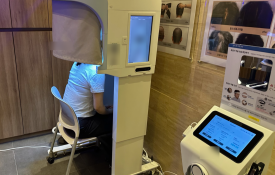
Check and diagnose the scalp and hair condition from various angles
-
Set a management direction according to the type of hair loss and progression pattern
-
Personalized management that takes into account scalp condition, hair thickness, sensitivity, and hair loss status
Build a program
An approach that sets the management direction based on an individual's scalp and hair condition is important.
To do this, you need to go through a process of checking the current condition of the scalp and hair from multiple perspectives,
and then set a management direction that considers individual differences such as hair loss type and progression pattern, scalp environment, hair thickness, and sensitivity.
Through this process, a personalized management plan suited to each person's condition and circumstances is established,
and the management methods and intervals should not be the same, but should be designed so they can be adjusted according to changes in condition.