When consulting with patients taking hair loss medication, one question comes up most often.
“Why do I not really feel like it’s working even though I’m taking the same medicine?”
Some people say they shed less when washing their hair, while others feel there has been no major change even after taking it for a year.
However, this difference is not simply a matter of whether the medication works or not.
The response to hair loss medication is the result of overlapping factors: the drug’s mechanism, when treatment was started, the condition of the hair follicles, the evaluation criteria, and expectations.
Focusing on the questions patients actually ask most often, let’s organize why the same hair loss medication can feel like it works differently.
Why do hair loss medications feel different even when they’re the same drug?
Summary
The effect of hair loss medication often appears first as maintenance or slowing of progression, rather than increase.
There is often a time gap between a clinically meaningful change and a change the patient can feel.
The type of medication, genetic sensitivity, consistency of use, and whether other treatments are combined all affect how it feels.
It is important to assess effectiveness based on set criteria and timing, not on feeling alone.
Q1. When do people usually start to notice the effect of hair loss medication?
Hair loss medication is not a treatment that produces obvious changes in a short period of time.
Major clinical studies usually use 24 weeks (about 6 months) as the first evaluation point¹.
In clinical practice as well, the first 2 to 3 months often show only a reduction in shedding or changes in scalp condition, and actual changes in hair thickness or density usually appear gradually after that.
Therefore, deciding that it is not effective after 2 to 3 months often does not match the nature of the treatment.
Q2. If hair volume does not increase, does that mean it is not working?
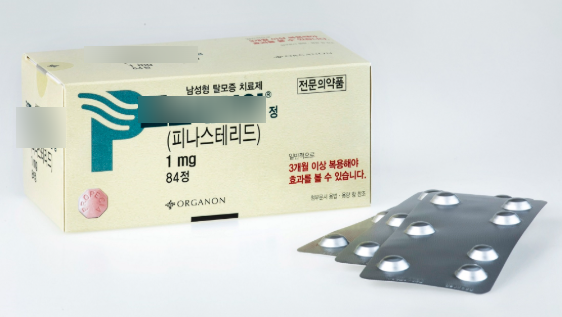
Source - Health JoongAng
Finasteride
Not necessarily. Since hair loss is a progressive condition, slowing the rate of progression itself is a treatment effect.
In studies on finasteride, increases were confirmed not only in hair count but also in hair thickness and overall hair weight¹.
These changes are clear when comparing photos or measurements, but the person looking in the mirror every day may notice them more slowly.
Q3. Why does the same hair loss medication feel clearly effective to some people
but vague to others?
The biggest reason is the difference in when treatment is started.
If treatment begins while the follicles are still alive and in the thinning stage, recovery in thickness may be felt more quickly.
On the other hand, if the condition has already progressed, the main effect is maintenance rather than a noticeable recovery.
In clinical settings, this difference is the biggest dividing line in perceived satisfaction.
Q4. Do finasteride and dutasteride feel different in effect?
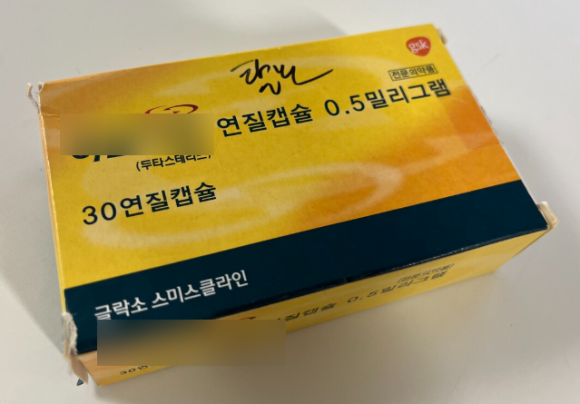
Source - Radiance Report
Dutasteride
The two drugs have different ranges of action.
Finasteride inhibits type II 5α-reductase, while dutasteride inhibits both type I and type II.
In comparative studies, dutasteride showed statistically superior results in increasing hair count², and later systematic reviews also reported stronger effects in improving miniaturization³.
However, this should be understood not as a matter of which is better, but as a difference in the level of inhibition needed by each individual.
Q5. Can genetics cause hair loss medication not to work?
Genetics affects not only the development of hair loss but also the treatment response.
A study analyzing androgen receptor gene repeat sequences and response to finasteride suggested that genetic differences may influence individual variation in treatment response⁴.
Even with the same medication, the degree to which hair follicles are sensitive to hormonal signals can differ.
Q6. Can there be a difference in effect even if it seems like you take it every day?
In actual clinical practice, missed doses and uneven application are very common.
One or two days may seem like a small difference, but over 6 months to a year, the cumulative difference becomes clear.
In particular, topical medications are often used in uneven amounts or at inconsistent locations, which affects how the response feels.
Q7. Does using minoxidil together change how it feels?
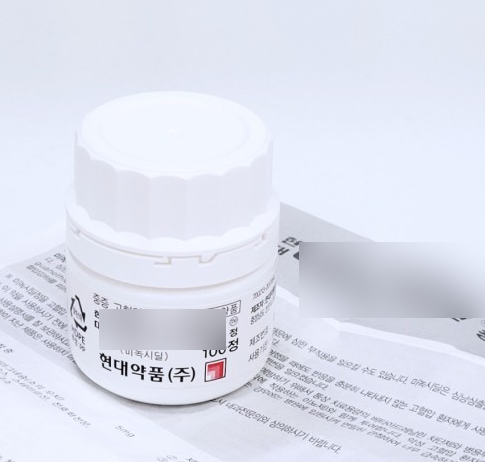
Recently, combination treatment strategies have been used more often than hair loss medication alone.
There are reports that low-dose oral minoxidil can contribute to improving hair density and thickness when used for a certain period of time⁵, and depending on the combination, the difference in perceived response can become quite large.
Why do hair loss medications feel different even when they’re the same drug?
Summary table
| Category | When the effect feels fast | When the effect feels slow |
|---|
| Start point | Early / miniaturization stage | Later stage of progression |
| Drug response | Appropriate level of inhibition | Insufficient level of inhibition |
| Evaluation criteria | Reduced shedding / thickness | Expecting only an increase in volume |
| Medication habits | High consistency | Frequent missed doses |
| Combination treatment | Used with minoxidil | Single treatment only |
The difference in response to hair loss medication usually comes not from the drug itself, but from differences in the starting point and the evaluation criteria.
Once you organize what to use as the 기준, when to evaluate, and how to judge the effect, the answer to the question of why it feels different from person to person becomes much clearer.
It’s time to make hair hair again, this was Kim Jino.
Pilsaengsinmo (必生新毛).
Written by: Kim Jino, New Hair Plastic Surgery Clinic (Public Relations Director of the Korean Association of Plastic Surgeons / Academic Director of the Korean Society for Laser, Dermatology, and Hair)
References
- Gupta, A.K. & Charrette, A. (2022) Finasteride for hair loss: a review. Journal of Dermatological Treatment.
cited:"Finasteride 1 mg/day significantly increased total hair count compared to placebo after 24 weeks."
- Harcha, W.G. et al. (2014) A randomized, active- and placebo-controlled study of the efficacy and safety of dutasteride versus finasteride in men with androgenetic alopecia. Journal of the American Academy of Dermatology.
cited:"Dutasteride 0.5 mg was statistically superior to finasteride 1 mg at increasing hair count."
- Almudimeegh, A. et al. (2024) Comparison between dutasteride and finasteride in hair regrowth and reversal of miniaturization in androgenetic alopecia: a systematic review.
cited:"Dutasteride showed superior efficacy in hair regrowth and reversal of hair follicle miniaturization."
- Ghassemi, M. et al. (2019) Androgen receptor gene polymorphisms and response to finasteride in androgenetic alopecia. Journal of Research in Medical Sciences, 24, 104.
cited:"CAG and GGC repeat polymorphisms in the androgen receptor gene may influence response to finasteride therapy."
- Pozo-Pérez, L. et al. (2024) Clinical and preclinical approaches in androgenetic alopecia treatment. Stem Cell Research & Therapy.
cited:"Oral minoxidil has demonstrated efficacy and safety in improving hair density over a 24-week period."
[This post is written directly by a board-certified plastic surgeon for informational purposes in accordance with Article 56, Paragraph 1 of the Medical Service Act. Hair transplant surgery and treatment may have side effects, and you should make decisions carefully through consultation with a specialist.]