When consulting about hair loss, many people ask this:
“Eventually, isn’t there no option other than hair transplantation?”
Hair transplantation is certainly a powerful treatment option.
However, if it is chosen without sufficiently considering the cause of hair loss, the speed of progression, and the condition of the remaining hair, there can be a large gap between the expected result and what is actually felt.
The recent trend in hair loss treatment is shifting from what to do to what order and combination are right.
Based on the questions patients ask most often, I will organize why hair transplantation cannot be the answer for every type of hair loss in an evidence-based way.
If you have hair loss, should you start with hair transplantation?
Summary
Hair transplantation is a technique that redistributes a limited amount of donor hair, so
it is difficult to expect the same effect for all types of hair loss.
In diffuse or active hair loss, and in rapidly progressing stages, the effect of transplantation may be limited.
International guidelines also emphasize stabilization through medical treatment before transplantation.
Medication, follicular injections, microneedling, autologous cell-derived ingredients,
and scalp micropigmentation may be more practical options than transplantation depending on the situation.
The key to hair loss treatment is not whether surgery is done, but the order and combination.
Q1. If you have hair loss, do you have to get a hair transplant no matter what?

No. There are definitely cases in which hair transplantation is not appropriate depending on the type of hair loss.
Hair transplantation is often misunderstood as a treatment that increases the amount of hair, but in reality it is closer to a method of transferring stable follicles to reconstruct visual density.
The problem is that in diffuse hair loss or female pattern hair loss, where the hair overall becomes thinner, the back of the head is not infrequently affected by the hair loss as well.
In such cases, the quality of the donor area itself may be unstable, which can lower the success rate of transplantation.
Several review papers have repeatedly pointed out that in diffuse hair loss without a clear donor area, the predictability of hair transplantation is low.¹
Q2. If hair loss is progressing, shouldn’t you do a hair transplant first?
In progressing hair loss, timing determines the outcome.
If transplantation is rushed while hair loss is rapidly advancing, temporary shedding of existing hair during the surgery process may overlap, making the density appear even lower.
This phenomenon may partially recover, but it is not guaranteed in every case.
That is why recent international expert consensus places great importance on stabilizing hair loss through medical treatment before hair transplantation.²
This is not just a simple recommendation, but rather a strategy that takes long-term outcomes into account.
Q3. Then what treatments are available besides surgery?

The basic pillar of hair loss treatment remains medication.
In androgenetic alopecia, minoxidil and the finasteride/dutasteride classes of drugs play a key role in slowing progression and maintaining existing hair.
This is consistently confirmed in multiple treatment guidelines and recent reviews.³
Even if you undergo hair transplantation, if this pillar is missing, the density is likely to break down again over time.
Q4. Are follicular injections or PRP treatment actually meaningful?
Rather than expecting too much from them as stand-alone treatments, it is more realistic to understand them as supportive measures.
Evidence summarized in meta-analysis form suggests that follicular injections (including PRP) may help improve hair density and thickness when combined with medication.⁴
In particular, the advantage is that they can be tried relatively safely in cases where surgery feels burdensome or it is too early to decide on transplantation.
Q5. Why is microneedling discussed together with them?
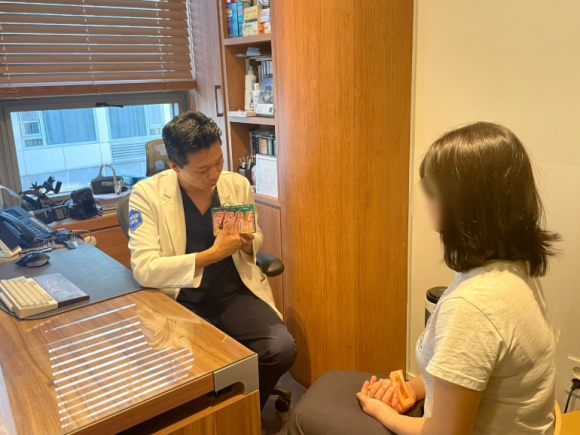
Microneedling is closer to a treatment that changes the environment.
By giving the scalp micro-stimulation, it helps activate blood flow and growth signals and aids the absorption of topical agents.
A recent systematic review also reported that combining microneedling with minoxidil was significantly more effective than minoxidil alone in improving hair count and thickness.⁵
Q6. Can autologous cell-derived ingredients or exosomes be trusted?
At present, it is appropriate to understand this as an area still under research rather than one in which a single conclusion has been established.
Studies related to autologous cell-derived ingredients and exosomes vary greatly in the source of the material, manufacturing process, and application method, and the research designs are also often different, making it difficult to compare results on the same basis.
For this reason, careful interpretation is needed before generalizing the clinical significance of any specific method based only on the studies published so far.
That said, literature reviews and meta-analyses analyzing autologous tissue-conditioned media with a focus on hair-related indicators have been reported, and possible changes related to the follicular environment are being discussed at the research level.⁶
Research on extracellular vesicles, including exosomes, is also continuing, mainly through preclinical and early clinical studies, and recent review papers summarize that this field continues to be considered as a future research topic.⁷⁸
For now, it is more realistic to understand these approaches not as a replacement for existing hair loss treatments, but as part of an expanding body of hair loss research in which additional evidence is still being accumulated.
Q7. Is scalp micropigmentation a fallback option?
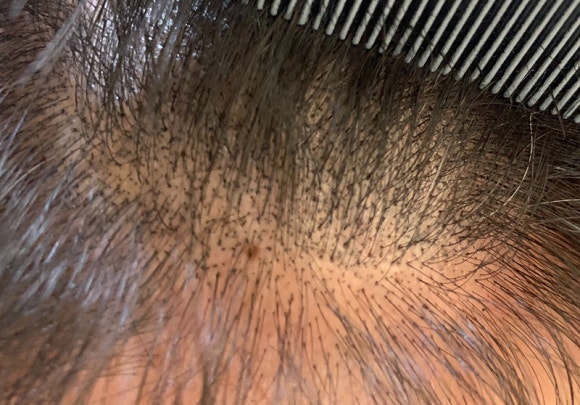
The purpose is different, but satisfaction is by no means low.
Scalp micropigmentation is not a treatment that makes hair grow, but a method of improving the appearance of density.
By reducing the contrast in the part line or crown, it lowers the appearance of scalp show-through, so it can be a practical alternative, especially in female pattern hair loss or in cases where hair volume remains but looks sparse.
A case series involving patients with localized alopecia also reported cosmetic improvement and high satisfaction.⁹
If you have hair loss, should you start with hair transplantation?
Summary table
| Hair loss situation | Primary strategy to consider | Explanation |
|---|
| Early or progressing hair loss | Medication | Stabilizing progression is the top priority |
| Pre-surgery stage | Follicular injections and microneedling | Support for density and thickness |
| Diffuse hair loss | Focus on non-surgical treatment | Consider donor area limitations |
| When surgery is a burden | Autologous tissue-derived ingredients | A choice based on possibility |
| When show-through is the problem | Scalp micropigmentation | Improves visual density |
Hair loss treatment is not a matter of choosing one method, but a process of designing time and expectations together.
Accurately diagnosing the type and activity of hair loss, building a foundation with medication, and then looking into whether there is room to increase density with supportive
treatments.
Only then can you separate the areas that need hair transplantation from the problems that cannot be solved by surgery.
After going through this process, many people say:
I guess I don’t need to transplant right away.
The less urgency there is, the more stable the results tend to be.
It is now time for hair to grow, this was Kim Jin-oh.
Pilsaengsinmo (必生新毛).

Written by: Kim Jin-oh of New Hair Plastic Surgery Clinic (Public Relations Director of the Korean Society of Plastic and Reconstructive Surgeons / Academic Director of the Korean Laser, Dermatology and Hair Society)
References
-
Zito, P.M. & Goldin, J. (2024) Hair Transplantation. StatPearls. cited:"Diffuse unpatterned alopecia... If the patient has no such area on the scalp, hair transplantation may not be successful."
-
Vañó-Galván, S. et al. (2023) ‘An international expert consensus statement focusing on pre and post hair transplantation care’, Journal of Dermatological Treatment, 34(1): 2232065. cited:"Consensus recommendations include careful patient selection and stabilization with medical therapy prior to transplantation."
-
Devjani, S. et al. (2023) ‘Androgenetic alopecia: therapy update’, Drugs, 83(8): 701–715. cited:"Topical minoxidil and oral finasteride remain the cornerstone of androgenetic alopecia treatment."
-
Xiao, C. et al. (2024) ‘Meta-analysis of efficacy of platelet-rich plasma combined with minoxidil for androgenetic alopecia’, Aesthetic Plastic Surgery, 48: 4554–4566. cited:"PRP combined with minoxidil significantly improved hair density and hair diameter."
-
Ahmed, K.M.A. et al. (2025) ‘Combined microneedling therapy versus topical minoxidil in androgenetic alopecia’, Archives of Dermatological Research. cited:"Microneedling combined with minoxidil significantly improved hair count and hair diameter."
-
Chien, W.Y. et al. (2024) ‘Stem cell-derived conditioned medium for alopecia: a systematic review and meta-analysis’, Journal of Plastic, Reconstructive & Aesthetic Surgery. cited:"Stem cell-derived conditioned medium can effectively increase hair density and thickness."
-
Lee, E. (2024) ‘The efficacy of adipose stem cell-derived exosomes in hair regeneration’, International Journal of Dermatology. cited:"Adipose stem cell-derived exosomes have shown efficacy in hair regeneration."
-
Wu, X. et al. (2025) ‘Advances in extracellular vesicle-based treatment of alopecia’, Review. cited:"Extracellular vesicle-based therapies show promising potential for alopecia treatment."
-
Liu, Q. et al. (2025) ‘Scalp micropigmentation for localized alopecia: a case series’, Journal of Cosmetic and Laser Therapy. cited:"Scalp micropigmentation resulted in significant cosmetic improvement with high patient satisfaction."
[This post was written directly by a board-certified plastic surgeon for informational purposes in accordance with Article 56, Paragraph 1 of the Medical Service Act. Hair transplant surgery and treatment may involve side effects, so please make a careful decision through consultation with a specialist.]