After starting hair loss treatment and letting some time pass, many people come to the same point
and stop.
“Can I feel the effect, but how long do I need to keep taking this medicine?”
Hair loss medication is not a treatment that ends after taking it for a set period, like cold medicine, so this question is natural and very realistic.
Focusing on the questions that come up most often in the clinic, I will organize the criteria for how long to take hair loss medication by combining academic evidence and clinical experience.
Hair loss medication: Do you have to take it for life? A realistic question many people ask
Summary
Hair loss medication is not a cure, but a management treatment that slows progression and helps maintain
It is closer to treatment that maintains the current state
If you stop taking the medication, it may feel like the hair loss gets worse
but this is the process of returning to the original rate of progression
Not everyone has to take the medication the same way for life;
a management strategy can vary depending on the condition, speed, and life plans
The important question is not “How long should I take it?” but
“How much do I want to maintain?”
Q1. Why is hair loss medication not a treatment that ends?
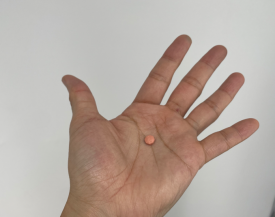
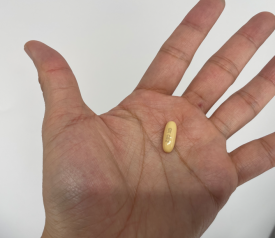
Hair loss medication
Male-pattern and female-pattern hair loss are chronic conditions that progress gradually over time.
Medications currently used, such as finasteride and dutasteride, work by suppressing DHT (dihydrotestosterone) and easing the follicle environment¹.
Rather than removing the cause of hair loss, they are closer to treatments that slow progression by reducing unfavorable conditions.
For this reason, when you stop taking the medication, it is not that the treatment effect disappears; rather, the timeline of the hair loss that had been suppressed starts running again.
Q2. Will hair start falling out right away if I stop the medication?
Many people feel like their hair suddenly started falling out as soon as they stopped the medication, but in reality it is a little different.
When finasteride is discontinued, DHT levels in the body return to the normal range within about two weeks², but changes in the hair usually appear gradually over several months³.
Clinically, rather than sudden shedding, people often notice it gradually through photo comparisons or changes in the part line.
Q3. So do I have to take hair loss medication for life?
Not necessarily.
For people whose hair loss progresses quickly and whose condition clearly stabilizes after taking medication, continuing treatment is the most predictable and easiest strategy to manage¹.
On the other hand, if the condition remains stable for several years without major changes, you may consider dose reduction, discontinuation, or alternative strategies depending on medication burden and life plans.
In actual clinical practice, it is very common for people taking the same medication to arrive at completely different conclusions.
Q4. Is it okay to use minoxidil long term?
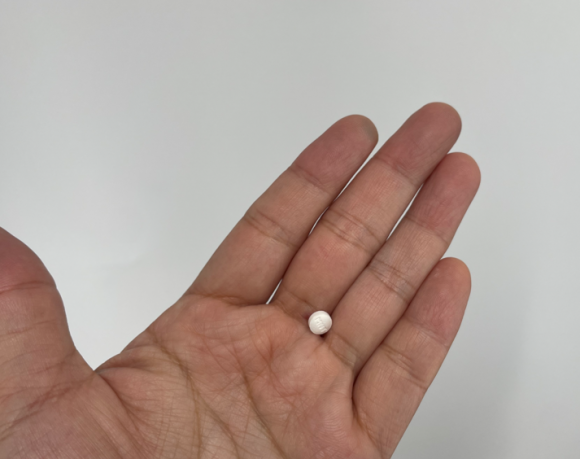
Minoxidil
Minoxidil is less of a drug that changes the structure of the follicle and more of an adjunctive treatment that makes the growth phase more favorable.
According to research, the hair growth effect tends to peak around one year and then show a gradual maintenance or decline pattern afterward⁴.
So even with long-term use, people often say it feels less noticeable over time, and if it is stopped, that effect is hard to maintain.
Q5. When should dutasteride be adjusted?
Dutasteride has a clear advantage in terms of efficacy because it suppresses DHT more broadly.
In fact, it is widely used as a treatment for male-pattern hair loss in Korea and Japan⁵⁶.
However, with long-term use, future pregnancy plans and an individual’s life plan are also taken into consideration.
Some studies have reported an association between long-term use and changes in semen parameters⁷.
This should not be interpreted as a definitive statement of risk, but rather as meaning that there may be a point when treatment priorities can change.
Q6. Are medications used in combination these days?

That’s right. Recently, with broader options such as low-dose oral minoxidil,
hair loss treatment has become much more flexible⁸.
Rather than unconditionally staying on one medication for a long time, an approach that adjusts strategy according to timing, response, and the range of tolerable side effects is becoming more common.
The important point is not reducing treatment blindly, but understanding how much change can occur
and choosing accordingly.
Hair loss medication: Do you have to take it for life? A realistic question many people ask
Summary table
| Question | Key point |
|---|
| How long should hair loss medication be taken? | A management treatment that slows progression |
| What happens if I stop? | Returns to the original rate of hair loss |
| Is lifelong use necessary? | It varies by person |
| Minoxidil characteristics | Adjunctive; effect is lost when stopped |
| Dutasteride | Strong effect; long-term plans should be considered |
| Recent trend | Low-dose and combination treatment |
There is no single correct answer for how long hair loss medication should be taken.
What is clear, however, is that the moment you stop hair loss medication, not everything is over, and not everything collapses either.
From that moment on, you are simply back on your own hair loss timeline²³.
So the important question is not “How long should I take it?” but “How much do I want to maintain?”
The clearer this 기준 becomes, the more hair loss treatment becomes a choice of management rather than a burden.
Now it is time for hairhair, Kim Jin-Oh.
필생신모(必生新毛).

Written by: Kim Jin-Oh, New Hair Plastic Surgery Clinic (Public Relations Director, Korean Society of Plastic and Reconstructive Surgeons / Academic Director, Korean Society of Laser Dermatology and Hair)
References
-
Mohy, S.M. et al. (2025) Consensus Recommendations for the Management of Androgenetic Alopecia. cited:"oral finasteride at a daily dosage of 1 mg is a potent modality in males with AGA"
-
Zito, P.M. et al. (2024) Finasteride. StatPearls. cited:"Upon discontinuation of finasteride, DHT levels return to normal within 14 days"
-
Courtney, A. et al. (2023) Evaluating 5 alpha reductase inhibitors for the treatment of androgenetic alopecia. cited:"Discontinuation leads to loss of effect and hair density returns to baseline"
-
Kaiser, M. et al. (2023) Treatment of Androgenetic Alopecia: Guidance & Needs. cited:"hair growth peaked at 1 year followed by a slow, steady decline afterward"
-
Shin, J.W. et al. (2024) Updates in Treatment for Androgenetic Alopecia. cited:"0.5 mg oral dutasteride is now approved for male AGA in Japan and South Korea"
-
Choi, S. et al. (2024) Long-term efficacy and safety of dutasteride 0.5 mg in Korean men with androgenetic alopecia. cited:"Dutasteride demonstrated long-term safety and efficacy in Korean male patients"
-
Kim, Y.J. et al. (2025) Long-term use of dutasteride to treat androgenic alopecia in young men may lead to persistent semen parameter changes. cited:"Long-term use of dutasteride may lead to male infertility by persistently impairing semen volume"
-
Jimenez-Cauhe, J. et al. (2025) Adverse Events of Low-Dose Oral Minoxidil for Alopecia. cited:"Adverse events including hypertrichosis and edema were reported"
[This post is written directly by a board-certified plastic surgeon for informational purposes in accordance with Article 56, Paragraph 1 of the Medical Service Act. Hair transplant surgery and treatment may have side effects, and please make a careful decision through consultation with a specialist.]