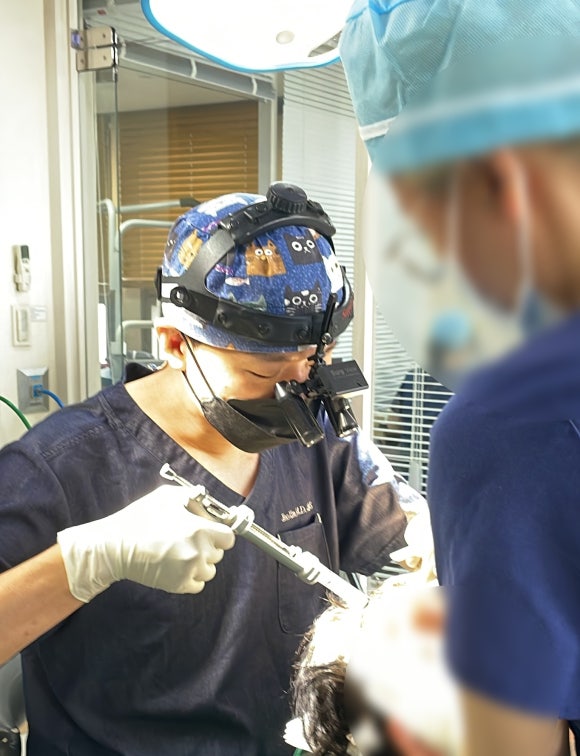
The first question people considering hair transplantation usually ask is, "At what point of hair loss should I get it?"
But the more important question is a different one.
How much more hair am I likely to lose in the future, and can the transplanted results be maintained 10 years from now?
Hair transplantation is not simply a surgery to fill in empty areas, but a strategic treatment that decides when and where to allocate hair resources that can be used for a lifetime.
In today's post, I have organized the most frequently asked questions about the timing of hair transplantation, with a focus on early hair loss and people in their 20s.
Hair Transplantation: Is It a Better Choice in Your 20s?
Summary
The timing of hair transplantation is determined not by age but by predicting whether hair loss will progress and whether it has stabilized
Core
It is possible in your 20s and in the early stages of hair loss if the conditions are right, but
conservative planning is essential
Deciding on surgery after observing the course through medication is more stable in the long term
Hair transplantation is not a treatment that ends the process, but one step in a management strategy
Q1. If I’m in the early stage of hair loss, wouldn’t it be most natural to get a hair transplant in advance?
On the surface, it may seem like a reasonable idea, but caution is needed when considering the nature of hair loss.
Male pattern and female pattern hair loss are mostly progressive conditions, so the state visible now is often not the final result.
The International Society of Hair Restoration Surgery (ISHRS) particularly emphasizes planning that takes the future extent of hair loss into account for young patients.²
If the design is based only on the early stage, a few years later the existing hair may become thinner, making the transplanted hair stand out.
Clinically, cases where patients were satisfied at first but later felt the result looked unnatural are not uncommon.
Q2. If I get a hair transplant in my 20s, will I need another surgery later?
That is possible. The reason is simple: donor hair is a limited resource.
Hair transplantation does not create new hair; it relocates hair from areas less affected by hair loss.
If a large amount is used at a young age, there may be fewer options later if hair loss progresses further.
The ISHRS guidelines for follicular unit extraction hair transplantation also clearly state that both the safe donor area and the future extent of hair loss should be considered.⁵
Clinically, a plan that uses hair gradually is far more important than a surgery that fills everything at once.
Q3. So should medication treatment come first?
Yes. This is not a way of wasting time, but a process of confirming the direction of hair loss.
In the clinical summary from StatPearls, it is recommended to begin medication therapy for at least one year before considering hair transplantation and then reassess.¹
In fact, studies have reported that medications such as finasteride maintain their effect for more than five years in Korean male patients with hair loss.⁴
In clinical experience, when hair transplantation is planned after hair loss has stabilized through medication, the consistency of the results is much higher.
Q4. Then when does hair transplantation in your 20s make sense?
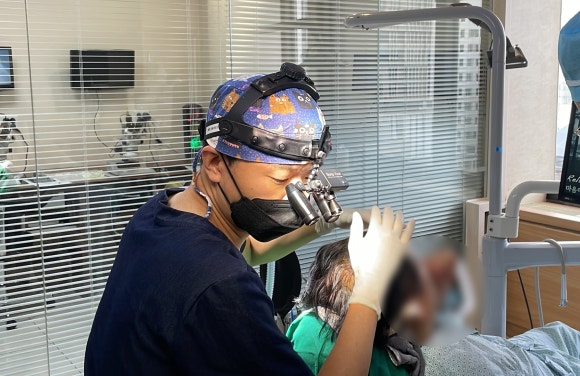
If the conditions are met, it is certainly possible. The key conditions are as follows.
-
The extent of hair loss should be localized
-
Thinning at the crown or overall hair density loss should not be severe
-
The progression rate should have stabilized to some degree with medication therapy
In such cases, a first hair transplant with conservative goals can be a reasonable choice.²⁵
The important point is not maximizing the current level of completion, but designing with room left for the future.
Q5. Why is lowering the hairline a problem?
This is one of the most common mistakes in young patients.
The forehead line that suits a face in the 20s and the line that remains natural into the 40s and beyond are inevitably different.
International guidelines also recommend a conservative hairline design for younger patients.⁵
Clinically, if the hairline is placed too low, the burden of revision surgery increases significantly as hair loss progresses later.
Q6. I’m having a really hard time psychologically, but should I still wait?
Hair loss can affect more than appearance; it can also affect self-esteem and social withdrawal.
Research has also reported that as hair loss progresses, many patients experience fear of reduced attractiveness and psychological stress.³
In such cases, hair transplantation can be a strategic choice to restore quality of life rather than a surgery that simply ends hair loss.
Even then, an approach based on a long-term plan is important.
| Decision factor | Key point |
|---|
| Age | Not the 기준 |
| Rate of hair loss progression | Key decision factor |
| Response to medication | Check whether it has stabilized |
| Donor hair condition | Manage lifetime resources |
| Hairline design | Conservative approach needed |
Hair transplantation can be done at any time, but it is not a surgery that should be done at just any time.
The more important question than "Can I get it done now?" is:
Can I explain the result 10 years from now if I transplant now?
If you can answer that question, then the hair transplantation at that point is likely to be a well-considered choice.
Now it is time for Hairhair, Kim Jino.
Filsaengsinmo (必生新毛).
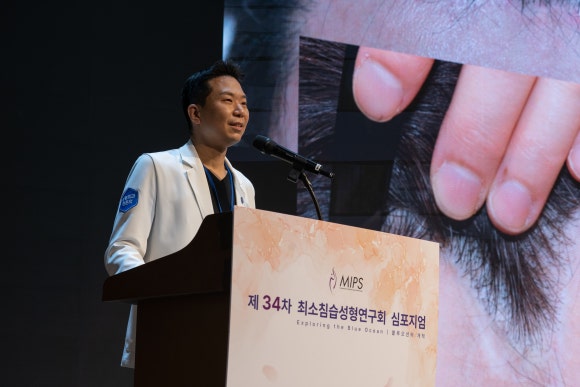
Written by: Kim Jino, New Hair Plastic Surgery (Public Relations Director, Korean Association of Plastic Surgeons / Academic Director, Korean Laser Dermatology and Hair Society)
References
-
Zito, P.M. & Raggio, B.S. (2024) Hair Transplantation. StatPearls Publishing. cited:"The preferred management is to defer hair transplantation and initiate medical therapy for at least 1 year, with reassessment at that time."
-
International Society of Hair Restoration Surgery (ISHRS) (2006) Expectations and decision-making in hair restoration surgery. cited:"Planning for hair restoration in a young man must take account of the likelihood of future hair loss."
-
Knoedler, L. et al. (2023) ‘Hair Transplantation in the United States: A Population…’, PRS Global Open, 11(11). cited:"Study participants frequently reported that with their hair loss progressing, they would not feel attractive anymore…"
-
Shin, J.W. et al. (2018) ‘Evaluation of long-term efficacy of finasteride in Korean men with androgenetic alopecia’, Annals of Dermatology, 30(4), pp. 457–463. cited:"Finasteride 1 mg showed a sustainable effect for at least 5 years in Korean male AGA patients."
-
International Society of Hair Restoration Surgery (ISHRS) (2019) FUE Clinical Practice Guidelines – Chapter I: Patient Evaluation and Selection. cited:"Possible extent of future hair loss that needs to be considered."
-
Nagai, M. (2015) Early hair loss – the young patient. ISHRS. cited:"Physicians do not typically recommend performing hair transplant surgery on anyone younger than 20 years old."
[In accordance with Article 56, Paragraph 1 of the Medical Service Act, this post is written directly by a board-certified plastic surgeon for informational purposes. Hair loss surgery and treatment may have side effects, so please make a careful decision after consulting with a specialist.]