When conducting hair transplant consultations, one of the most frequently asked questions is this:
“If I get a transplant, does that mean I no longer need to manage my hair loss?”
Hair transplantation is a powerful option that creates visible change, but it is not a treatment that changes the overall course of the condition called hair loss.
If this difference is not understood, many people end up judging the results after surgery with unnecessary anxiety.
In this post, I will focus on questions that patients often ask and organize why hair loss management remains important even after a hair transplant, based on both academic evidence and clinical experience.
Can hair loss continue to progress even after a hair transplant?
Summary
Hair transplantation is not a treatment that stops hair loss;
it is a surgery that supplements hair density.
Transplanted hair is relatively stable, but existing hair continues to be
affected by hair loss.
Postoperative care is a strategy to protect the surrounding hair,
not the transplanted hair.
The more medication is combined, the better long-term density and
naturalness are maintained.
Q1. I had hair transplanted, so why does hair loss keep progressing?
Androgenetic alopecia is not a short-term issue, but a progressive condition in which hair follicles gradually shrink¹.
Having a hair transplant does not stop this biological process itself.
What surgery changes is the position of the hair, not the speed of hair loss.
In clinical practice as well, it is common to observe that existing hair around the transplanted area gradually becomes thinner over the course of several years after surgery³.
Q2. Will transplanted hair really last a lifetime?
In most cases, transplanted hair is maintained relatively stably.
This is because hair from areas with lower sensitivity to male hormones, such as the occipital or temporal regions, is moved and transplanted².
However, this means that it is less likely to fall out completely, not that it does not require care.
If the surrounding hair decreases, only the transplanted hair may stand out.
Q3. What is the goal of hair loss management after a hair transplant?
The key goal is preserving existing hair, not transplanted hair.
Follicles in which miniaturization has already begun are highly likely to continue weakening unless treatment is combined¹.
The purpose of management is to help the remaining hair stay natural together with the transplanted hair.
Q4. Do I have to take hair loss medication after a hair transplant?
It is not mandatory, but the results of the choice are clearly different.
Finasteride or minoxidil cannot create new hair, but they help slow follicular miniaturization and maintain the growth phase⁵.
In actual studies, cases that combined medication treatment before and after surgery showed more stable appearance and density in the non-transplanted area⁶.
Q5. Is dutasteride always a stronger drug than finasteride?
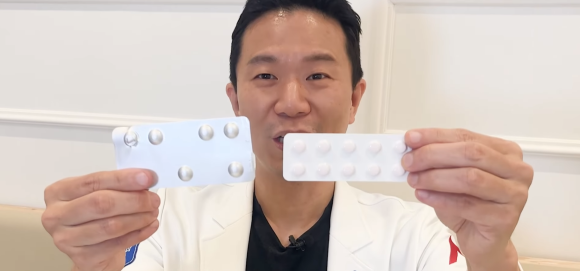
Dutasteride suppresses a wider range of male hormone metabolism, but in recent years, research on intermittent dosing strategies rather than daily dosing has also accumulated⁷⁸.
This can be seen not as a concept of treating as aggressively as possible, but as an approach to designing a management method that can be sustained long term.
Q6. What changes can happen if I stop management?
If management is stopped, the timeline of hair loss begins to move again at its original pace.
The transplanted hair remains, but as the surrounding density decreases, the impression may shift toward a look in which certain areas stand out³.
For this reason, in clinical settings, the expression is often used that the better the management, the less noticeable the transplanted hair becomes.
Q7. Is postoperative management also necessary in female pattern hair loss?
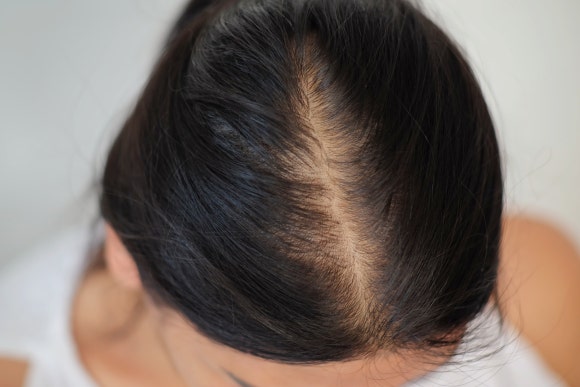
Female pattern hair loss often shows a pattern in which overall density decreases in a diffuse manner rather than having a clear boundary⁹.
Therefore, it is often difficult to maintain long-term satisfaction with surgery alone, so an approach that combines medication or topical treatment has been discussed as important.
Can hair loss continue to progress even after a hair transplant?
Summary Table
| Category | Whether managed | Long-term change |
|---|
| Transplanted hair | Relatively stable | Can be maintained |
| Existing hair | When managed | Density and thickness maintained |
| Existing hair | When management is stopped | Gradual miniaturization |
| Overall appearance | With management | Natural density |
| Overall appearance | Without management | Increased artificial contrast |
It is time to be a hairhair, Kim Jin-oh.
Pilsaengsinmo (必生新毛).
Written by: Kim Jin-oh of New Hair Plastic Surgery (Public Relations Director, Korean Society of Plastic and Reconstructive Surgeons / Academic Director, Korean Society of Laser Dermatology and Hair)
References
- Chen, S. et al. (2025) Androgenetic alopecia: an update on pathogenesis and therapeutic approaches. Journal of Dermatological Science.
cited:"Androgenetic alopecia is a progressive condition characterized by follicular miniaturization influenced by genetic and hormonal factors."
- Park, J.H. et al. (2014) Predicting the permanent safe donor area for hair transplantation. Dermatologic Surgery.
cited:"Transplanted hair follicles largely retain the characteristics of the donor site."
- Mysore, V. et al. (2021) Hair transplant practice guidelines. Journal of Cutaneous and Aesthetic Surgery.
cited:"Progression of androgenetic alopecia continues even after hair transplantation, affecting non-transplanted hair."
- International Society of Hair Restoration Surgery (2008) Combined surgical and medical hair restoration therapy.
cited:"Hair transplantation does not halt the progression of androgenetic alopecia."
- Shin, J.W. et al. (2024) Updates in the treatment of androgenetic alopecia. Annals of Dermatology.
cited:"Topical minoxidil and oral finasteride remain the most widely accepted treatments."
- Leavitt, M. et al. (2005) Effects of finasteride on hair transplantation. Dermatologic Surgery.
cited:"Finasteride significantly improved the appearance of existing, non-transplanted hair."
- Choi, G.S. et al. (2022) Long-term effectiveness of dutasteride versus finasteride. Journal of Dermatology.
cited:"Dutasteride demonstrated superior or comparable efficacy with similar safety profiles."
- Sereepanpanich, V. et al. (2025) Efficacy of intermittent dutasteride dosing in male androgenetic alopecia. Dermatologic Therapy.
cited:"Hair density and diameter increased in a dose-dependent manner."
- Dinh, Q.Q. & Sinclair, R. (2007) Female pattern hair loss. Journal of the American Academy of Dermatology.
cited:"Adjunctive medical therapy is essential when considering surgical options."
[This post is written directly by a board-certified plastic surgeon for informational purposes in accordance with Article 56, Paragraph 1 of the Medical Service Act. Hair loss surgery and treatment may have side effects, so please make a careful decision through consultation with a specialist.]