One of the questions patients most often ask before starting chemotherapy or after treatment has already begun is hair loss.
It is not something that can simply be dismissed by saying, “It’ll grow back anyway.” The actual experience is far more complex.
Hair loss caused by chemotherapy is not limited to a change in appearance; it can easily lead to psychological withdrawal and restrictions in social activity¹².
Recently, wig support programs and preventive adjuvant therapies for hair loss have also been discussed as ways to reduce this burden.
Chemotherapy-Induced Hair Loss Wig Support: How Far Has the System for Cancer Patients Come?
Summary
Chemotherapy-induced hair loss is directly linked to quality of life¹²³
Wigs are not just for appearance; they are an aid for returning to daily life
Many local governments in Korea provide wig cost support for adult cancer patients
Scalp cooling is an evidence-based method for preventing hair loss⁴
Q1. Do most people lose their hair when they undergo chemotherapy?
Chemotherapy-induced hair loss varies depending on the type of anticancer drug, dose, and treatment cycle.
In particular, taxane-based and anthracycline-based anticancer drugs have been reported to have a high incidence of hair loss¹.
Clinically, hair often begins to fall out 2 to 3 weeks after treatment starts and then progresses gradually while treatment continues.
Q2. Why is chemotherapy-induced hair loss so psychologically difficult?
Hair is something that symbolizes the self before illness.
According to research, hair loss caused by chemotherapy is significantly associated with depression, anxiety, and social avoidance², and in male patients as well, a decline in quality of life and increased stress have been clearly confirmed³.
In clinical settings, we often hear patients say that being seen as someone who is ill is the hardest part.
Q3. Is a wig necessary after chemotherapy?
It is not essential for every patient, but it becomes an important option for those preparing to return to daily life.
When patients need to maintain social roles such as going to work, public activities, or family events, we often see a much greater sense of psychological stability after wearing a wig.
For this reason, many local governments have begun to recognize wigs as one of the medical aids.
Q4. Who can receive chemotherapy wig support?

Source - NewsPim

Source - Herald Economy
In general, the following conditions are often required.
-
Cancer patients who have hair loss due to chemotherapy
-
Meeting local residency requirements
-
Medical aid recipients or lower-income groups (varies by region)
The support method is mostly a structure in which the wig is purchased first and then reimbursed later, and applications are submitted through public health centers.
Q5. Is there a way to reduce chemotherapy-induced hair loss in advance?
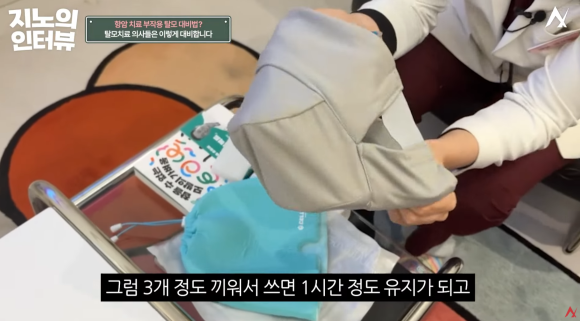
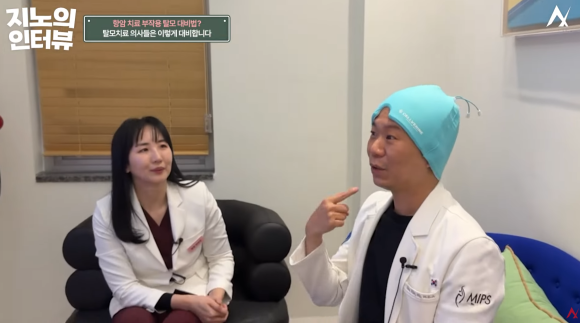

It cannot be completely prevented, but there is evidence that scalp cooling significantly reduces the incidence of hair loss⁴.
By lowering scalp temperature during anticancer drug administration and reducing blood flow to the hair follicles,
effectiveness has been clearly confirmed in some chemotherapy regimens.
Its introduction in Korea is still limited, but there is certainly potential for expansion as an adjuvant therapy in the future.
Chemotherapy-Induced Hair Loss Wig Support: How Far Has the System for Cancer Patients Come?
Summary Table
| Category | Main Target | Support Details | Application Method |
|---|
| Jecheon City | Adult cancer patients receiving medical aid or in lower-income groups | 90%, up to KRW 700,000 | Visit a public health center |
| Incheon Metropolitan City | Registered recipients of medical expense support for cancer patients | 90%, up to KRW 700,000 | County/district public health center |
| Yeonsu-gu, Incheon | Adult cancer patients residing in Yeonsu-gu | Follows Incheon City standards | Yeonsu-gu Public Health Center |
| Yongsan-gu, Seoul | Cancer patients eligible for medical expense support | 90%, up to KRW 700,000 | Yongsan-gu Public Health Center |
| Jung-gu, Ulsan | Cancer patients residing in Jung-gu | Up to KRW 500,000 | Jung-gu Public Health Center |
Chemotherapy-induced hair loss is not just a side effect; it is an experience that shakes the structure of daily life.
Wig support is a safety net that helps sustain everyday life after treatment, and scalp cooling is a preventive attempt to protect daily life during treatment.
These two approaches are not in competition; they are directions that should go together.
It is time to grow hairhair, this was Kim Jin-oh.
필생신모(必生新毛).
Written by: Kim Jin-oh, New Hair Plastic Surgery (Public Relations Director, Korean Association of Plastic Surgeons / Academic Director, Korean Laser Dermatology and Hair Society)
References
- Perez, A.M. et al. (2024). Chemotherapy-Induced Alopecia by Docetaxel. Current Oncology, 31(9), 423.
cited:"Hair loss has severe negative impacts on patients' quality of life."
- Özüsağlam, E. et al. (2021). The impact of the perception of chemotherapy-induced alopecia on psychosocial life. European Journal of Oncology Nursing.
cited:"Chemotherapy-induced alopecia significantly affects psychosocial well-being."
- Çelik, A. et al. (2025). The effect of chemotherapy-induced alopecia on distress and quality of life of male patients. Supportive Care in Cancer.
cited:"Chemotherapy-induced alopecia contributes to distress and reduced quality of life in male patients."
- Rugo, H.S. et al. (2017). Prevention of chemotherapy-induced alopecia with scalp cooling. JAMA, 317(6), 606–614.
cited:"Scalp cooling reduced the incidence of chemotherapy-induced alopecia with chemotherapy."
[In accordance with Article 56, Paragraph 1 of the Medical Service Act, this post is being written directly by a plastic surgery specialist for informational purposes. Hair loss surgery and treatment may have side effects, and please make a careful decision through consultation with a specialist.]