It seems that in Korea, awareness of hair loss is formed more sensitively than in other countries. If we look only at the actual prevalence of male pattern hair loss, Korea is among the lower-ranking countries globally. Ironically, however, the psychological burden caused by hair loss often feels greater. In societies where fewer people have hair loss, it stands out more easily.
So today, I have summarized why hair loss is especially sensitive in Korea and what a realistic way is to view and manage it in this environment.
If you read to the end, it will help you reset your perspective on hair loss and your direction for managing it.

Summary of the Prevalence of Hair Loss Among Koreans and Why Hair Loss Feels More Sensitive
| The prevalence of hair loss among Korean men is in the low 20% range, which is lower than in some European countries. |
|---|
| In a social environment where fewer people have hair loss, even small changes in hair volume are easier to notice. |
| In Korea, hair loss is often seen not simply as aging, but as an issue of self-care and image. |
| Genetically, East Asian men are relatively advantaged, but stress and lifestyle habits can bring the onset earlier. |
| Hair loss is an issue with large individual differences rather than a simple matter of statistics, and early recognition and management are practical strategies in Korean society. |
Q1. Are Korean men really less likely to have hair loss than men in other countries?
Looking at medical and epidemiological studies, the answer is yes. When various studies are combined, the prevalence of androgenetic alopecia in Korean men is reported to be around the low 20% range.
This is clearly lower than in European countries such as the Czech Republic, Spain, and Germany, where more than 40% of adult men are included in the hair loss category¹. Japan is estimated to be in the mid-20% range, and China below 20%, so Korea is relatively lower even within East Asia. Based on the statistics alone, Korean men can be said to have a relatively advantageous starting point when it comes to hair loss.
Q2. Why does hair loss feel like a bigger issue in Korea in everyday life?
The biggest difference felt in clinical practice is the gap between the 'rate' and the 'perceived reality'.
In Korea, even men in their 20s who are not yet classified as having hair loss by medical standards often visit hospitals because they strongly worry about changes in hair density or visible thinning at the crown.
This is closely linked not so much to hair loss itself, but to the social perception of hair loss. In societies where hair loss is common, a certain degree of hair reduction is accepted as a natural change, but in environments where fewer people have hair loss, even small changes are easily noticed.

Q3. How is hair loss perceived in Western countries?
In Western societies, hair loss is relatively often seen as part of the aging process. In fact, there is also the view that androgenetic alopecia can be interpreted not as a disease, but as a physiological and age-related change².
The cultural background in which bald actors and sports stars are consumed as an image, and social stigma is relatively weak, also reinforces this perception. As a result, even with the same degree of hair loss, the psychological burden felt by an individual varies greatly depending on the culture.
Q4. Why is hair loss received more sensitively in Korea?
In Korea, hair is still strongly interpreted as the result of 'management'.
Hair loss is sometimes perceived not simply as aging, but as a sign of failing at self-care. In an environment where employment, human relationships, and social image are closely connected, hair, as part of appearance, has a surprisingly large impact.
In this context, psychological research has also pointed out that East Asian men tend to experience greater stress from hair loss³.
Q5. Genetically, are Koreans less vulnerable to hair loss?
To some extent, yes.
There are racial differences in how male hormones act on hair follicles and in their sensitivity, and this is related to genetic polymorphisms⁴. East Asian men relatively often experience a later onset of hair loss and a slower rate of progression compared with Western men. However, this is closer to an 'average tendency' than to 'absolute safety'.
Q6. Do lifestyle habits and stress also affect hair loss?
Clinically, they are very important.
Even with the same genetic background, chronic stress, lack of sleep, and irregular daily rhythms can bring the clinical onset of hair loss earlier. There are also reports that stress can promote hair loss by causing hair follicles to move into the telogen phase prematurely⁵.
In actual practice, we also often see cases in which people suddenly become aware of hair loss after changes in their environment.
Q7. In the end, can hair loss be seen as an individual issue rather than a statistical one?
Yes.
National hair loss rates are only reference indicators and do not directly explain whether an individual will experience hair loss progression. Some people notice changes much earlier than average, while others may not have major problems until old age.
Hair loss is an area with large individual differences in when it starts, how quickly it progresses, and how sensitively the changes are perceived.
Summary table of male hair loss prevalence by country
| Country | Estimated male hair loss rate | Characteristics |
|---|
| Czech Republic | about 42–45% | Among the highest in the world |
| Spain | about 42% | High-risk group in Southern Europe |
| Germany | about 40–43% | Sharp increase with age |
| United Kingdom | about 38–40% | Low social stigma |
| United States | about 35–40% | High access to treatment |
| Japan | about 25–27% | Relatively high among East Asian countries |
| South Korea | about 20–23% | Low rate, but heightened awareness |
| China | about 18–20% | Large differences by region and city |
On average, Korean men start from conditions that are relatively favorable in terms of hair loss, but they are also in an environment where even small changes are felt strongly.
Within this structure, rather than viewing hair loss only as something to fear, it may be more reasonable to observe changes from an early stage and establish a management strategy.
Early management and continuous observation can be said to be approaches that fit well with the characteristics of Korean society.
From now on, it is time for hair to grow, Kim Jino.
May new hair be born.
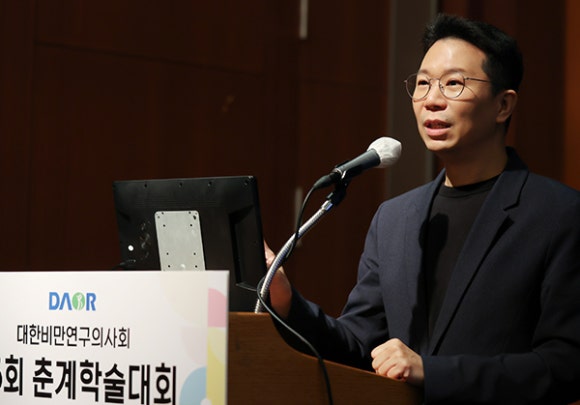
Written by: Kim Jino, New Hair Plastic Surgery (PR Director, Korean Association of Plastic Surgeons / Academic Director, Korean Society for Laser Dermatology and Hair)
References
- Norwood, O.T. (1975). Male pattern baldness: classification and incidence. Southern Medical Journal, 68(11), 1359–1365.
cited:"Male pattern baldness is a common condition affecting a large proportion of men, with incidence varying among populations."
- Birch, M.P., Messenger, J.F. & Messenger, A.G. (2001). Hair density, hair diameter and the prevalence of female pattern hair loss. British Journal of Dermatology, 144(2), 297–304.
cited:"Androgenetic alopecia represents a physiological age-related change rather than a pathological condition."
- Hunt, N. & McHale, S. (2005). The psychological impact of alopecia. BMJ, 331(7522), 951–953.
cited:"Hair loss can have a significant psychological impact, particularly in societies where appearance is closely linked to self-esteem."
- Ellis, J.A., Sinclair, R. & Harrap, S.B. (2002). Androgenetic alopecia: pathogenesis and potential for therapy. Expert Reviews in Molecular Medicine, 4(22), 1–11.
cited:"Genetic polymorphisms in androgen receptor pathways contribute to ethnic differences in androgenetic alopecia."
- Trüeb, R.M. (2016). Stress and hair growth. International Journal of Trichology, 8(3), 96–102.
cited:"Psychological stress may prematurely shift hair follicles into the telogen phase, influencing the clinical expression of hair loss."
[This post is written directly by a board-certified plastic surgeon for information-sharing purposes in accordance with Article 56, Paragraph 1 of the Medical Service Act. Hair loss surgery and treatment may have side effects, and you should make a careful decision after consulting with a specialist.]
Posts you may also find helpful