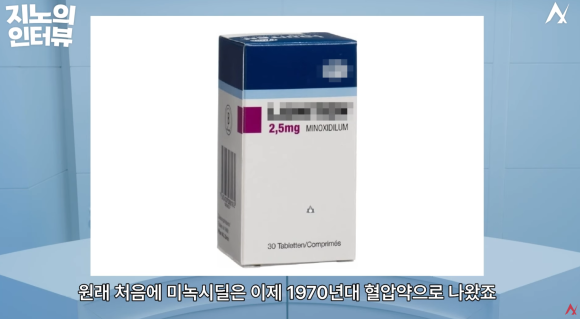
I’m taking minoxidil that I bought directly overseas,
is it really the same as the pharmacy product?
This is the question I hear most often from hair loss patients. Minoxidil has a simple ingredient profile and is commonly sold overseas as well, so it naturally seems reasonable to think, “If the concentration is the same, the effect should be the same too.” In fact, this way of thinking itself is not necessarily wrong.
However, in clinical practice, among people who use directly purchased products, there are not a few cases where they feel the response is weak or that the effect has become less noticeable partway through. This difference comes not from the medicine’s ingredients, but from the realities of how it is used.
Summary of minoxidil direct-purchase effectiveness and stability
| Although minoxidil is a proven treatment, directly purchased products do not always guarantee the same results. |
|---|
| For directly purchased products, it is difficult for users to confirm authenticity, actual content, and storage/distribution conditions. |
| High-concentration (10%) minoxidil is not clearly better than 5%, and the risk of irritation and discontinuation is greater.⁴ |
| The key to minoxidil treatment is not the concentration, but whether it is used without interruption for months or years. |
| The difference comes not from the ingredient itself, but from a treatment environment that can be maintained to the end. |
Q1. If the ingredient is the same, isn’t directly purchased minoxidil the same as the hospital or pharmacy product?
In theory, yes.
If the concentration is the same, minoxidil has the same mechanism of action. In actual studies as well, 5% topical minoxidil showed clearly better results than placebo or 2% formulations.¹
But the problem is the gap between the “theoretical ingredient” and the “medicine actually used.” With directly purchased products, it is difficult for users to verify whether the labeled concentration matches the actual concentration or what kind of conditions it has gone through after manufacturing.
Q2. Why do people say directly purchased products are concerning?
The biggest reason is uncertainty in distribution and storage.
Minoxidil is not a medicine used for a few weeks and then finished; it is used for months to years. Some studies have reported that compounded minoxidil can remain stable for a certain period even if color changes occur,⁵ but that result assumes controlled conditions.
For directly purchased products, it is difficult to know whether they have been exposed to high temperatures, stored for long periods, or delayed during distribution, and these variables become a growing burden during long-term use.
Q3. Isn’t high-concentration directly purchased minoxidil, like 10%, more effective?
Many people expect this.
However, looking at the research results, it is difficult to say that 10% minoxidil is clearly superior to 5%, and there have been reports of increased irritation and discomfort instead.⁴
In clinical practice, there are also many people who stop using it because of scalp itching, redness, or flaking after switching to a high-concentration product. In hair loss treatment, irritation is not just a minor inconvenience; it is a decisive factor that undermines continued use.
Q4. “Can I use the foam type or only once a day?”
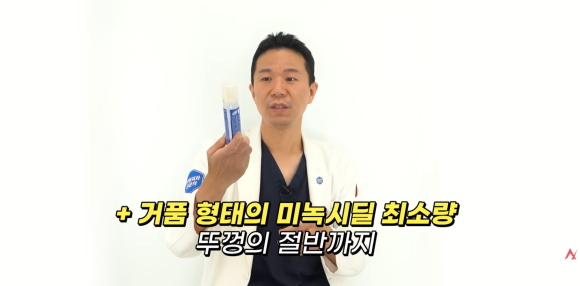
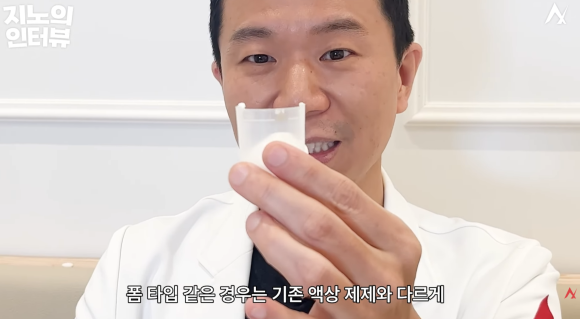
The 5% minoxidil foam formulation also showed effects similar to the liquid form.²
In a study involving women, using 5% foam once daily showed effects similar to using 2% liquid twice daily.³
In clinical experience, a method that is less burdensome and causes less irritation increases real-world adherence. In the end, what determines effectiveness is not theoretical efficacy, but “how long you can use it without interruption.”


Q5. If it doesn’t work, can’t I just switch later?
This is the most disappointing part.
Minoxidil is not a medicine that gives a quick answer. You need to use it for at least 3 to 6 months before judging whether there is a change.
With directly purchased products, there are many chances for gaps in use because delivery delays, stock interruptions, and brand changes happen repeatedly.
In clinical practice, a significant number of people who feel that “minoxidil doesn’t suit me” have a history of interrupted use in between.
The problem is not the medicine itself; much more often, the treatment environment collapses first.
| Category | Pharmacy/Clinic Minoxidil | Directly Purchased Minoxidil |
|---|
| Theoretical ingredients | Same | Same |
| Reliability of actual content | High | Uncertain |
| Storage and distribution environment | Managed | Uncertain |
| Long-term supply stability | High | Low |
| Irritation risk (high concentration) | Relatively low | May be higher |
| Possibility of continued use | High | Easy to become unstable |
Minoxidil is already a proven treatment.¹²³
The issue is not whether you can buy it directly or not. The real question is whether this choice can still be maintained months later.
The most regrettable failure in hair loss treatment is not when the treatment has no effect, but when it cannot be continued to the end.
Rather than choosing the option that starts a little cheaper, it may be better to choose the one that is a little less unstable and can be continued.
It is now time for hairhair to grow, Kim Jin-oh here.
필생신모(必生新毛).

Written by: Kim Jin-oh of New Hair Plastic Surgery (Public Relations Director, Korean Society of Plastic and Reconstructive Surgeons / Academic Director, Korean Society of Laser Dermatology and Hair)
References
- Olsen, E.A., Whiting, D., Bergfeld, W., Miller, J., Hordinsky, M., Wanser, R., Whalen, E. and Gehring, W. (2002) Efficacy and safety of topical minoxidil 5% solution in the treatment of androgenetic alopecia in men: A randomized clinical trial. Journal of the American Academy of Dermatology, 47(3), pp.377–385.
cited:"5% topical minoxidil was clearly superior to 2% topical minoxidil and placebo."
- Olsen, E.A., Whiting, D., Savin, R., Rodgers, A., Johnson-Levonas, A.O., Round, E., Miller, J. and Zajac, D. (2007) A multicenter, randomized, placebo-controlled, double-blind trial of 5% minoxidil topical foam versus placebo in the treatment of androgenetic alopecia in men. Journal of the American Academy of Dermatology, 57(5), pp.767–774.
cited:"This study evaluated the efficacy and safety of a novel 5% minoxidil topical foam formulation."
- Blume-Peytavi, U., Hillmann, K., Dietz, E., Canfield, D. and Garcia Bartels, N. (2011) A randomized, single-blind trial of 5% minoxidil foam once daily versus 2% minoxidil solution twice daily in women with androgenetic alopecia. Journal of the American Academy of Dermatology, 65(6), pp.1126–1134.
cited:"Once-daily 5% minoxidil foam was noninferior to twice-daily 2% minoxidil solution."
- Ghonemy, S., Abdallah, M. and Abdel Hay, R. (2021) Comparative study of efficacy and tolerability of topical 5% versus 10% minoxidil in male androgenetic alopecia. Dermatologic Therapy, 34(1), e14687.
cited:"Five percent minoxidil showed better tolerability than 10% formulation with comparable efficacy."
- Polonini, H.C., Silva, S.L., Raposo, N.R.B. and Brandão, M.A.F. (2023) Stability of compounded topical minoxidil solutions and foams: Does color change impact formulation integrity? Scientia Pharmaceutica, 91(2), 28.
cited:"Color change did not significantly impact minoxidil stability within the evaluated period."
[This post is written directly by a board-certified plastic surgeon for informational purposes in accordance with Article 56, Paragraph 1 of the Medical Service Act. Hair transplant surgery and treatment may have side effects, and please make a careful decision through consultation with a specialist.]
Recommended reading