「Medical Advertising Review Approved by the Medical Advertising Review Committee of the Korean Medical Association No. 260120-중-206308」
The hairline is one of the important elements that determine the overall impression and proportions of the face.
In particular, if there is left-right asymmetry, the face may look sharper than it actually is, or conversely,
it may feel like the sense of dimension is reduced.
For this reason, many people become curious about what 기준 would be used to plan correction.
Hairline asymmetry correction is not simply the process of lowering the forehead line,
but rather a process of setting a direction tailored to the individual by considering the face’s structure, hair thickness, follicle angle, the impression of the cheekbones and jawline, and even the temporal area’s
shape.
Check facial proportions and forehead height first
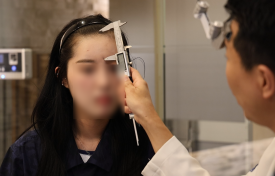
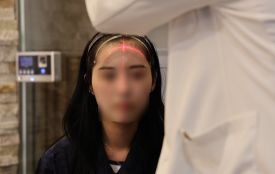
The first criterion checked is the overall facial proportion.
In general, when the forehead, midface, and lower face are divided into similar sections, the face is considered balanced.
However, because not everyone fits this proportion exactly, the discussion also considers each person’s facial length, cheekbone position, and jawline together to determine how much forehead height would
be natural to set.
At this stage, the following items are examined as the main focus.
-
Length from the glabella to the beginning of the forehead
-
The proportion of the forehead area within the face
-
Differences in the left and right forehead curves
-
Depth of the M-shaped pattern
Once this basic structure is understood, the overall direction of correction can be established.
Analyze hair thickness, direction, and flow in detail
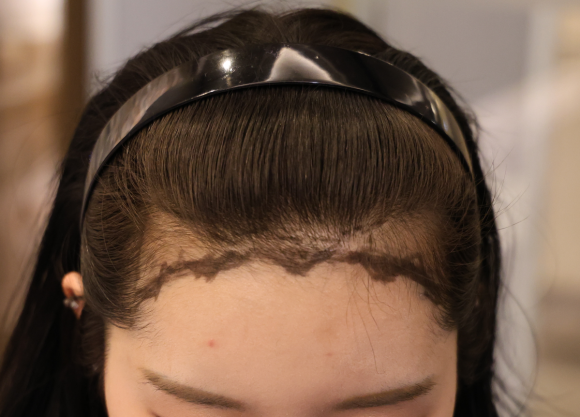
A hairline can change the impression dramatically even with a few millimeters of curvature.
In particular, when planning asymmetry correction, it is necessary to closely check hair thickness, follicle direction, and the existing hair flow pattern.
-
Thick hair is used to form density in the inner area
-
Fine hair is applied to the edge and transition areas
-
Hairs growing in different directions are arranged naturally so they blend together
If the difference between the left and right sides is large, the angle and thickness distribution will also differ, so they must be combined and arranged to create a natural sense of symmetry.
Check the side and temple lines as well
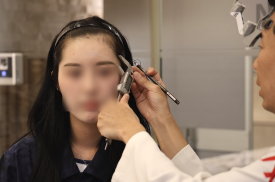
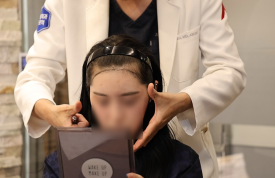
Asymmetry is less accurate if judged from the front alone.
In particular, the temple line and temporal curve are important structures that affect face shape.
-
When the face appears slightly long
-
When the area near the cheekbones looks prominent
-
When the sides look hollow
These factors change not only the forehead line but also how much the side line is advanced and whether curvature is reflected.
That is why asymmetry correction is designed to include both the front and side views.
Set the direction after identifying the cause of the asymmetry
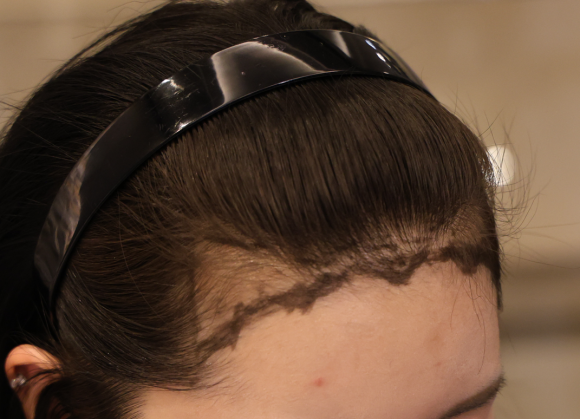
-
Congenital differences in facial length and structure
-
Asymmetry in the temporal bone structure
-
Left-right differences in hair thickness and density
-
Irregularity in the existing hairline pattern
The correction direction varies by individual after identifying these causes, including which side should be advanced and by how much, where the curvature should be placed, and how the edges should be refined.
This process is an important step that determines how natural the correction result will be.
Design a specific plan through photo and angle analysis
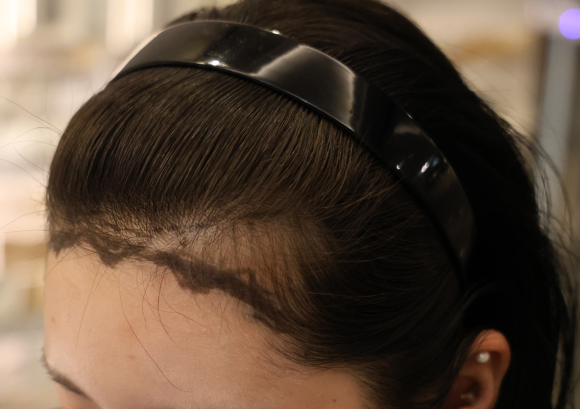
The appearance from the front, at 45 degrees, from the side, and with the head tilted downward can differ greatly.
In particular, the M-shaped pattern or edge flow often appears more accurately in photos, so it becomes an important criterion in the design discussion process.
At this stage, the team organizes whether naturalness is secured, how much difference there is in left and right height, and whether it matches the proportions of the entire face.
Correction is connected not only to the forehead but to the entire face
Hairline asymmetry correction is not the process of matching a single forehead line.
It is work to balance the entire upper face, which extends from the forehead to the temples, temporal area, and the space in front of the cheekbones.
If the forehead alone is reduced too much, the cheekbones may be emphasized; if side compensation is insufficient, the face may look longer; and if the curvature is excessive, naturalness may be lost.
Therefore, rather than simply lowering it, it is
important to find the position and direction that suit the face shape.
For a natural hairline
Design by New Hair Hair Transplant Clinic
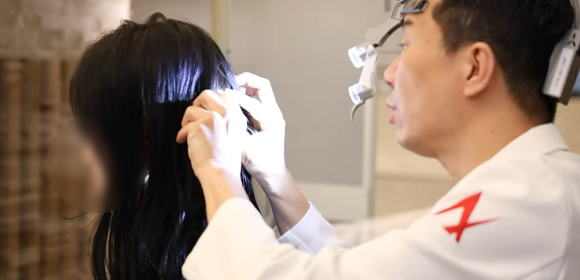
When examining hairline asymmetry, it is necessary to check the overall balance by considering not only the simple forehead line but also the temple curve, the flow of baby hairs, and the thickness and direction of the hair.
New Hair Hair Transplant Clinic uses methods such as follicle separation by thickness, multi-angle photo analysis, and designs using laser pointing to find a line that matches the individual’s face shape and preferences.
A key feature is that the curvature of the temple peak (temporal area) and the placement of fine hairs are finely adjusted
to ensure that the front and side lines connect naturally.
Within a range that does not make definite claims about a specific outcome, the process of discussing a design direction suitable for the individual can help with asymmetry correction.
The effect of this review approval is limited to this page