After hair transplant surgery is over, the keyword patients search for most often is unquestionably “how to increase graft survival after a hair transplant.” However, clinically speaking, graft survival is already largely determined the moment you leave the operating room¹.
The role of aftercare is less about “increasing” survival and more about helping the transplanted follicles survive safely.
In this post, I have organized the information patients ask about most often by combining academic evidence and clinical experience.
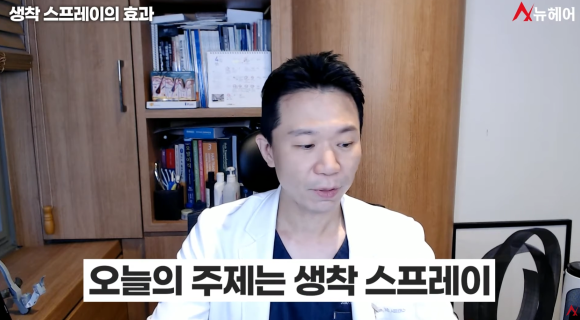
How to Increase Graft Survival After Hair Transplant Surgery, Graft Spray Summary
| After a hair transplant, graft survival is not something that is “increased” after surgery; it is the process of helping the transplanted follicles take hold without damage. |
|---|
| The first few days after transplantation are the most sensitive period, before blood vessel connections are fully established, and managing irritation, dryness, pressure, and inflammation during this time has a major effect on how consistent the results are. |
| Graft spray is not a medication that makes hair grow; it is an aftercare tool that stabilizes the environment around the transplanted area. |
| The key is not to add something special, but to reduce unnecessary variables. |
| Proper spray use is intended to reduce itching, scabbing, and unconscious touching, minimizing factors that interfere with graft survival. |
Q1. Can aftercare really increase graft survival after a hair transplant?
A. Graft survival is mainly determined by the surgical procedure, and aftercare is closer to a role of “reducing loss.”
The method of follicle extraction, storage conditions, depth and angle of implantation, and whether tissue damage occurred have the greatest impact on survival¹. Postoperative care is the stage where already transplanted follicles are protected from unnecessary stimulation so they do not fall out.
In other words, it is more accurate to understand aftercare not as a way to dramatically “increase” graft survival, but as a way to reduce losses that could occur if aftercare is poorly managed.
Q2. Which days after surgery are the most important?
A. About 3 to 5 days after surgery are the most sensitive period.
The transplanted follicles do not immediately have an independent blood supply, and new vascular connections are formed only after about 5 days².
During this period, because they depend on nourishment from the surrounding tissue, pressure, dryness, friction, and inflammation can become major causes of graft failure. Clinically, the consistency of the results also varies depending on how this period is managed.
Q3. Do I really need to use graft spray?
A. It is not an essential medication, but it can be practically helpful as an environmental management tool.
Most graft sprays are saline-based mists or products designed to stabilize the wound environment. They are not medications that make follicles grow; they help keep the transplanted area from drying out and reduce itching and scabbing³. When itching decreases, unconscious touching and scratching also decrease, which in turn helps reduce variables that are unfavorable for graft survival.
Q4. Why is it so important to keep the area from drying out?
A. Because dryness → scabbing → itching → hand contact → graft loss can follow.
If the transplanted area becomes excessively dry, scabs become thicker, and scabs cause itching. Itching is one of the most common reasons patients unconsciously touch the area.
In fact, there are reports that frequent use of saline spray after surgery helps reduce itching³. In clinical practice as well, patients who maintain a moist environment tend to have less discomfort and better adherence to aftercare.
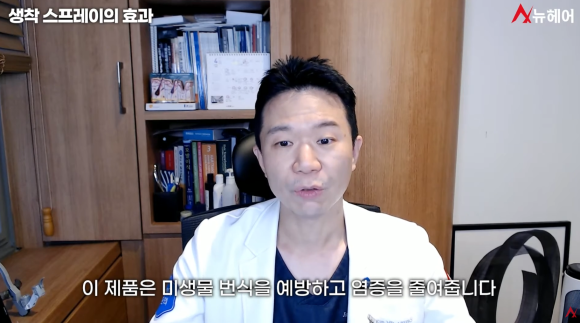
Q5. How is an HOCl (hypochlorous acid) spray different from regular saline?
A. There is a difference in antibacterial action and in stabilizing the wound-healing environment.
HOCl has properties similar to substances produced during our body’s immune response, and it is characterized by strong antimicrobial activity with low tissue toxicity⁴⁵. According to studies, HOCl solutions rapidly remove microorganisms while showing low toxicity to fibroblasts and keratinocytes, thereby supporting wound healing⁴⁵.
The reason some hospitals use it is not to “increase” graft survival, but to reduce variables such as infection and excessive inflammation.
Q6. Wouldn’t frequent disinfection be better?
A. No. Excessive disinfection can actually interfere with recovery.
Strong disinfectants can irritate not only bacteria but also normal tissue, which may delay wound healing³. The recent direction in wound care is not strong sterilization, but maintaining a stable recovery environment while minimizing irritation. In other words, “keeping it clean” and “excessive irritation” are completely different concepts.
Q7. In the end, what is the most important principle for protecting graft survival?
A. It is about “less stimulation,” not “doing more.”
Clinically, the four most important points are as follows.
By following only these principles, you can reduce a substantial portion of the major variables that threaten graft survival¹²³.
| Care factor | Clinical meaning | Related evidence |
|---|
| Maintaining moisture | Reduces scabbing and itching → less touching | Kerure & Patwardhan³ |
| Avoiding pressure | Prevents blood flow obstruction and physical damage | Rose² |
| Antimicrobial environment | Prevents infection and excessive inflammation | Sakarya et al.⁴ |
| Minimizing irritation | Stabilizes the wound-healing environment | Wang et al.⁵ |
| Surgical technique | The biggest determinant of graft survival | Parsley & Perez-Meza¹ |
The essence of graft-survival aftercare after hair transplant surgery is not adding special products. The key is to give the already transplanted follicles time to quietly and undisturbed connect with blood vessels¹²³.
Graft spray is not a medication that makes follicles grow; it is a tool that stabilizes the transplanted area’s environment and reduces unnecessary variables. In the end, good results are created not by excessive intervention, but by accurate understanding and restrained care.
Now it’s time for hairhair, this was Kim Jino.
Filsaengsinmo (必生新毛).
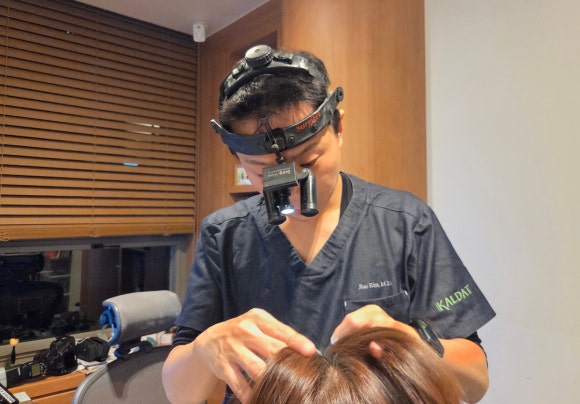
Written by: Kim Jino of New Hair Plastic Surgery (Public Relations Director, Korean Association of Plastic Surgeons / Academic Director, Korean Society of Laser Dermatology and Hair)
References
-
Parsley WM, Perez-Meza D. Review of factors affecting the growth and survival of follicular grafts. Journal of Cutaneous and Aesthetic Surgery. 2010;3(2):69–75. cited:"This review attempts to explore the stresses affecting grafts during transplantation and some of the complexities involved in graft growth and survival."
-
Rose PT. Hair restoration surgery: challenges and solutions. Clinical, Cosmetic and Investigational Dermatology. 2015;8:361–370. cited:"Once implanted, the grafts will not acquire their own specific blood supply for approximately 5 days."
-
Kerure AS, Patwardhan N. Complications in hair transplantation. Journal of Cutaneous and Aesthetic Surgery. 2018;11(4):182–189. cited:"Saline spray for 3–4 days for multiple times can reduce itching."
-
Sakarya S, et al. Hypochlorous acid: an ideal wound care agent with powerful microbicidal, antibiofilm, and wound healing potency. Wounds. 2014;26(12):342–350. cited:"HOCl solutions demonstrate rapid microbicidal activity with minimal cytotoxicity and support wound healing."
-
Wang L, et al. Hypochlorous acid as a potential wound care agent: part II. stabilized hypochlorous acid. Journal of Burns and Wounds. 2007;6:e6. cited:"Stabilized HOCl was found to be non-toxic to fibroblasts and keratinocytes while supporting wound repair."
[This post is written directly by a board-certified plastic surgeon for informational purposes in accordance with Article 56, Paragraph 1 of the Medical Service Act. Hair loss surgery and treatment may have side effects, so please make a careful decision through consultation with a specialist.]
Other recommended posts