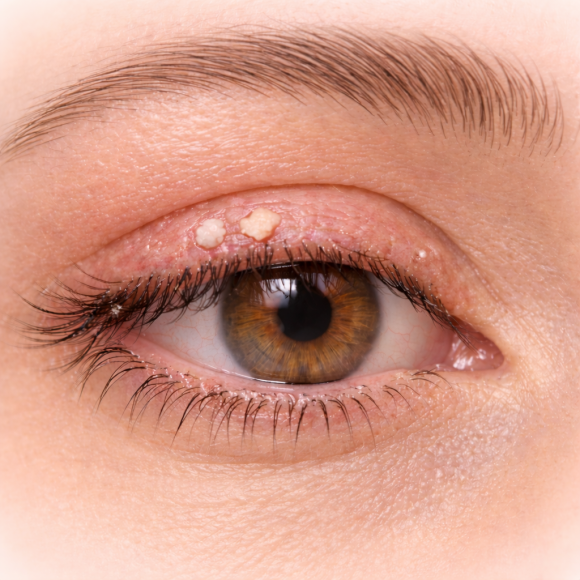
A White Bump on the Eyelid — Could It Be a Sign of Blepharitis?
If you notice a small white bump on your eyelid while looking in the mirror, it is easy for most people to think, “Is that acne?” and move on.
But the skin around the eyes is thin, and the oil glands are densely distributed there, so the cause may be different from ordinary skin trouble.
In particular, white bumps that repeatedly appear near the eyelid margin or along the lash line may be a sign of blepharitis, not just a simple oil gland issue.
Because it is connected not only to a cosmetic concern but also to eye health, it is important to tell the causes apart.
There are several possible explanations for a white bump on the eyelid.
Milia
These are small white bumps formed when keratin gets trapped beneath the skin’s surface. They cause almost no pain and feel hard to the touch.
Early stye
This is inflammation caused by a bacterial infection. It is accompanied by pain, swelling, and a feeling of warmth.
Blocked meibomian gland
This is a small white spot caused by a blockage in the oil glands inside the eyelid. If it happens repeatedly, it can lead to chronic inflammation.
If you especially notice white crusts or discharge near the base of the eyelashes and your eyes become red often, blepharitis may be the cause.
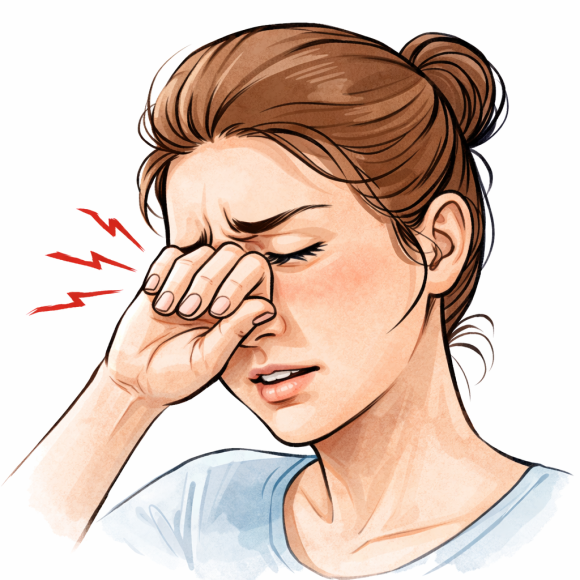
What is blepharitis?
Blepharitis is, quite literally, a condition in which inflammation develops along the edge of the eyelid. The main causes are related to abnormal oil gland secretion, bacterial overgrowth, and skin conditions.
Typical symptoms include the following.
White flakes or crusts around the eyelashes, a gritty and dry feeling in the eyes, a feeling of discharge in the eyes in the morning, redness along the eyelid margin, and small white bumps or recurring styes
Blepharitis is often chronic and recurrent rather than appearing as an acute condition. It does not usually happen just once and end; if not managed, it tends to keep coming back.
Why does it look like a white bump?
The eyelids contain meibomian glands that secrete oil to stabilize the tear film.
If this oil does not flow properly, the opening can become blocked, and discharge can collect inside, making it look like a small white dot.
If this condition continues, inflammation can develop, the eyes can become easily tired, and discomfort may remain even when using artificial tears.
Unlike a simple skin issue, it is characterized by being accompanied by dryness of the eyes.
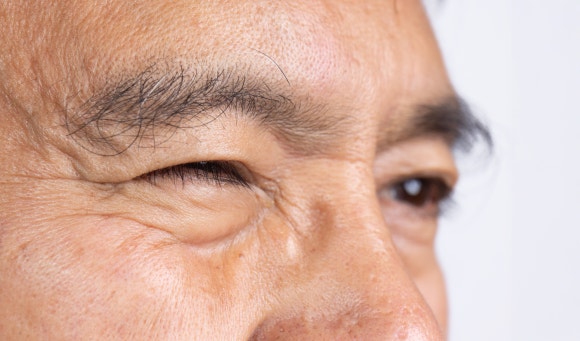
Lifestyle management is very important for blepharitis.
Use a warm compress to gently warm the eyelids with a warm towel for about 5 to 10 minutes a day to soften and loosen the oil glands.
Gently wipe the lash line with a dedicated eyelid cleanser or diluted cleanser.
Do not touch or squeeze it with your hands. The eyelids are very sensitive, and pressing on them can worsen inflammation.
If symptoms persist, it is best to visit an ophthalmology clinic. Antibiotic ointment or oral medication may be needed.
This is especially important if you wear contact lenses or frequently use eye makeup, since hygiene management becomes even more important.
Not all white bumps on the eyelid are dangerous.
However, if they keep recurring, or if your eyes are dry and red and there are flakes around the eyelashes, it may not be a simple pimple but an early sign of blepharitis.
The eyes are a much more sensitive organ than the skin. Rather than squeezing it carelessly or leaving it alone, the priority is to restore oil gland function with warm compresses and proper cleanliness.
If the symptoms continue, the safest approach is to get an accurate diagnosis through professional medical care.