When you start considering hair loss treatment, you eventually come across minoxidil at least once.
It has been used for a long time, and many people have actually experienced its effects.
However, recently the discussion has gone beyond simply “just apply it,” and the question
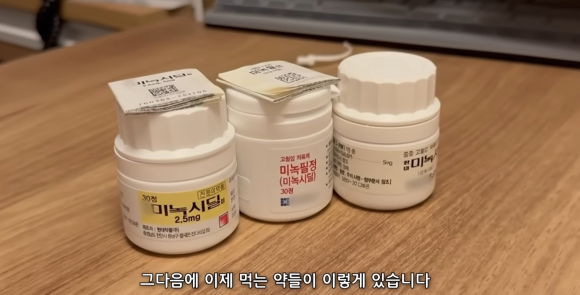
How many mg is appropriate for oral minoxidil?
has been raised often.
The reason is simple.
-
The topical form is a standard treatment
-
The oral form is not an FDA-approved drug for the indication of hair loss
-
The balance between effectiveness and side effects changes depending on the dose.
In particular, if you are a woman with low body weight, someone who tends toward low blood pressure, or someone sensitive to edema, dose setting must be approached even more carefully.
What Is the Appropriate Minoxidil Dose and What Precautions Should You Take? Summary
| Minoxidil is an FDA-approved hair loss treatment (topical form) with relatively well-established effectiveness and safety. |
|---|
| Oral minoxidil has not been FDA-approved for the indication of hair loss, but it has recently been used more actively. |
| In a study of women, 1 mg showed a more significant effect on increasing hair count than 0.25 mg. |
| However, as the dose increases, the possibility of increased body hair, edema, and lowered blood pressure must also be considered. |
| The most important principle is to start with the “minimum effective dose” and adjust while monitoring individual response. |
Topical minoxidil works by increasing blood flow to the scalp and prolonging the growth phase of hair follicles.
In both male pattern hair loss and female pattern hair loss, use for 3 to 6 months has been shown to reduce shedding and improve hair growth.
The advantages are as follows.
-
Relatively well-established safety
-
Long-term use possible
-
Low risk of systemic side effects
-
But there are also disadvantages.
-
Scalp irritation
-
Contact dermatitis
-
Inconvenience of use
For this reason, oral minoxidil, which has high medication adherence, is now drawing attention as an alternative.

Oral Minoxidil: The Difference Between 0.25 mg and 1 mg
A recently published study on female pattern hair loss reported the results of comparing 0.25 mg and 1 mg over 24 weeks.
The results were relatively clear.
In other words, in terms of effectiveness, 1 mg showed a more definite result.
However, some in the 1 mg group experienced increased facial body hair, and temporary worsening of shedding was reported at 8 weeks, but it recovered by 24 weeks.
No serious adverse events were reported, but as the dose increases, the possibility of increased body hair or edema should also be considered.

Important Precautions You Must Know When Taking Oral Minoxidil
If you tend to have low blood pressure
Minoxidil was originally a vasodilator.
Therefore, when taken orally, it may lower blood pressure, cause dizziness, and increase heart rate.
Patients with low blood pressure must take it only after consulting a specialist.
Edema and increased body hair
The most commonly mentioned problems with oral minoxidil are edema and hypertrichosis.
In particular, for women, increased facial body hair can be cosmetically burdensome.
Therefore, rather than starting immediately at a high dose, a strategy of starting with a low dose (0.25 to 0.5 mg) and then increasing it is recommended.

Understanding Initial Shedding
Whether topical or oral, shedding may increase within the first 1 to 2 months.
This may be part of the transition into the growth phase, and in most cases it recovers.
Many people stop treatment during this period, but in fact it is likely part of the treatment response.
The Importance of Continued Use
Minoxidil is a maintenance treatment.
If you stop using it, newly grown hair is highly likely to fall out again.
Therefore, before starting, you should consider the possibility of long-term use.

Minoxidil is one of the longest-used medications in hair loss treatment.
The topical form has established safety and effectiveness, while the oral form is still in the process of accumulating evidence.
This study gives us one important message.
0.25 mg may be safe, but its effectiveness may be limited, while 1 mg may be more clearly effective but also requires consideration of side effects.
So the most realistic approach is this.
Start with the minimum effective dose and adjust based on response.
Hair loss treatment is not a short-term contest.
Dose setting is not about being aggressive, but about balancing effectiveness and safety.
It’s time for hairhair, Kim Jin-oh.
Begetting new hair (必生新毛).

Written by: Kim Jin-oh, New Hair Plastic Surgery (Public Relations Director, Korean Society of Plastic and Reconstructive Surgeons / Academic Director, Korean Hair Research Society)