Exercise-related worries, like noticing an especially large amount of hair loss when showering after starting to work out, are more common than you might think.
Especially when you hear, “Exercise raises testosterone, so it causes hair loss,” it is easy to feel anxious.
So what is the actual relationship between exercise and hair loss? Here is a summary centered on the questions patients ask most often.
Does Exercise Cause Hair Loss? Creatine Hair Loss Summary
| There is insufficient evidence that exercise itself directly causes male pattern hair loss. |
|---|
| Temporary rises in testosterone and cortisol during exercise return to baseline within a short time¹². |
| The key factor in hair loss is not hormone levels, but the genetic sensitivity of hair follicles to DHT³. |
| If you feel like your hair is falling out after exercise, first consider the possibility of telogen effluvium. |
| When intensity is adjusted and nutrition, sleep, and scalp care are balanced, exercise can actually help. |
Q1. If exercise raises testosterone, doesn't that make hair loss worse?
It is true that testosterone and cortisol rise during exercise¹².
This change is especially observed during high-intensity exercise. But the important point is that this increase is temporary. In most cases, levels return to baseline relatively quickly after exercise ends.
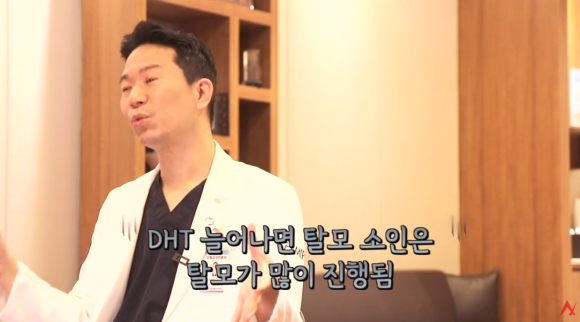
The key factor in male pattern hair loss is not simply an increase in testosterone. The real issue is DHT, or more precisely, how hair follicles respond when exposed to DHT³.
This responsiveness is largely influenced by genetic factors.
In clinical practice, it is rare for male pattern hair loss to newly appear just because someone started exercising. More often, people who already have a genetic predisposition simply become more aware of it after beginning exercise.
Q2. My hair has been falling out a lot since I started exercising. Why is that?
Hair loss associated with exercise is mostly a pattern of telogen effluvium.
Telogen effluvium is less a specific disease and more a physiological response that appears when the body is under stress.
For example, it can occur when the following factors overlap.
The problem is not the short-term rise in cortisol itself, but a prolonged state of stress⁴. If high-intensity exercise continues without recovery, hair follicles cannot stay in the growth phase and shift into the resting phase.
A characteristic feature is that hair shedding increases not immediately after starting exercise, but 2 to 3 months later.
Because of this time lag, the cause is often misunderstood.
Q3. Does creatine supplementation cause hair loss?
Creatine is a question that almost always comes up in hair loss consultations.
One study reported a change in the DHT/testosterone ratio after creatine supplementation⁵.
However, that study did not confirm whether actual hair loss occurred. A change in lab values and clinical hair loss are different issues.
In clinical practice, it is not common to see clear worsening of hair loss from creatine alone. However, if male pattern hair loss is already progressing and you are in a sensitive state, it is reasonable to observe your own response before deciding.
Q4. Can exercise actually help with hair loss?
Regular exercise has the following positive effects.
In the long term, it helps overall hormonal balance and stabilizing daily routines¹².
The problem is not exercise itself, but the way you exercise without allowing for recovery.
Q5. How can you prevent hair loss while exercising?
| Check item | Key points | Relationship to hair loss |
|---|
| Exercise intensity | Increase gradually, avoid overtraining | Continuous stress can trigger telogen effluvium⁴ |
| Nutrition | Get enough protein and iron | Nutritional deficiency lowers follicle priority |
| Sleep | At least 6 to 7 hours per day | Poor recovery keeps cortisol elevated |
| Supplements | Observe your personal response | DHT ratio may change⁵ |
| Scalp care | Cleanse right after exercise | Minimize an inflammatory environment |
For people who already have male pattern hair loss, it is more effective to maintain a balanced lifestyle while combining that with medication rather than stopping exercise.
The statement “exercise causes hair loss” is closer to an exaggeration.
Hormonal changes during exercise are temporary¹², and the essence of male pattern hair loss is the genetic responsiveness of hair follicles³.
However, high-intensity exercise without recovery, energy deficiency, and lack of sleep can combine to cause telogen effluvium⁴.
In the end, the key is not to stop exercising, but to find an intensity and recovery rhythm your body can handle. Hair is only one indicator of the body’s overall balance.
It is time for Hairhair, Kim Jin-oh.
필생신모(必生新毛).
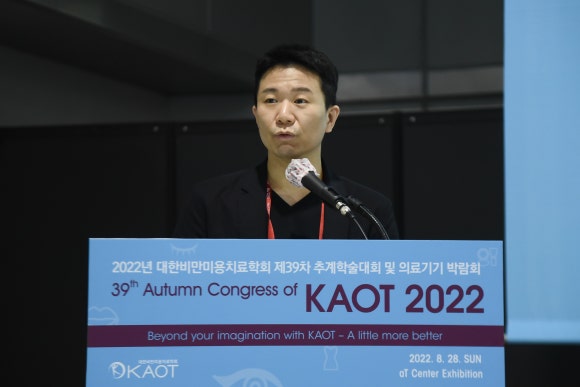
Written by: Kim Jin-oh, New Hair Plastic Surgery Clinic (Public Relations Director, Korean Society of Plastic and Reconstructive Surgeons / Academic Director, Korean Society for Laser, Dermatology and Hair)
References
- Sato, K., Iemitsu, M., Katayama, K., Ishida, K., Kanao, Y. & Saito, M. (2016). Responses of sex steroid hormones to different intensities of exercise in endurance athletes. Experimental Physiology, 101(1), 168–175.
cited: “Responses of sex steroid hormones to different intensities of exercise in endurance athletes.”
- Corazza, D.I., Sebastião, É., Pedroso, R.V., Andreatto, C.A.A., Coelho, F.G.M., Gobbi, S., Teodorov, E. & Santos-Galduróz, R.F. (2014). Influence of chronic exercise on serum cortisol levels in older adults. European Review of Aging and Physical Activity, 11, 25–34.
cited: “Influence of chronic exercise on serum cortisol levels in older adults.”
- Ellis, J.A., Stebbing, M. & Harrap, S.B. (2005). Androgenetic alopecia: pathogenesis and potential for therapy. Expert Reviews in Molecular Medicine, 7(13), 1–11.
cited: “Androgenetic alopecia: pathogenesis and potential for therapy.”
- Thom, E. (2016). Stress and the hair growth cycle: cortisol-induced hair growth disruption. Journal of Drugs in Dermatology, 15(8), 1001–1004.
cited: “Stress and the hair growth cycle: cortisol-induced hair growth disruption.”
- van der Merwe, J., Brooks, N.E. & Myburgh, K.H. (2009). Three weeks of creatine monohydrate supplementation affects dihydrotestosterone to testosterone ratio in college-aged rugby players. Clinical Journal of Sport Medicine, 19(5), 399–404.
cited: “Creatine monohydrate supplementation affects dihydrotestosterone to testosterone ratio.”
Related article