Alopecia areata is not simply a problem of hair loss, but an autoimmune disease in which the immune system attacks the hair follicles.
In the past, the main treatments were steroid injections, topical treatment, and immunotherapy, but in cases of widespread hair loss, it was often difficult to achieve satisfactory results.
The treatment that changed this trend is the JAK inhibitor (Janus kinase inhibitor).
This medication blocks the JAK-STAT pathway, which regulates immune signaling, and reduces the inflammatory response that attacks the hair follicles¹².
In recent clinical studies, baricitinib showed meaningful recovery in patients with severe alopecia areata, greatly expanding treatment options³.
After that, ritlecitinib was also approved, and two JAK inhibitors are now used in Korea.
However, in actual clinical practice, we often hear this question.
I took a JAK inhibitor, but it seems like it isn’t working very well. Should I switch the medication?
In this article, I will organize treatment strategies in a FAQ format based on the questions patients ask most often.
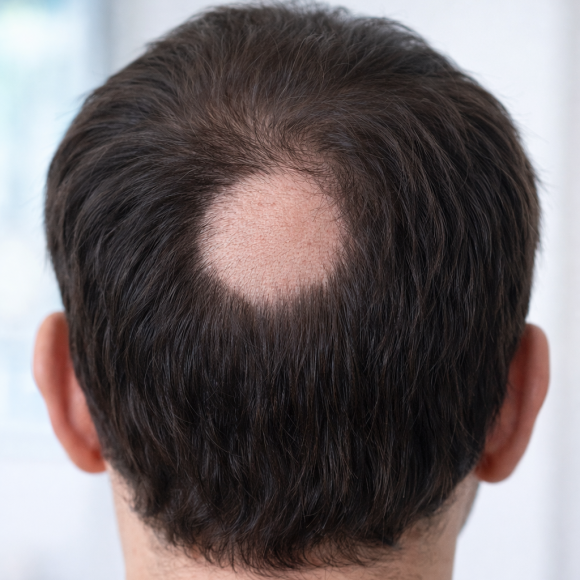
Alopecia Areata Treatment with JAK Inhibitors: Should You Switch If It Doesn’t Work Well? Summary
| JAK inhibitors are not medications that directly make hair grow; they are treatments that regulate immune signaling. |
|---|
| In general, the basic principle is to use them for at least 6 months and then evaluate the response. |
| If the effect is unclear or there is only a partial response, switching to another JAK inhibitor may help. |
| If there is no response at all, other immunotherapy strategies should be considered rather than simply changing the medication. |
| During treatment, infections, blood counts, and cholesterol changes should be checked regularly. |
Q1. When do JAK inhibitors start to work?
The effect of JAK inhibitors for alopecia areata generally begins to show early changes around 3 months.
The first signs are new fine hairs coming in or a slower rate of hair loss.
However, in real clinical practice, clear changes are often confirmed after about 6–9 months.
Even in large clinical trials, treatment response was usually assessed at 24 weeks (about 6 months)³.
Therefore, it is not recommended to judge the treatment as ineffective and switch medications after only a few weeks.


Q2. If a JAK inhibitor is not effective, should I switch the medication right away?
Most specialists evaluate the response after at least 6 months of treatment.
The reasons are as follows.
-
It takes time for the immune response to stabilize
-
It takes several months for the hair follicles to re-enter the growth phase
-
Some patients show slow but steady recovery
Therefore, even if there is little change during the first 3 months, it is not immediately judged as a failure.


Q3. Could switching to another JAK inhibitor be effective?
Yes.
In a recent multicenter retrospective study, 108 severe cases that were not sufficiently satisfied with the first JAK inhibitor were analyzed¹.
After switching to another JAK inhibitor, about half of the patients improved beyond the severe disease criteria.
In particular, the switch was more effective in patients who had shown at least some response to the first medication.
This difference is explained by the fact that each JAK inhibitor suppresses slightly different signaling pathways².


Q4. In what cases is switching a JAK inhibitor considered?
Switching is discussed in the following situations.
| Situation | Treatment strategy |
|---|
| No noticeable change after using the medication for 6 months or more | Consider another JAK inhibitor |
| Partial response | A switch may be attempted |
| No response at all | Consider combining other immunotherapy |
| Side effects occur | Change the medication or stop it |
In other words, changing the medication is closer to a “next-step strategy” than a first-line treatment.
Q5. Which is better, Litfulo or Olumiant?
So far, studies have not shown a clear overall superior option.
Instead, the choice is based on the following criteria.
-
Age (Litfulo for adolescents)
-
Response to previous treatment
-
Risk of side effects
-
Insurance coverage and cost
Therefore, personalized treatment is important.


Q6. Are JAK inhibitors dangerous because of side effects?
In most patients, they are often used without major problems.
However, because they are medications that regulate immune responses, the following tests are needed.
-
Blood tests
-
Liver function
-
Cholesterol levels
-
Presence of infection
Safety is managed through regular monitoring¹³.
Q7. Can JAK inhibitors be used together with other hair loss treatments?
Yes.
In actual clinical practice, the following treatments are often used together as supportive therapy.
-
Minoxidil
-
Topical steroids
-
Immunotherapy
This combination treatment may help improve the environment for hair growth.

Q8. Does alopecia areata recur if you stop a JAK inhibitor?
Because alopecia areata is a chronic immune disease, there is a risk of recurrence if the medication is suddenly stopped.
Therefore, when stopping treatment, it is important to check the following³
| Question | Key answer |
|---|
| When effects appear | Usually start at 3 months, clearly seen at 6–9 months |
| When to switch medications | After evaluating for at least 6 months |
| Effect of switching treatment | About 50% improvement in some patients |
| Patients most likely to respond | Those who had a partial response to the first medication |
| Safety management | Blood tests and infection monitoring are needed |
JAK inhibitors are one of the most important new treatment strategies in alopecia areata treatment.
However, these medications do not directly make hair grow; they regulate overactive immune signals.
Therefore, the basic principles of treatment are as follows.
-
Use them for an adequate period (at least 6 months) before evaluating
-
If there is a partial response, consider continuing or switching
-
If there is no response at all, review other immunotherapy strategies
Recent studies show that even medications in the same class can produce different responses depending on the patient¹².
In other words, treatment should not end with just one medication, but should be approached with a personalized strategy.
Now it is time for hairhair, Kim Jin-oh.
A wish for new hair to grow (必生新毛).

Written by: Kim Jin-oh of New Hair Plastic Surgery Clinic (Public Relations Director, Korean Association of Plastic Surgeons / Academic Director, Korean Society of Laser Dermatology and Hair)
References
-
Martin A, Chen LC, Kreytak C, et al. Journal of the American Academy of Dermatology 2026; cited:"Switching between Janus kinase inhibitors for treatment of alopecia areata: A Multi-Center Retrospective Review".
-
Xing L, Dai Z, Jabbari A, et al. Journal of Investigative Dermatology 2021; cited:"The JAK-STAT pathway in alopecia areata".
-
King B, Lockshin B, et al. New England Journal of Medicine 2022; cited:"Baricitinib in severe alopecia areata".

Articles worth reading together