There is one question that patients who are considering hair loss treatment ask most often during hospital consultations.
If I get a follicle injection, will my hair really grow?
Recently, one of the treatments commonly performed at hair loss clinics is follicle injection.
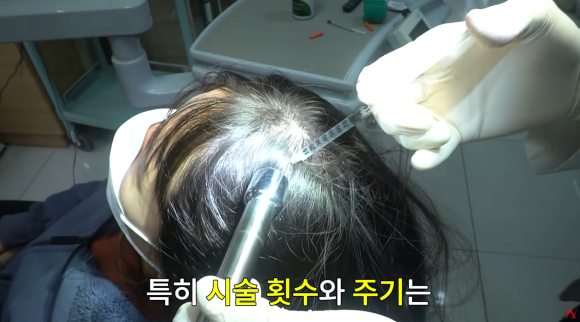
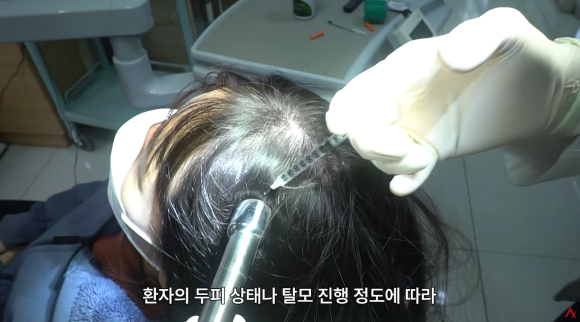
It is a method of directly injecting growth factors or medication into the scalp, and it works by a mechanism different from hair loss medication.
However, many people wonder whether it is actually effective, what types there are, and whether there are any side effects.
In this post, we will organize the effects and types of follicle injections, as well as how they are used in actual treatment, in a patient Q&A format.
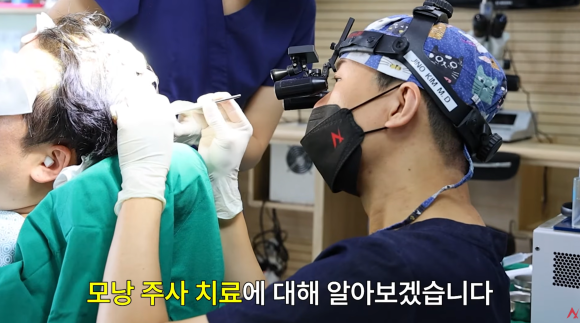
Does Hair Follicle Injection for Hair Loss Really Work? (Types · Side Effects) Summary
| Follicle injection is not a substitute for hair loss medication, but a complementary treatment. |
|---|
| There are various types, such as PRP, dutasteride injection, PDRN/PN, and exosomes, and they work by improving the environment around the hair follicle. |
| Studies have repeatedly reported a trend of increased hair density and thickness. |
| In many cases, better results are seen when used together with finasteride, dutasteride, or minoxidil. |
| The effects and duration vary from person to person depending on scalp condition and the degree of hair loss progression. |
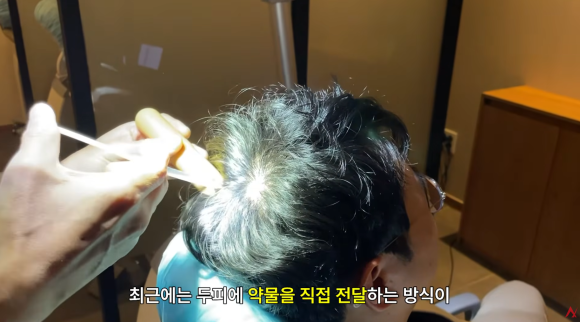
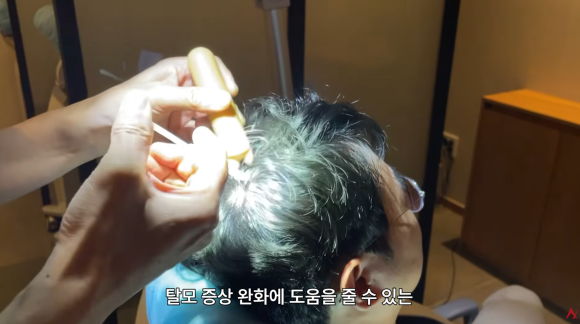
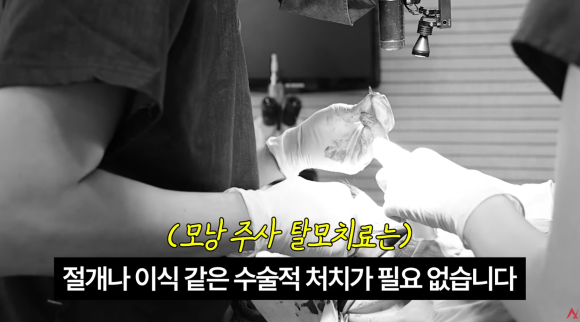
Q1. Do hair follicle injections actually work for hair loss?
To start with the conclusion, this is a treatment for which a certain level of effectiveness has been reported.
However, rather than directly blocking the cause of the condition like hair loss medication does, it is closer to an auxiliary treatment that improves the environment around the hair follicle.
Hair follicles are greatly affected by the scalp microenvironment, such as blood flow, inflammation, oxidative stress, and growth factor signaling.
If this environment is poor, the hair may not thicken even when the same medication is used, or hair loss may progress more slowly.
Follicle injection is a treatment that improves this scalp microenvironment.
In actual studies, PRP and local injection treatments have been reported to show a tendency toward improved hair density and thickness.
In addition, when added to existing hair loss treatment, there are cases where better results are seen than with minoxidil or medication treatment alone.
Q2. What types of follicle injections are there?
Follicle injection is not a single treatment; there are various ingredients and methods.
Representative types are as follows.
| Type | Main mechanism | Features |
|---|
| PRP | Platelet growth factors | Many studies on increased hair thickness |
| Dutasteride injection | DHT suppression | Local hair loss suppression effect |
| PDRN / PN | Tissue regeneration, anti-inflammatory | Improves the scalp environment |
| Exosome | Cell signaling | Possible stimulation of hair follicle growth |
| Growth factor complex injection | Growth factor supply | Improves microenvironment |
PRP is the most studied treatment to date.
Meta-analyses have also reported that PRP may help increase hair density and improve thickness.
In addition, local dutasteride injection has shown a tendency to increase hair density and thickness even in patients who do not take oral medication⁴.
Recently, exosome-based treatments are also being studied, and they have been reported to potentially stimulate hair follicle growth signaling and promote the transition from the resting phase to the growth phase.
Q3. Can hair loss be treated with follicle injections alone?
This is a very important question.
Most experts recommend using follicle injections together with medication rather than as a stand-alone treatment.
The main cause of androgenetic alopecia is the hormone DHT.
The treatments that suppress it are as follows.
• Finasteride
• Dutasteride
In other words, it is most accurate to understand follicle injection as a treatment that complements the basic treatment.
That said, in some patients, increases in hair thickness or reduced shedding have also been reported with follicle injection alone.
Q4. How many sessions of follicle injection are needed before results appear?
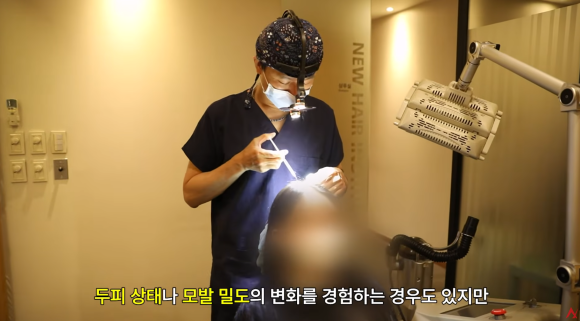
In general, in clinical practice, many people feel changes after about 4 to 6 treatment sessions.
Initial treatment is usually carried out in the form of
• treatment every 1 to 2 weeks
• followed by monthly maintenance treatment
.
However, hair loss treatment is similar to skincare.
If treatment is stopped, the effect may gradually decrease over time.
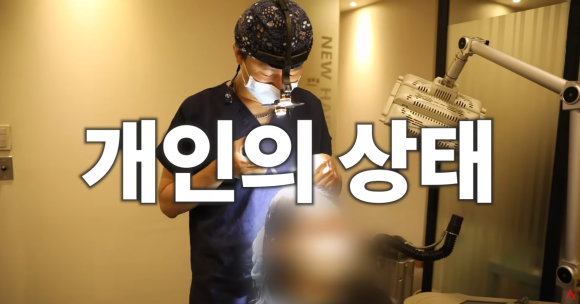
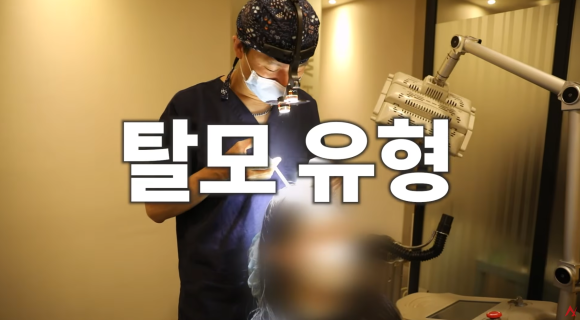
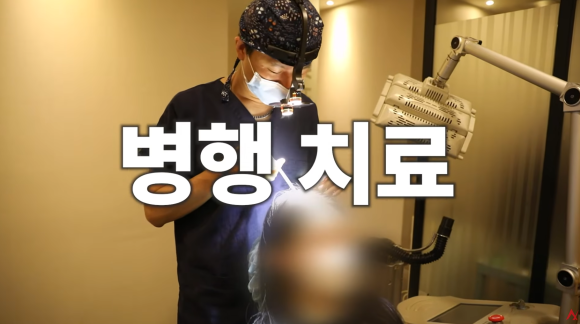
Q5. Are there any side effects of follicle injection?
In most cases, serious side effects are rare.
Typical reactions that may occur include the following.
• Pain at the injection site
• Temporary swelling
• Minor bleeding
• Scalp irritation
The thing patients worry about most is damage to the hair follicle.
However, since the injection depth is generally about 1 to 3 mm, which is shallower than the depth of the hair follicle (about 5 to 7 mm), actual follicle damage is known to be very rare.
Summary of follicle injection effects
| Item | Details |
|---|
| Role of treatment | Improving the scalp microenvironment |
| Main effects | Increased hair thickness, reduced shedding |
| Place in treatment | Complementary to medication treatment |
| When effects begin | After about 4 to 6 treatment sessions |
| Combination treatment | Hair loss medication, minoxidil |
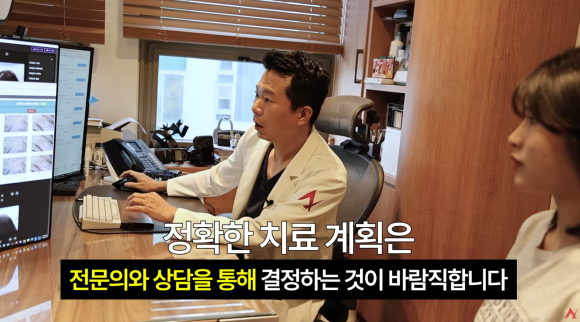
Hair follicle injection for hair loss is not a replacement for hair loss medication, but it is a meaningful complementary treatment.
There are various methods such as PRP, dutasteride injection, and exosomes, and studies have reported a trend toward improved hair density and thickness.
In particular, when used together with medication, it can improve the scalp environment and help increase responsiveness to medication.
What matters in hair loss treatment is not which treatment is better, but how to combine treatments to suit the patient's condition.
It is time for hairhair, Kim Jino.
Pilsaengsinmo (必生新毛).

Written by: Kim Jino of New Hair Plastic Surgery (Public Relations Director, Korean Society of Plastic and Reconstructive Surgeons / Academic Director, Korean Society of Laser Dermatology and Hair)
Articles you may also find helpful