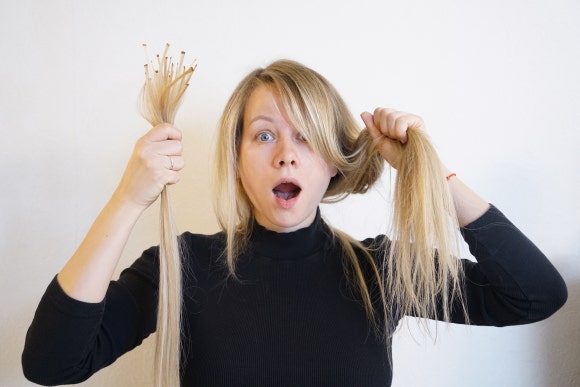
Hair extension side effects? Possible cause of traction alopecia
Hair extensions are a hairstyling method that many people choose because they can quickly change hair length or volume.
They are especially popular when someone wants to change their look in a short period of time, and salons offer a variety of hair extension procedures.
However, you may have heard that wearing hair extensions for a long time or failing to care for them properly can put stress on the scalp and hair.
One of the most commonly mentioned issues is traction alopecia.
So, let’s look at whether hair extensions can actually cause hair loss, and in what cases they may become risky.
What is traction alopecia?
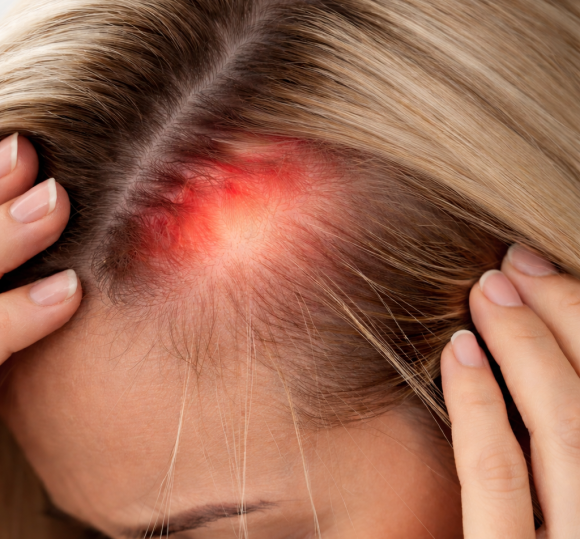
Traction alopecia refers to hair loss caused by the force of hair being continuously pulled.
Hair grows from a structure in the scalp called the follicle, and if that follicle is repeatedly pulled or put under pressure, it can gradually weaken.
As a result, hair may fall out more easily, or over time the follicle itself may be damaged, making it harder for hair to grow properly.
This type of hair loss can commonly occur with styles such as:
-
Ponytails or bun styles tied too tightly
-
Braids kept in place for long periods
-
Hair extensions or hair add-ons
-
Heavy wigs or hairpieces
�a
In other words, the risk of traction alopecia increases when the scalp is exposed to continuous pulling.
Why hair extensions can cause hair loss
Hair extensions are installed by attaching human hair or synthetic hair to existing hair.
Because this adds extra weight to the hair, it can place a burden on the scalp.
In particular, the risk of traction alopecia may increase in the following situations:
- Hair extensions that are too heavy
If there is a large amount of extensions or if they are long, the weight increases accordingly. If that weight continuously pulls hair downward, it can put stress on the follicles.
- When the application area is too dense
If the spacing used to attach extensions to the hair is too tight, the tension on each strand can increase.
- When worn for a long period
Hair extensions are usually kept in place for several weeks to several months, and if the pulling continues during that time, stress can build up on the scalp.
- When scalp care is insufficient
Wearing hair extensions can make scalp cleansing more difficult. As a result, inflammation or follicle irritation may occur, which can further increase the risk of hair loss.
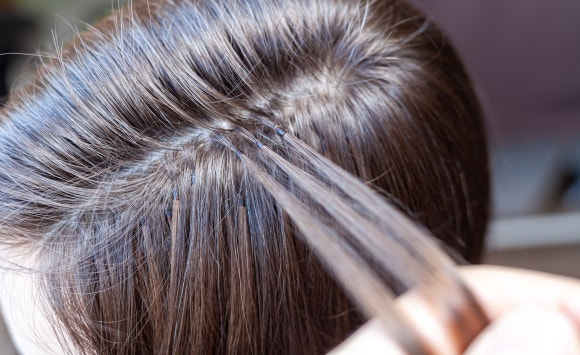
If the hair around the forehead or temples becomes thinner or starts to feel sparse, it may be an early sign of traction alopecia, so it is a good idea to temporarily stop wearing hair extensions and check the condition of the scalp.
In the end, hair extensions themselves do not necessarily cause hair loss; rather, their effect on scalp health can vary depending on how they are applied and managed.
If you feel pain or pulling on the scalp, do not simply dismiss it as a minor discomfort. Checking the condition of the hair and scalp can help maintain healthy hair.