People who take medications such as finasteride or dutasteride for hair loss treatment often ask this in the clinic.
My semen became thinner.
It does not feel as forceful as before when I ejaculate.
This question is surprisingly common, but most patients feel embarrassed and end up only worrying about it through internet searches or comments.
To give the conclusion first, this change is not simply a matter of feeling; it is a bodily response that can be explained pharmacologically.
This is because hair loss medication changes the hormone environment in the body, temporarily reducing the secretory function of the prostate and seminal vesicles.
Below, focusing on the questions patients ask most often, I will organize the medical evidence and clinical experience together.
My semen became thinner after taking hair loss medication, and the feeling of ejaculation changed. Summary
| Taking hair loss medication (5α-reductase inhibitors such as finasteride) may cause decreased ejaculate volume, reduced ejaculation sensation, and thinner semen. |
|---|
| This is a physiological change caused by reduced DHT, which temporarily lowers the secretory function of the prostate and seminal vesicles¹. |
| Clinical studies have reported decreased ejaculate volume in about 1.2–3.4% of patients, and it is mostly reversible². |
| In many cases, symptoms improve after an initial adjustment period of 3–6 months. |
| When the medication is stopped, most sexual function measures are reported to return to baseline². |

Q1. Why does semen become thinner when taking hair loss medication?
Ejaculate is not simply a liquid made up of sperm.
In fact, sperm account for less than about 5% of the total ejaculate, and most of the rest is prostatic fluid and seminal vesicle fluid.
These two organs are tissues that are highly sensitive to DHT (dihydrotestosterone), a male hormone.
Medications such as finasteride block 5α-reductase and reduce DHT concentration by 70–90%¹.
In this process,
occur, and as a result, the total volume of ejaculate may decrease and its viscosity may become lower.
In simple terms,
it can be understood as "the production factory operating at a lower rate, so the output decreases."
Q2. If ejaculate volume decreases, does the pleasure of ejaculation also decrease?
It can.
The pleasure felt during ejaculation is influenced not only by nerve responses but also by physical pressure stimulation.
The ejaculation process consists of the following stages:
-
Semen gathers in the posterior urethra
-
Internal pressure rises
-
The pelvic floor muscles contract
-
Urethral expansion stimulates the brain, which recognizes it as pleasure
However, when the ejaculate becomes thinner and the amount decreases,
and this can lead to a feeling that satisfaction during ejaculation is reduced.
Clinically, a decrease in ejaculation satisfaction has been reported in patients with reduced ejaculate volume².

Q3. Doesn’t hair loss medication cause infertility?
In most cases, it is not directly related to infertility.
Thinner semen is due to changes in secretions, not a decrease in sperm count.
Studies have also reported that in patients taking finasteride, the effects on
-
sperm count
-
sperm motility
-
abnormal morphology rate
are generally limited².
However, if you are planning a pregnancy, it is safer to consider
-
stopping the medication
-
consulting a specialist
Q4. Do hair loss medication side effects continue indefinitely?
In most cases, the changes are reversible.
A meta-analysis also confirmed that after discontinuation of the drug, sexual function measures tended to return to baseline².
Also, in clinical practice,
passes, and many patients experience symptom improvement.
In other words, the chance that the initial change will be permanent is low.


Q5. Is there a way to address reduced ejaculation sensation?
Depending on the patient’s condition, several approaches can be considered.
| Situation | Action | Expected effect |
|---|
| Reduced ejaculation sensation early in treatment | Observe for 3–6 months | Hormonal adaptation may occur |
| Stress due to decreased ejaculate volume | Adjust dosing interval | Reduced sensitivity to side effects |
| Accompanied by reduced erectile strength | Combine with tadalafil | Improved pelvic blood flow |
| Psychological withdrawal | Counseling and medication adjustment to reduce the nocebo effect | Reduced nocebo effect |
| Lack of exercise | Squats / lower-body exercise | Strengthening of the pelvic floor muscles |
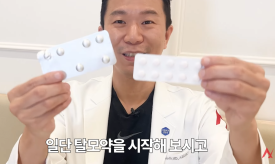
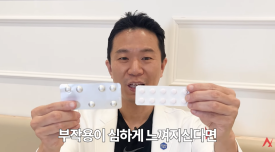


In particular, lower-body exercise is often actually helpful.
This is because when the pelvic floor muscles are strengthened, the force of muscular contraction during ejaculation increases, partially compensating for the physical pressure.
After taking hair loss medication,
can occur.
However, in most cases,
can explain these changes as reversible phenomena.
What is important is
and, if necessary, adjusting the dose or dosing method through consultation with a specialist.
Finding a balance between hair loss treatment and sexual function is probably the most practical approach.
This has been Kim Jin-oh, and it is time for hairhair.
May new hair be born (必生新毛).
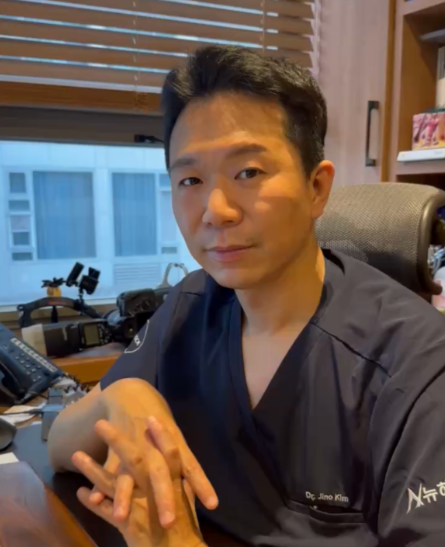
Written by: Kim Jin-oh of New Hair Plastic Surgery (Public Relations Director, Korean Society of Plastic and Reconstructive Surgeons / Academic Director, Korean Society of Laser Dermatology and Hair)
[References]
-
Traish, A.M., et al. (2020). "The Impact of 5α-Reductase Inhibitors on Male Sexual Function: A Systematic Review." Journal of Sexual Medicine, 17(10), pp. 1920-1940. cited: "DHT suppression in the prostate and seminal vesicles leads to reduced secretory activity, potentially impacting ejaculate volume and quality."
-
Gupta, A.K. and Talukder, M. (2022). "Finasteride in alopecia: A review of efficacy and safety profile." International Journal of Dermatology, 61(12). cited: "Adverse sexual effects, including decreased ejaculate volume, were reported in a small percentage of patients but showed reversibility upon discontinuation."
Related posts worth reading