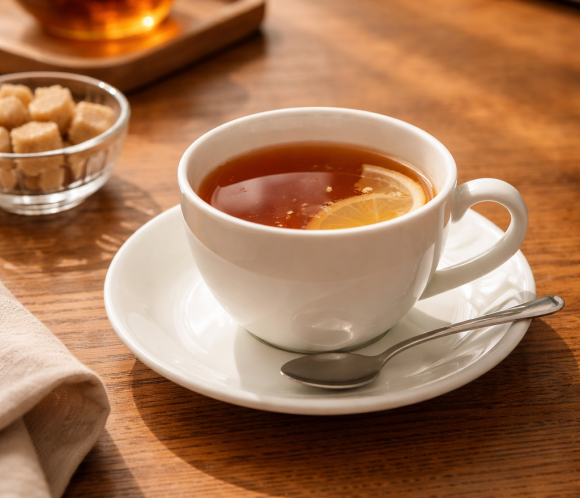
Tea You Can Drink Instead of Water, and Tea You Shouldn't? How to Drink It Healthily
You have probably heard at least once that it is important to drink enough water every day for your health.
But because drinking a lot of water is not as easy as it sounds, many people drink tea instead of water.
In particular, warm tea can be easy to drink without feeling burdensome, and its aroma and taste can make it feel more comfortable than water.
So, can all tea be drunk like water?
To put it simply, depending on the type of tea, some can be drunk instead of water and some cannot.
Some teas help with hydration, but others can place a burden on the body because of caffeine or certain ingredients.
In this post, we will briefly sort out the difference between teas that can be drunk instead of water and teas that should be consumed with caution.
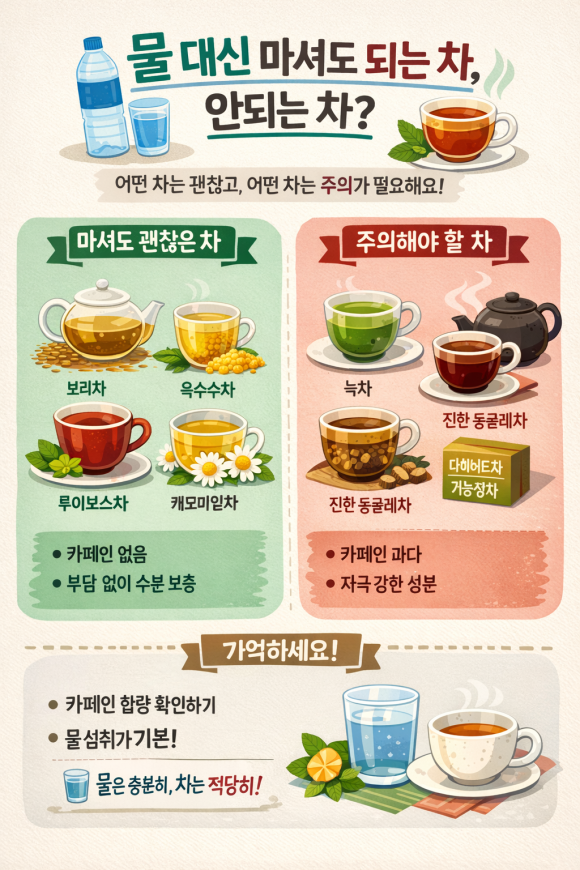
Teas That Are Relatively Fine to Drink Instead of Water
Teas that can be drunk relatively easily like water are teas that contain almost no caffeine and have few stimulating ingredients.
These teas help with hydration without placing a major burden on the body.
Representative examples include the following.
Barley tea
This is the tea most commonly drunk in Korea instead of water.
It contains no caffeine and has a mild taste, so it can be enjoyed without strain by everyone from young children to adults.
It is also known for helping to soothe the stomach, so many households use it as a substitute for water.
Corn tea
Corn tea also contains no caffeine and is characterized by its savory flavor.
It helps replenish body fluids and is known as a tea that is relatively low in stimulation and suitable for drinking like water.
Rooibos tea
Rooibos tea originates from South Africa and contains no caffeine; it also contains antioxidant compounds.
It has the advantage of being suitable even for people sensitive to caffeine or for drinking in the evening.
Chamomile tea
Among herbal teas, chamomile tea is known as a relatively easy tea to drink comfortably.
Because it is said to help ease tension and relax the body, it is also often recommended as a tea to drink before bed.
These teas contain no caffeine or very little, so they cannot completely replace water, but they can help with hydration to some extent.
Teas That Are Not Good to Drink Instead of Water
On the other hand, there are teas that are not recommended for continual drinking like water.
Most of them contain caffeine or have strong specific ingredients.
Representative examples include the following.
Green tea
Green tea contains many healthful compounds, but it also contains caffeine.
A moderate amount is fine, but if you keep drinking it like water, your caffeine intake can become too high.
In particular, people sensitive to caffeine may experience palpitations or sleep problems.
Black tea
Black tea also contains caffeine.
It has less than coffee, but if you drink a lot of it consistently, your caffeine intake will still increase, so it is not recommended to drink it continuously instead of water.
Balloon flower root tea (when brewed strongly)
Balloon flower root tea is often drunk instead of water, but if it is brewed too strongly, it can place a burden on the digestive system.
In particular, drinking strong balloon flower root tea on an empty stomach can sometimes cause stomach discomfort.
Diet teas or functional teas
Some diet teas or functional teas sold on the market have a strong diuretic effect or contain large amounts of certain ingredients.
If you drink these teas frequently like water, it may actually disrupt the body's fluid balance.
Tea is easier to drink than water because of its taste and aroma, but not all tea can replace water.
Teas without caffeine, such as barley tea, corn tea, and rooibos tea, are relatively good choices as substitutes for water, but teas containing caffeine, such as green tea and black tea, should not be consumed excessively.
Also, depending on the type of tea, there may be diuretic effects or gastrointestinal irritation, so if you plan to drink tea instead of water for a long period, it is necessary to check the ingredients.
The best approach is to get your basic hydration from water and enjoy tea in moderation according to the situation.
If you choose tea wisely in everyday life, staying hydrated can become easier and may also help with health management.