「Approved by the Medical Advertising Review Committee of the Korean Medical Association No. 251002-중-199308」
Female hair loss often begins with visible changes such as reduced volume at the crown, a widening part, and thinning hair.
However, behind these changes are complex causes such as hormonal changes, stress, nutritional imbalance, and scalp conditions.
Because female hair loss can occur due to a variety of causes,
step-by-step customized treatment based on the underlying cause is important.
New Hair Hair Transplant Clinic provides a variety of treatment options through accurate diagnosis.
STEP 1. Precise diagnosis for the treatment that suits me
Treatment begins with accurately understanding your condition.
Starting treatment without an accurate diagnosis can become a prescription without direction.
Diagnosis is the benchmark for objectively confirming the current state of hair loss,
and it is also the starting point for setting the direction of future treatment.
In addition, periodic diagnosis provides a basis for comparing changes before and after treatment
and evaluating how effective it has been.
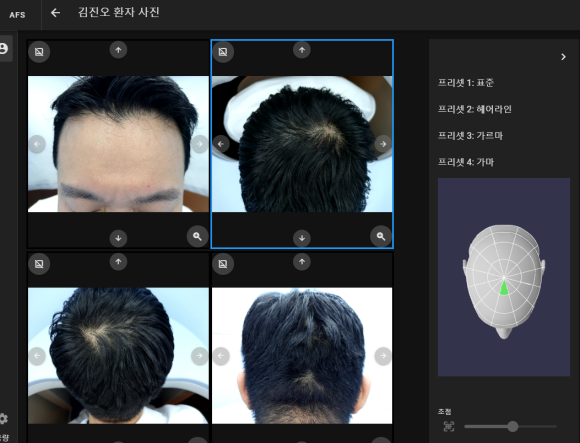
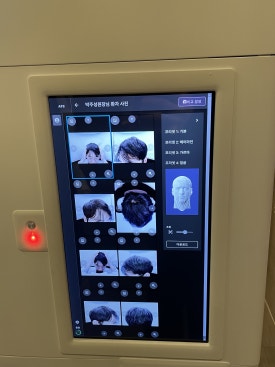
At New Hair Hair Transplant Clinic, the following items are comprehensively analyzed.
-
Full-direction scalp check (hair loss, scalp condition check)
-
Hair loss progression check (hair thickness, density, growth cycle)
-
Check for accompanying conditions (seborrheic dermatitis)
-
Stress test
-
Analysis by a plastic surgery specialist
Through a hair loss precision diagnosis system consisting of
360-degree scalp imaging, microscopic imaging, stress testing, and a consultation with a plastic surgery specialist,
three precision devices and a plastic surgery specialist's analysis are carried out together.
Based on these objective data,
a customized judgment is made about which combination of medication and device-based treatment is appropriate.
STEP 2. Non-surgical customized treatment options
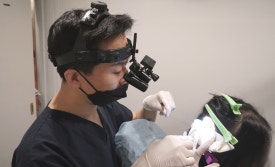
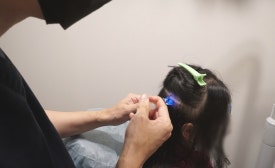
At New Hair Hair Transplant Clinic, the following non-surgical treatments are
flexibly combined and applied according to scalp condition, hair loss type, and lifestyle.
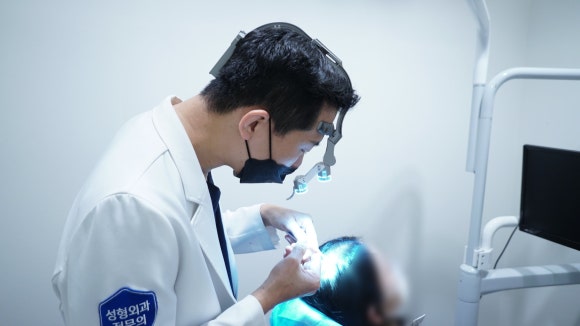
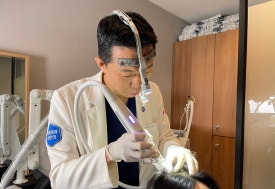
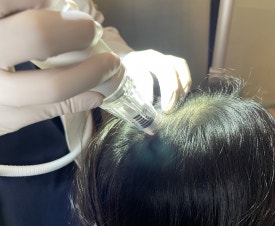
- Follicle injection therapy
A method that directly injects nourishing ingredients into the hair follicles
to improve the hair growth environment and slow the progression of hair loss.
It is suitable not only for female hair loss treatment but also for male hair loss cases where taking medication is difficult.
- MTS
A technique that stimulates the scalp with ultra-fine needles to induce growth factor activation and increase the absorption of treatment ingredients.
It is an approach that achieves both stimulation and delivery at the same time, and it can be used together with certain medications or seborrheic dermatitis treatments.
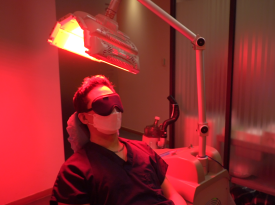
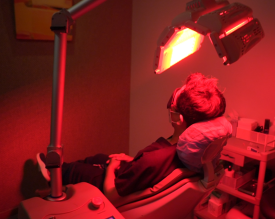
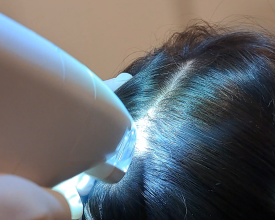
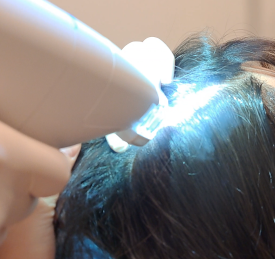
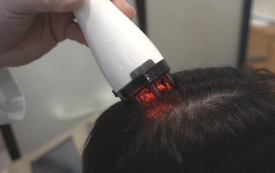
- Low-level laser therapy
Depending on the hair loss condition or scalp condition, a laser of a specific wavelength is applied to the scalp to promote blood circulation and cellular metabolism.
It helps create conditions in which hair growth and regeneration can occur by improving the follicle environment.
- Cooling therapy
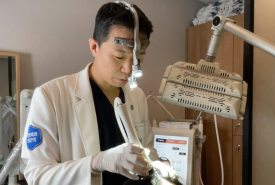
Low-temperature stimulation helps hair growth by stimulating follicle stem cells and promoting blood vessel formation.
It is also effective at soothing scalp inflammation and activating local blood flow.
In particular, when hair loss is accompanied by seborrheic dermatitis, it is often used together with other treatments.
- Low-temperature plasma
It temporarily opens the cell membrane to help effective ingredients penetrate and contributes to relieving scalp inflammation through anti-inflammatory action.
It is often applied together with other treatments in cases of hair loss accompanied by seborrheic dermatitis or scalp inflammation.
STEP 3. If necessary, surgical options are also introduced
New Hair Hair Transplant Clinic prioritizes non-surgical treatment.
However, depending on the degree of hair loss progression or scalp condition,
there are cases where a surgical approach may be a more effective alternative.
It may be considered when M-shaped hair loss has progressed severely or the hair density in the crown area has decreased significantly,
making it difficult to achieve sufficient improvement with standard treatment alone.
It requires delicate planning in terms of graft survival rate, design, and density,
and is carefully planned according to each individual's scalp conditions.
- Scalp micropigmentation (SMP)
A method that makes the area appear visually fuller when the hair loss area looks less dense.
It can help improve psychological satisfaction in areas such as the crown, hairline, and part line.
These surgical options are also suggested as alternatives within the overall course of treatment,
and are carefully considered through sufficient consultation and diagnosis.
Female hair loss is not simply a problem of hair.
Hair loss can affect quality of life,
and rather than reaching a quick conclusion,
ongoing management tailored to your condition is important.