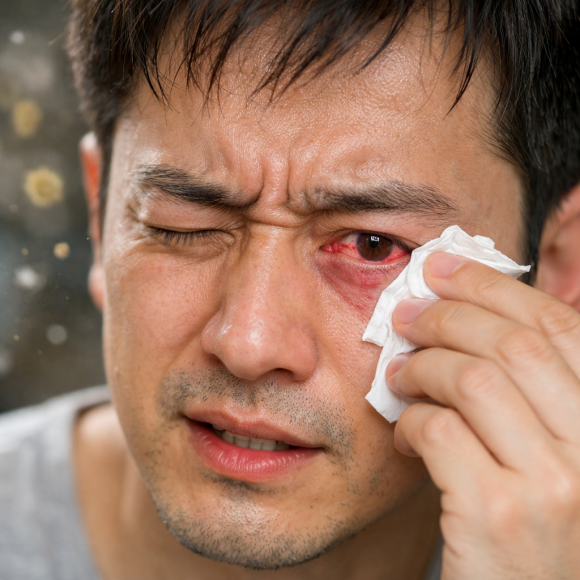
Allergic Conjunctivitis (Red Eyes, Pain, Eye Discharge): Symptoms and Causes
Allergic conjunctivitis is a representative eye condition that many people experience when the seasons change or when they are exposed to certain environments.
It is especially important to understand its exact causes and symptoms because it can cause red and itchy eyes or increased eye discharge, making everyday life uncomfortable.
Below, I will explain the characteristics of allergic conjunctivitis in simple terms.
If your eyes are red and bloodshot, sting, or have frequent discharge, it may not be simple fatigue or an infection, but rather an allergic reaction.
Allergic conjunctivitis occurs as an immune response to external substances. Unlike infectious diseases, it does not spread to other people, but it often recurs.
In particular, symptoms often worsen during the seasonal transition in spring and fall or on days with severe fine dust.

Main Symptoms
Allergic conjunctivitis has several characteristic symptoms.
-
Red eyes
This refers to the whites of the eyes turning red, which occurs as the conjunctival blood vessels dilate.
-
Itching and stinging
This is the most representative symptom and is what makes people keep rubbing their eyes.
-
Increased eye discharge
Thick, sticky, mucus-like discharge may appear.
-
Increased tearing
The eyes become irritated and tear more than usual.
-
A foreign-body sensation
It may feel as if sand is in the eye.
A key difference from infectious conjunctivitis is that the main symptom is “itching,” rather than severe pain.
Allergic conjunctivitis occurs when the immune system overreacts to certain substances.
-
Pollen (seasonal allergies)
This is a representative cause and occurs frequently in spring and fall.
-
House dust mites
These can continuously affect people in indoor environments.
-
Animal fur or dander
This is common in homes with pets.
-
Fine dust and air pollution
These are among the major causes that have been increasing recently.
-
Cosmetics, contact lenses
Products that come into direct contact with the eyes can cause irritation.
When these substances touch the eyes, the body recognizes them as “dangerous substances” and releases a substance called histamine.
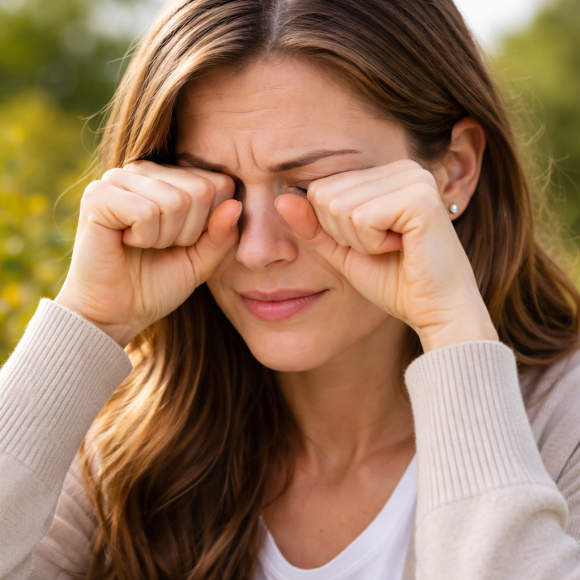
This process causes symptoms such as itching, redness, and tearing.
Allergic conjunctivitis is not a condition that appears once and ends; it can recur or worsen.
-
The more often you rub your eyes, the worse the inflammation becomes
-
If you continue to be exposed to the causative substance, symptoms persist
-
Wearing contact lenses can increase irritation
In particular, rubbing your eyes can even lead to damage to the cornea, so caution is needed.
Allergic conjunctivitis is not a life-threatening condition, but it can greatly increase discomfort in daily life.
If symptoms such as red eyes, itching, and increased eye discharge keep recurring, it is important not to dismiss them as simple fatigue and instead consider the cause.
The most important thing is to avoid the causative substances, and if symptoms persist or worsen, it is advisable to receive appropriate treatment through an ophthalmology visit.
Also, developing the habit of not rubbing your eyes and maintaining a clean living environment can greatly help relieve symptoms.
Because the eyes are an organ that is not easy to recover once damaged, it is most important not to overlook even minor symptoms and manage them carefully.