Hair loss consultation often brings up a question I hear very frequently.
Doctor, is it true that anemia makes your hair fall out?
This question cannot be answered simply with “yes” or “no.”
That is because iron can be a factor that causes hair loss, or it may not be.
In this post, I will focus on the questions patients actually ask often and explain the relationship between iron and hair loss by combining scientific evidence and clinical experience.
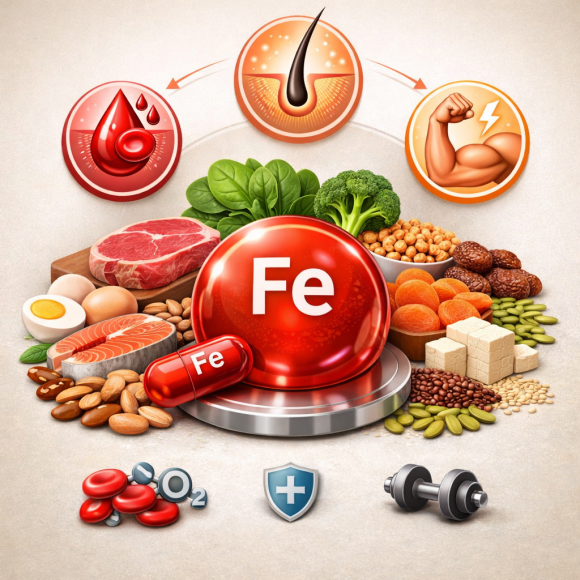
Will Hair Fall Out If You Have Anemia? Summary
| The direct cause of hair loss is not iron deficiency, but hormones and genetics¹ |
|---|
| However, in early hair loss, iron plays an important role in maintaining hair thickness² |
| Hair can become thinner even when blood iron levels are normal |
| There are reports that keeping ferritin at 70 ng/mL or higher is beneficial for hair growth⁶ |
| If a lot of hair suddenly falls out, an iron test is needed to help identify the cause³ |
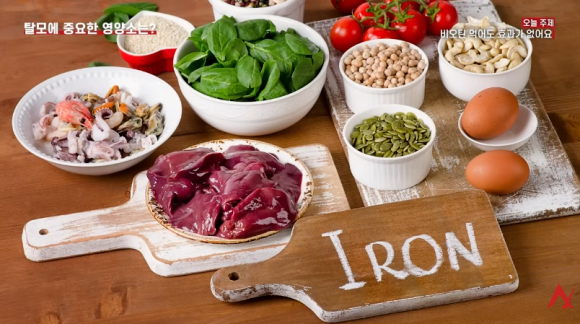
Q1. If you have anemia, will you definitely develop hair loss?
To give the conclusion first, not necessarily.
Hair loss is broadly divided into androgenetic alopecia, which is mainly driven by genetics and hormones, and shedding caused by nutrition, stress, illness, and other factors.
The key process in androgenetic alopecia is the shrinking of hair follicles due to DHT (male hormone)¹
In actual studies as well, there was no major difference in iron levels between hair loss patients and healthy individuals²
In other words, anemia is not the main culprit behind hair loss.
Q2. Then why do people say iron deficiency causes hair to fall out?
This is a very important point.
Iron is a key material needed when hair follicle cells divide⁵
In particular, hair follicles are one of the fastest-growing tissues in the body, so when iron becomes deficient, the body first preserves organs that are more critical for survival and reduces the energy going to hair
As a result, it can appear as telogen effluvium, a form of sudden, excessive hair shedding.

Q3. Why does hair become thinner even when iron levels are normal?
This is the part that confuses hair loss patients the most.
The key is this.
“Iron is the environment, hair loss is a structural problem.”
In androgenetic alopecia, the hair follicle itself undergoes miniaturization and becomes smaller¹
So even if there is enough iron, the hair can gradually become thinner
In other words, iron is only a supporting factor, not the main cause
Q4. Then does iron have no meaning for hair loss?
No. Here is the important twist.
Recent research found that in patients with early hair loss,
The meaning is clear.
In the early stage, iron acts as a “thickness-maintenance device”
In clinical practice, we often see improvement in hair condition after iron supplementation in cases such as:
- early patients whose hair suddenly became thinner
- people with a history of dieting, vegetarian diets, or blood donation



Q5. Do hair loss patients need to get an iron test?
It is not mandatory. But you should definitely check in the situations below.
- If a lot of hair has suddenly been falling out over the past few months
- If the diet is unbalanced (vegetarian diet, dieting)
- If there is accompanying chronic fatigue or dizziness
In these cases, a serum ferritin test is very useful for distinguishing the cause³
Q6. If iron levels are high, do you no longer need to worry about hair loss?
This is something you should actually be careful about.
Ferritin can appear falsely high when there is inflammation
In other words,
- the number may be normal
- but the body may still actually be in an iron-deficient state
So rather than looking at a simple number, you need to consider overall health status, eating habits, and the pattern of hair loss together.
Q7. What is an appropriate iron level for hair health?
In general, the normal range is sufficient, but research reports that 70 ng/mL or higher is more favorable for hair growth⁶
In other words, it is important to aim not just for “normal,” but for an “optimized for hair” state
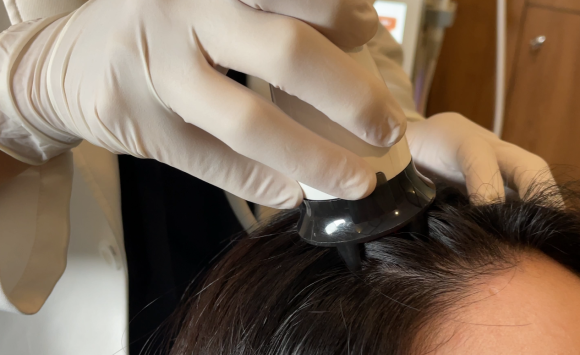
Q8. Can taking iron supplements alone treat hair loss?
Let me be clear about this.
NO
The basis of hair loss treatment is medication such as minoxidil and finasteride⁴
Iron is only an auxiliary treatment.
In particular, if it is genetic hair loss, it cannot be resolved without medication.
| Current condition | Main cause | Recommended strategy |
|---|
| Receding hairline / crown hair loss | Hormones + genetics | Medication first |
| Sudden heavy hair shedding | Nutrition / stress | Iron testing essential |
| Dieting / vegetarian diet | Iron deficiency | Diet + supplementation |
| Early hair loss + thinning | Environmental influence | Iron management helps |
| Advanced hair loss | Structural change | Consider medication + transplant |
The relationship between anemia and hair loss is not simple.
Iron deficiency is not the direct cause of hair loss.
But in the early stage, it affects hair thickness and density.
The key is this.
Hair loss treatment changes the structure, and iron improves the environment
So for genetic hair loss, the most efficient results come from using medication as the foundation while also managing iron status.
Now it is time for hairhair, Kim Jino.
Filsaengsinmo (必生新毛).
Written by: Kim Jino, New Hair Plastic Surgery (Public Relations Director, Korean Society of Plastic and Reconstructive Surgeons / Academic Director, Korean Society for Laser Dermatology and Hair)
References
-
Blume-Peytavi, U. (2019) 'Androgenetic alopecia', in Kang, S., Amagai, M., Bruckner, A.L. et al. (eds) Fitzpatrick's Dermatology. 9th edn. New York: McGraw-Hill Education, pp. 1495-1505. cited: "AGA characterized by hair miniaturization caused by susceptibility to androgen hormones."
-
Debinta, A.A., Budianti, W.K., Hardjodipuro, A., et al. (2026) 'Serum ferritin and hair iron content in correlation to hair diameter and density: a case-control study', Dermatology Reports, Epub ahead of print. doi: 10.4081/dr.2026.10109. cited: "Hair iron levels were positively correlated with hair diameter in men with early AGA..."
-
Zhang, D., LaSenna, C. and Shields, B.E. (2023) 'Serum Ferritin Levels: A Clinical Guide in Patients With Hair Loss', Cutis, 112(2), pp. 62-67. doi: 10.12788/cutis.0837. cited: "In patients presenting with diffuse hair loss, serum ferritin may be a clinically useful tool..."
-
Kaiser, M.R., Grimm, A. and Tosti, A. (2023) 'Treatment of Androgenetic Alopecia: Current Guidance and Unmet Needs', Clinical, Cosmetic and Investigational Dermatology, 16, pp. 1047-1067. cited: "Topical minoxidil and oral finasteride have been the standard of care..."
-
Trost, L.B., Bergfeld, W.F. and Calogeras, E. (2006) 'The diagnosis and treatment of iron deficiency and its potential relationship to hair loss', Journal of the American Academy of Dermatology, 54(5), pp. 824-844. cited: "Iron deficiency also affects transmembrane transport and cell responses to regulatory molecules..."
-
Gonul, M., Cakmak, S.K., Soylu, S., et al. (2009) 'Serum vitamin B12, folate, ferritin, and iron levels in Turkish patients with alopecia areata', Indian Journal of Dermatology, Venereology and Leprology, 75(5), p. 552. cited: "Optimal hair growth occurs if serum ferritin levels are >70 ng/mL..."
Related posts you may like